

A few years ago, when I first made this blog on a whim, I made the argument that games were not inherently fun. I also made the slightly strange argument that the word “game” implies that it’s not serious business. I’m not quite sure why that rankled me so much, but it’s safe to say I don’t need to call Silent Hill or Pathologic “experiences” or “interactive stories” or something similarly strange. Literary games, certainly. Narrative games. But they are games, there’s a reason they are called that, and that’s something my younger mind couldn’t grasp.
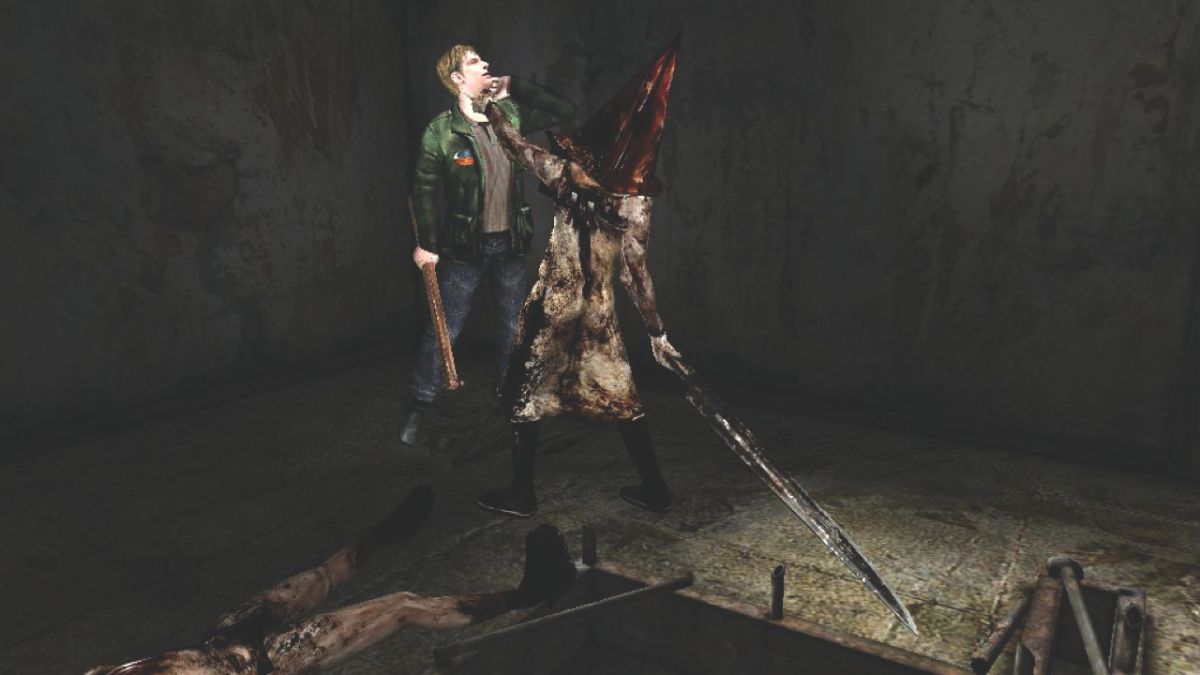
It’s important to recognize that games are games for a reason. That the people who’ve made a game generally have very good reason for not instead choosing to make a film, or a book, or a song, or podcast, blog, et cetera and so forth. The idea I’ve been contending with recently is that games are inherently supposed to be vehicles of interaction, with mechanics and systems that work best when a powerful story backs up the mechanics and the aesthetics of the game. That’s how I like my games – with a story that works within the context of the mechanics; the rules and the systems that make up a good video game should mesh with the story that also makes a good video game.
But this line of thinking got me wondering. What happens when a game is actually not that much fun really I’m kinda freaking out? Aren’t games supposed to be relaxing, or at least that magical word, fun? I’ve come to accept that for me, horror is a genre that can genuinely relax me and make me feel better (for some strange reason), but there are still certain aspects of Silent Hill 2 that my brain refuses to go near. I’m fine with the songs with the banging and scraping of Pyramid Head’s Great Knife dragging along the ground or even the damn dentist drills; I like the Pathologic songs with the eerie chanting, and hell, I play horror games to experience not just the stories and mechanics, but a special sense of escapism – the same reason I watch horror films and read books, etc. But there’s one tune from the Silent Hill 2 soundtrack that I just cannot stand, that makes me feel unbearably stressed.
For whatever reason, when this came on in the game, my brain went into a turtle shell. It’s the one song I reliably skip on the soundtrack, just because it affects me so.
So the question is, if this song was deliberately made to make the player uneasy (it was), then why would you keep playing? Well, you’d reply, for the atmosphere, the ambience, the story, the monsters, the gameplay…(?)
Yes, the trickier question really is, what if a game’s mechanics just aren’t that fun? What if a game is designed around the idea that you should be weak, that enemies can brutalize you if you aren’t careful? Is a game therefore considered less intrinsically valuable because you aren’t enjoying the experience of playing it, even if it was designed to feel this way?
A game that intrinsically feels bad or clumsy to play will undoubtedly frustrate a large amount of people. Take Just Cause 2 for example. A free-roaming, open-world sandbox where you can grapple onto everything and your main objective is to just blow up as much stuff as possible, overthrowing an evil dictator along the way (if you can be bothered). But for whatever reason, there are a lot of driving missions in the game. Drive here, drive there – and the mechanics for the driving are untrustworthy at best. The cars feel floaty; the planes and helicopters twitchy, exploding at a moment’s notice; and the boats can drive over an island and then continue driving in the water on the other side. At the start, the controls were frustrating, and I really struggled to contend with the fact that I had to do vehicle chase sequences in cars that liked to do somersaults when they clipped a rock. But, after enough time playing, I got better.
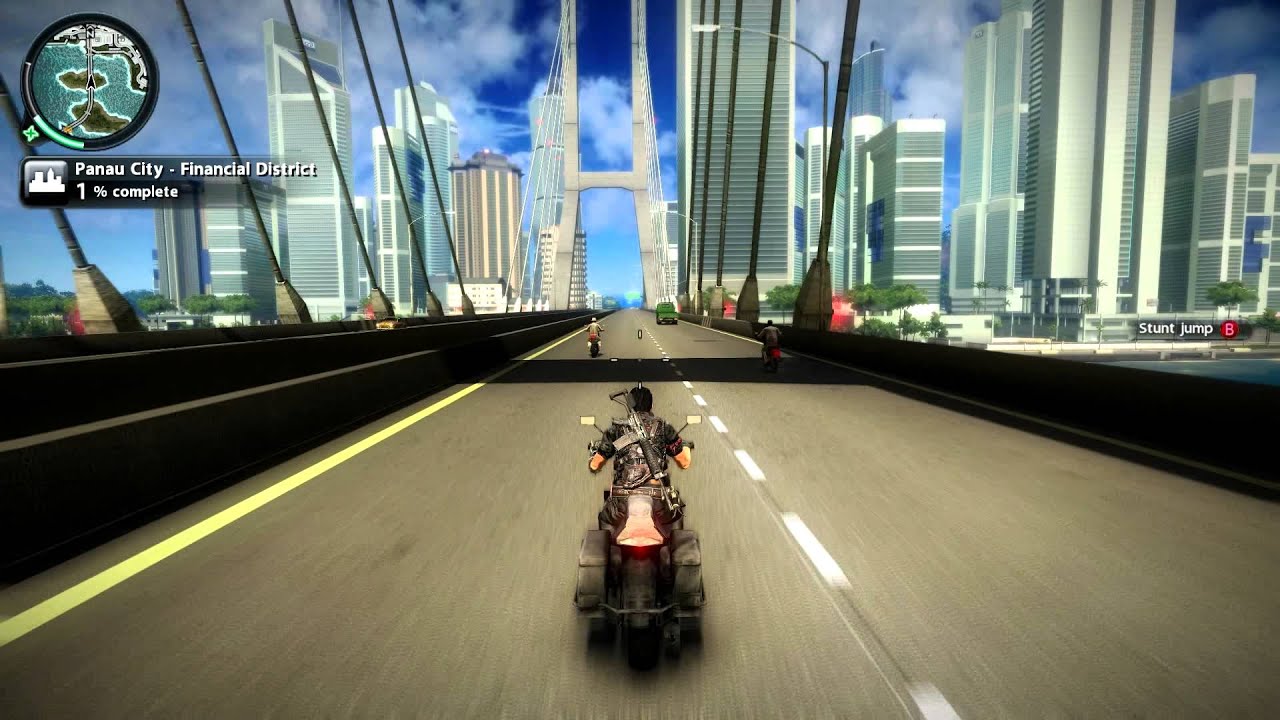
Whether it was the fact that the game actually became fun to play, and I’d just been going about it “all wrong”, or whether my brain had made the adjustments to how to actually handle these terrible cars, I’m not sure. It’s fairly easy to go back now and play Just Cause 2, as despite the pretty rubbish vehicle mechanics, my brain retains most of the mental adjustments and muscle memory I need to pilot the vehicles. Landing my first plane was a special accomplishment; I remember circling the entire map, looking for good spots to land, and when I found one, I tried and tried again and again, wrestling with the planes that liked to explode just because you sneezed, and when I eventually did it, I felt a huge sense of vindication. It was almost as though I’d done something impossible.
Of course, it’s not impossible. Plenty of people who play the game do it very easily, even though the game encourages you to just leap out of the plane and watch it crash into a mountain or skyscraper or something. But it felt like a personal victory. I’d overcome the game’s shortcomings – or my own – and landed the damn thing.
Again, the question circles back round to the games that are designed to be punishing or unfun. Depressing horror experiences might have janky controls to reinforce the nature of the enemy you are battling. Or at least, that’s the argument.
Silent Hill 2‘s control scheme for combat is simple. You have to hold down R2 and press X to attack an enemy. R2 readies James’ weapon, and X fires or swings it at wherever James is aiming. James typically locks on to an enemy if he is facing in the right direction, making it easy to just hold down R2 and press X. He can strafe a little too, but I never really needed it, other than in battles with the malevolent Pyramid Head.
What I noticed though was that Silent Hill 2’s combat worked. Or rather, it’s something I didn’t notice; I didn’t struggle with the controls or anything like in Just Cause 2. A lot of people complain that Silent Hill 2’s combat kind of sucked (in fact, that’s probably the most common complaint I see leveled against it, aside from people disliking the voice performances, which I loved). But it sucked in the right way. I know that sounds weird, but I’m hoping I can explain in an articulate way.
The thing is, it’s not actually that hard to make James do what you want him to do. If you’re used to the typical tank controls of the retro survival horrors, you can rotate him and run him down the corridor away from the monster fairly easily. The monsters don’t take that much time to kill (although I haven’t played on Hard or Extreme difficulties yet) and realistically if you’ve grasped James’ control scheme, a decent player won’t find many enemies that give them trouble, save from creatures like Pyramid Head and the Abstract Daddy.
What makes Silent Hill 2’s combat “suck” in the minds of many, I think, is the amount of time it takes James to actually do anything in combat. His animation with the initial plank for instance has a long wind up, and a bit of a cool-down as the plank “bounces” off the enemy he hit.
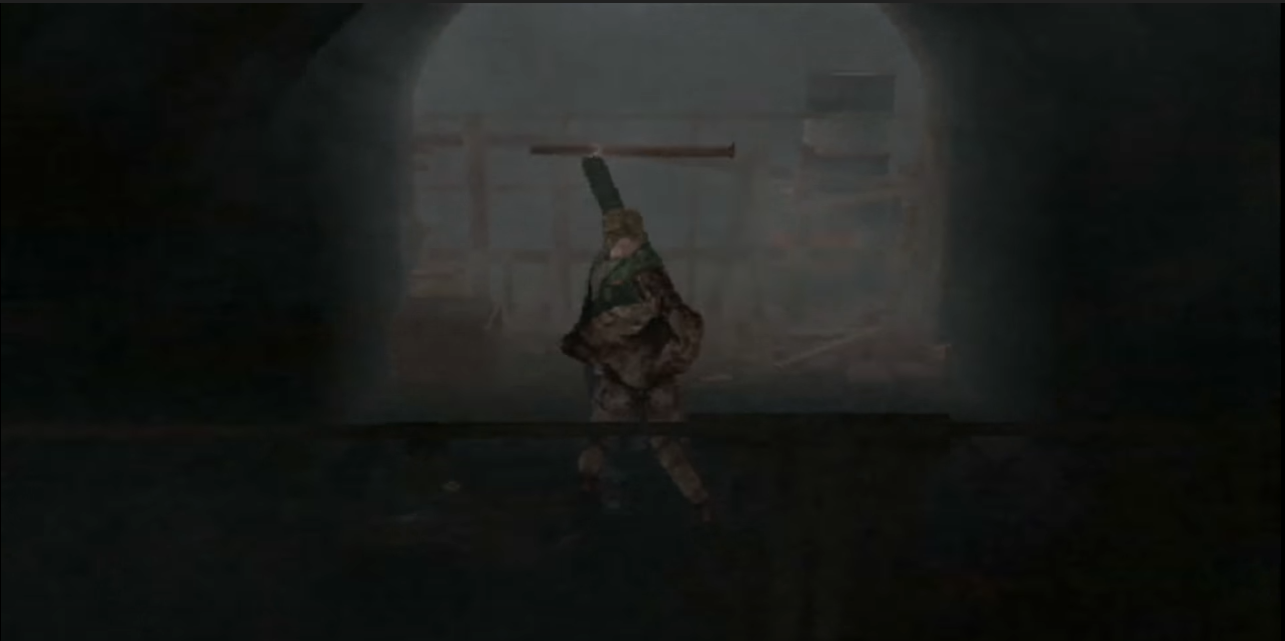
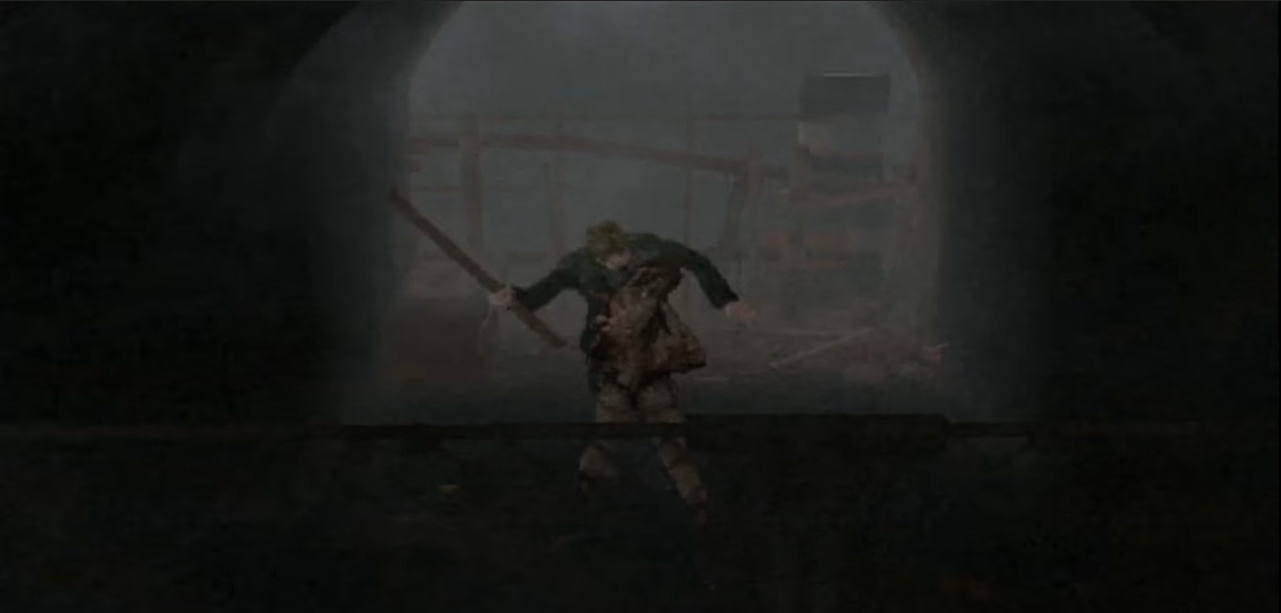
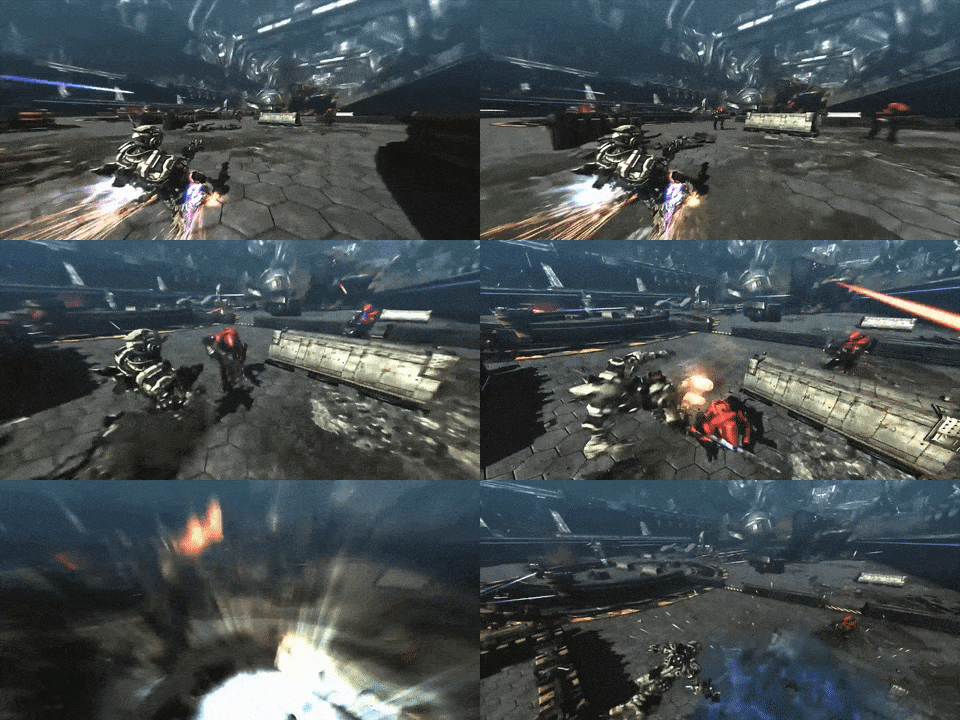
This makes James feel clumsy and inexperienced, even while we still feel in pretty perfect control. Action games typically make the player feel powerful – Vanquish for instance is a third-person shooter where you are sliding across the map, dodging and weaving bullets and missiles all while going as fast as a car down the highway. It’s immediate, it’s responsive, and you feel powerful and badass while you are playing it. It’s fun. People have a smile on their face as they play Vanquish.
People have much the opposite reaction to playing Silent Hill 2. James is fairly slow, he breathes heavily after running for too long, his aiming and melee combat is slow and feels ineffective (even though you are in full control at all times), and he turns fairly slowly, even though the enemies often are too slow to catch up with him even then. It’s the fact that James feels this way on purpose that we understand why Team Silent made the game slow and clunky-feeling. It’s not that the controls are bad, as many people say about classic horror games. It’s the fact that your responses, which are easily accessed, are slow and sometimes ineffective. They are tools in your arsenal, certainly, but they are rusty tools, unreliable tools. They are tools that require experience to master, an understanding of how a store clerk from small-town America would fight supernatural mannequins with inhuman strength. Fear powers the movements of James: as he raises his arm to high to strike; as he stands still and aims in place; as every shot from the shotgun unbalances him for a crucial second.
But it’s that feeling of control that we have over proceedings that keeps us playing. James isn’t an unreliable protagonist gameplay-wise. He’s slow and inexperienced for sure. But he’s also responsive and you feel what happens when he hits or shoots or stamps on something. The jaggedy edges of Just Cause 2’s driving is something to drag ourselves past, to adapt to and play in spite of. And while it can feel rewarding to pull off cool or even mundane things with flawed systems, the reason that we play games is to play games. While for some people it can be as simple and meditative as pressing W to walk and moving the mouse to look around, for others as complex as memorizing even a single Tekken character’s movelist, the compelling factor is how good it feels to play.
Mechanically speaking, we want a game that works the way it does on purpose, not because the players have to make it past the developer’s shortcomings to experience the good parts of the game. A bad walking simulator for example is one that spaces interactable items too far from each other, or makes the walking speed too slow for the size and scope of the environments. A clunky fighting game is bad because we want instant reaction from the character. Delays in button presses (as people who played Shenmue III apparently discovered) make a fight feel wooden and unresponsive, as the AI is doing things while your moves you input a second ago are now suddenly unsuitable for the current situation.
Silent Hill 2 owns its woodenness. Pathologic was designed to be a miserable experience. They are not traditionally “fun” to play. You wouldn’t crack open a beer with a friend and decide that a nice time on the couch playing Pathologic would be a way to spend a relaxing evening. (Well, it would be for me, but that’s another story).
It is in the initial design pitch of the game that the feel of the game should come through. Is the game designed to be intellectually stimulating? Or perhaps it’s more challenging for the fingers which have to perform crazy combos? Is the game a miserable exploration through a dreary town infested by an incurable disease, in which people scheme to kill you just because you have a bit of medicine? Then make your game accordingly. Imagine how the game should feel, and make the controls as responsive as possible, while still keeping the mood of the game intact. It’s a tough tightrope to walk, as evidenced by the multitudes of bad or mediocre titles out there, especially ones who strive for something more complex than simple arcade fun. There’s nothing wrong with designing a game around simple arcade fun, either – you just wouldn’t design the combat like Silent Hill.
Or at least, after reading this, I hope you wouldn’t.
Enjoyed this article? Consider visiting the virtual tip-jar of Patreon and helping me out. It would mean a lot.
 Horrorgameanalysis