
There’s not as much to talk about this week, so it’ll be a bit of a shorter post. I wanted to try and explore the interval between the school and the hospital, but as I reflected, there wasn’t a very interesting amount of new and potentially diverse content.
The most interesting things are things I have already spoken about at length; the sound design is key during this section. The church bell ringing in the distance is a beacon that draws the ever-curious Harry Mason towards the place of worship. The FMV cinematics are still brilliantly made. Takayoshi Sato’s hard work still pays off, twenty one long years down the line. While they aren’t particularly pretty by modern standards, they stood the test of time better than some other attempted FMVs from the PlayStation One era. See below:
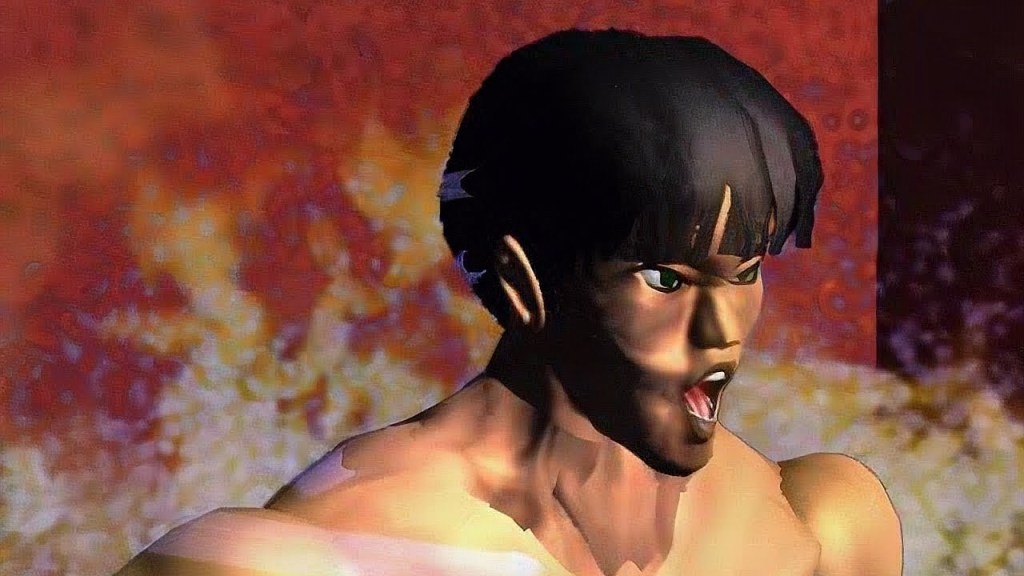
Marshall Law, Tekken 1 (’95) 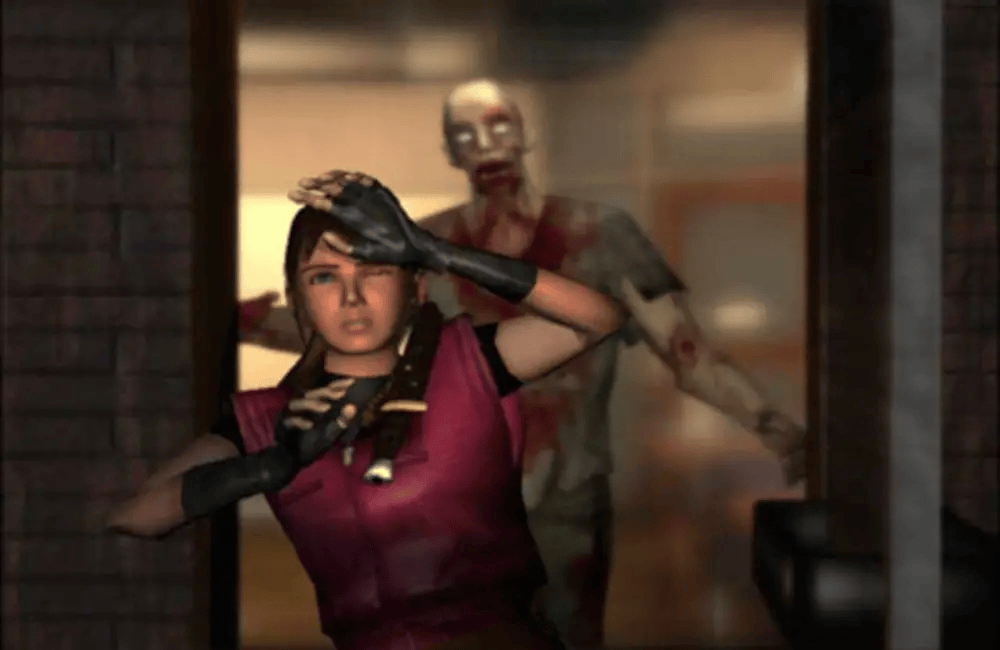
Claire Redfield, Resident Evil 2 (’98) 
Paul Phoenix, Tekken 2 (’95) 
Dahlia Gillespie, Silent Hill 1 (’99)
It’s a pretty simple lesson, but little things in games go a long way, even if we don’t notice them. Dahlia has a lot of detail on her face compared to the smooth or jagged-looking faces of other characters from the PS1 era. It’s also worth noting how the developers themselves would have been able to push the technology further, since the PS1 had been around longer by the time of Silent Hill, and plenty of information on how to maximize the PS1’s mighty specs would have existed in developer’s circles.
The texture of the fabrics is also worth noting; Dahlia’s outfit is visually interesting, memorable, and distinct. The one thing that I find slightly odd about her character model is her extremely long neck. Maybe it’s just me.
The walk across town to meet Dahlia is about as formulaic as Silent Hill gets. It doesn’t have any particularly new tricks to throw at you at this time, but that’s good. It gives you a while to breathe after the claustrophobic and somewhat circuitous confines of the school. A good horror game understands that the pressure doesn’t have to be on all the time. Attempting to shove overstated scares and continually ramping stuff up just makes you apathetic to what’s going on screen. A single bucket of gore followed by an hour without gore, then a fridge full of gore, is far better than tossing twenty buckets of gore at you over the course of an hour with no reprieve, then trying for the fridge full of gore. You’ve already seen the fridge full over the course of the hour, so trying to spook you or unnerve you with yet more is basically worthless.
The church itself comes with Akira Yamaoka’s best work so far in the original Silent Hill, a soothing track called somewhat unsoothingly “Claw Finger“. The track itself functions as both a melodic tune able to be listened to as a standalone track away from the game, and ambience for the church itself, as it sounds a lot like a church bell itself in the background.
Dahlia doesn’t have much of any substance to say, beyond giving me a strange pyramid object, and confusing the hell out of both me and Harry. She has more cryptic riddles to say, and her behaviour is obviously erratic and strange. This does work better than Cybil’s weird “I’ll give you a gun random civilian stranger”, which felt wrong to me. There’s something obviously twisted about Dahlia from the get-go, which makes her erratic and elusive behaviour easier to buy.
I head to the bridge and lower the bridge to the next side of Silent Hill, and towards the hospital. There’s an understated area here on the bridge control tower that I loved a lot. It had lots of nice little touches and the ambient noise was calm and soothing. Silent Hill has a strange way of making you feel at home, in abandoned industrial or public areas. They’re more comforting than some other areas.
Next time, into the hospital. I know for a fact I’ll have some more interesting stuff to talk about next time. Still a lot of setting stuff up at this point of the game, an exploratory bit of downtime.
If you did enjoy this article, please consider visiting my Patreon and giving me a hand. Thanks for reading.
 Horrorgameanalysis