
A little something I rely
And the white sugar gently hides me
Oh the sweet sugar saves me
It’s the room that confines me, confines me
~ Tender Sugar, Akira Yamaoka (2004)
Precious things are all too rare in this world. Games that touch and affect you in different ways are prevalent, but there are few that manage to pierce the veil that surrounds your heart, to grip at your imagination, to clutch at the black curtains fluttering elusively in the breeze, to take great fistfuls of them, and capture your fascination.
For me, Silent Hill as a series has done that to me in a way that very few other series have done. And while Silent Hill 4 is not my favourite in the series, it is one of the most fascinating – and also the most easily accessible these days. What it does is critical, perhaps even revelatory – it dares to divert from the beaten path. In making a new Silent Hill, Team Silent could have easily retread the same formula of previous titles they had developed, just as a few of the Western titles would do, with 0rigins & Homecoming in particular being guiltiest of this. Instead, they elected to try something different, to create a psychologically claustrophobic experience. The outcome is an admittedly hodgepodge collection of ideas and design choices, that do not all work as well together as they could. This is even reflected in sound designer Akira Yamoaka’s soundtrack, which comes across as a (still amazing) collection of tracks that do not fit together as cohesively as the previous Silent Hill 2 and Silent Hill 3 albums do.
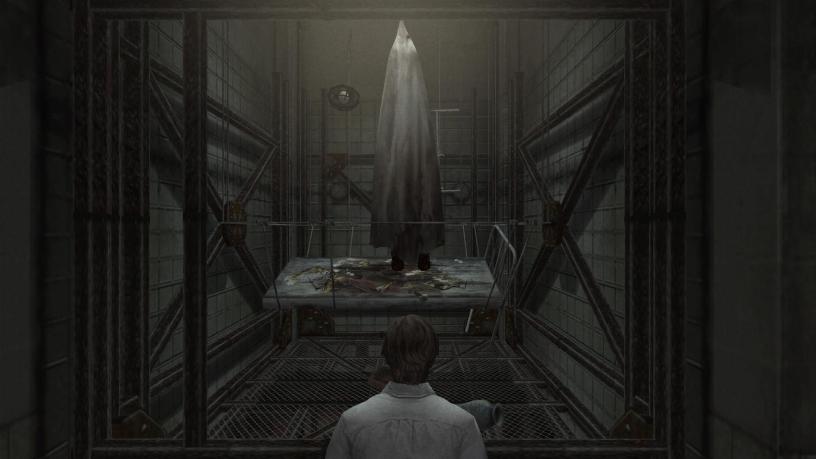
But 4‘s tricks, being new and interesting, would help to heighten the feeling of sheer horror that a player feels from playing the game. From the start, you are engrossed in a claustrophobic and antagonistic apartment room, that does not want to let you leave. While Henry Townshend is hardly an inspiring protagonist, and the characters surrounding him are similarly uninteresting (asides from the primary antagonist, who realistically is the protagonist of this sorry tale), the plot is one of the series best, achieving this all from the horrifying confines of the apartment, and the various nightmare worlds Henry and you must venture to in order to get to the bottom of the horrors that await.
A horror game having a singular hub world which is subverted and made more horrifying as the game goes forwards seems like a no-brainer in retrospect. It starts off normal – a little stifling, sure, but still normal-ish – but later in the game twists, becoming sordid, cruel and with some truly terrifying moments. When someone knocks at your door late in the game, you will not like what you find. When you get up from bed and find that a photograph has been replaced by something far more terrifying, you will realize that Team Silent, by now no longer made up of all of its original members, still has some gas in the tank, still has something to prove. It is a demonstration of bravery, I think, that they were able to make a game so fundamentally different from the previous titles, and a demonstration of skill that they were able to make it thematically consistent with the previous titles.
The game’s most challenging changes were made to combat – combat, for whatever reason, fails to satisfy at times, and ranged combat, which was previously a staple of the series, has been deemphasized in favour of a much more “gamified” form of melee combat, with light standard attacks and charged heavy attacks with an on-screen meter and invincibility frames, which couple together to make the hand ax the definitive weapon. Unkillable enemies (which previously were featured in the series with the enemy Pyramid Head) are now faster, deadlier, and more prevalent, in the form of ghosts. They can also follow from room to room – making them scarier, certainly, right up until they become annoying. Putting them down lasts far too little time, something developers were aware of in a postmortem of their game. A prolonged and frustrating escort quest in the latter half of the game merely serves as icing on top of a wobbly cake.
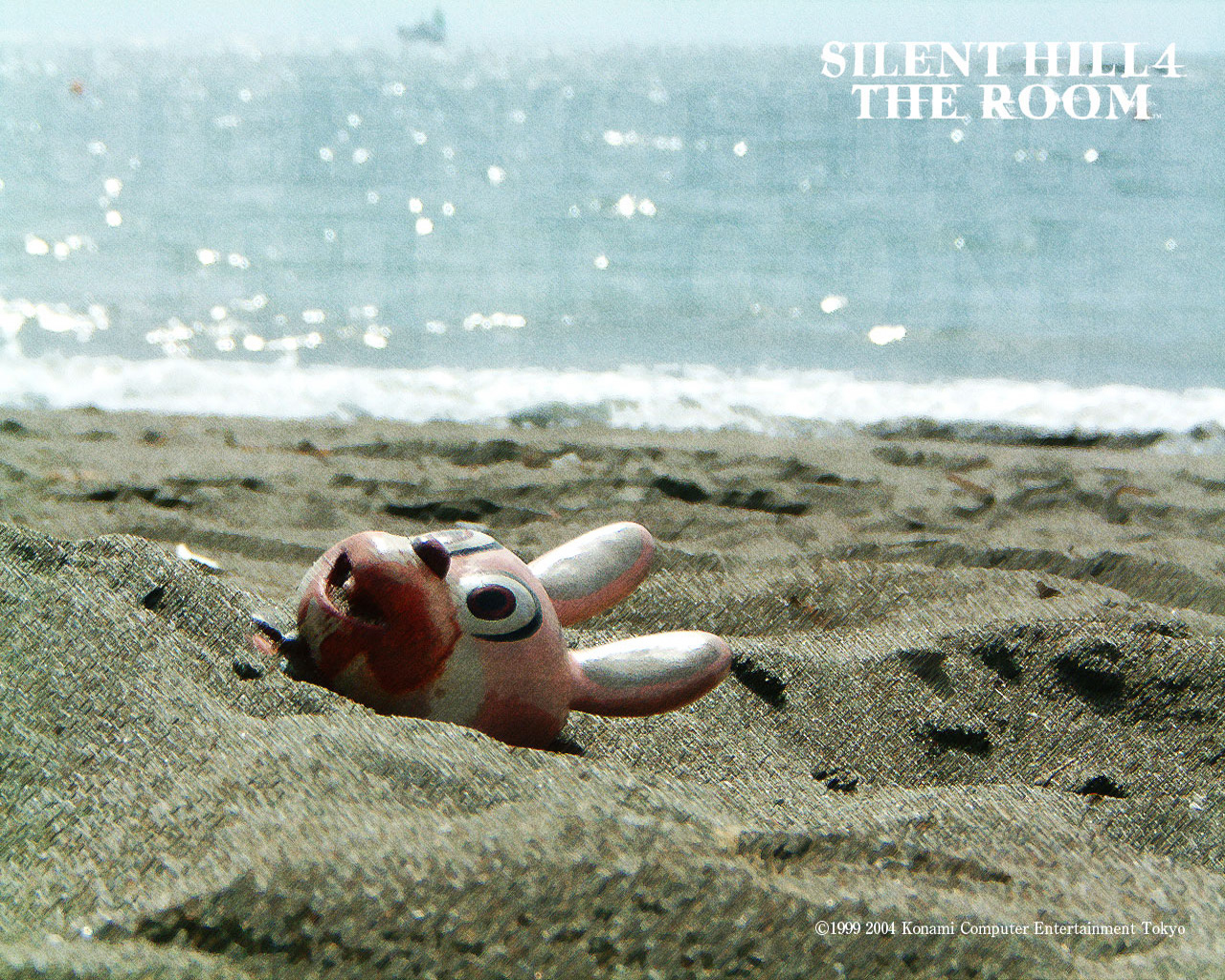
The game’s strengths however lie in classic Silent Hill territory. Atmosphere, music, disgusting and horrifying sights to see everywhere, and confronting themes help to build a gripping plot, a plot that never relents, and always has a core mystery or monster to confront. If you have ever been curious about the series, Silent Hill 4 – The Room is a place to experience both the best and the worst the series has to offer; clunky combat juxtaposed with masterclass horror, plot and atmosphere building. Hopefully one of these days I’ll actually get to sit down and record – I’ve finally broken out of a writers block that’s plagued me for about two or three months, so that period of malaise has hopefully ended. And when I do, you can be damn sure I’ll be recording about this game, maybe even trying my hand at a stream or two.
In an age of increasing corporate regurgitation and conservatism/sequel-obsession in media consumption, Silent Hill 4 is a double-edged reminder of the power of imagination and ambition. An examination of both the consequences of failure in a corporate world (it didn’t sell as well as Konami hoped, and Team Silent were shuttered soon after), but also the dizzying heights of success. Silent Hill 4 remains a haunting, and even touching, experience, eighteen years after its release, challenging the player to confront their darkest fears and emerge on the other side triumphant and stronger for it.
You can buy Silent Hill 4 – The Room on GOG.
 Horrorgameanalysis