
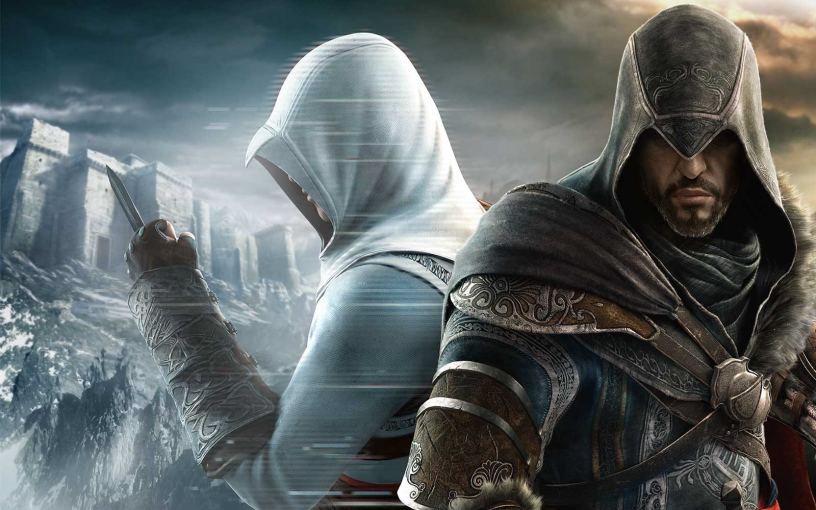
So we’ve been over the missed opportunity that was the past story, and the lackluster nature of the gameplay iterations. Two posts remain – in this post, I wanted to devote some time to talking about an aspect of the series that I hear almost noone talking about, but that genuinely comes across as an attempt to shake off the growing ennui that plagues the rest of the game. It didn’t work, mind you, but they tried.
The modern setting of the Assassin’s Creed series has always been a bit of a mess; when they lost the thread after 2012 and Desmond’s death, they crashed hard. But at the time of Revelations, we were right in the middle of it, and they were trying their hardest in Revelations to give Desmond some personality, and a definable backstory that we could try and understand him through. Remarkably, the game actually succeeds at this goal. Before, I couldn’t care less about Desmond – but now I actually know what he’s about, where he comes from, and maybe what drives him.
It turns out the modern Assassin order is run like a rural cult, wherein the children know nothing of the outside world beyond “Abstergo bad”, and they are trained relentlessly for a day they think will never come – that it is just their overprotective parents stifling their freedoms. Desmond, naturally, sees his parents as kind of crazy and just takes off one day without planning it, leaving behind the cult of Assassins (who come off as doomsday preppers in his recollections). He wanders for ages, but gravitates towards New York, where he becomes a bartender, naming drinks after the conspiracy theories that he was raised with – this is what allows Abstergo to get their hands on him in the first place, kicking off the events of the first game. I actually found myself invested in Desmond’s character after replaying these sections – though the gameplay segment approaches “awful”.
So Assassin’s Creed is a third-person open-world action-adventure, right? Well, what if we remove literally all of those descriptors from the gameplay. Is it still an Assassin’s Creed game then? Well, no. Now it’s a first-person linear puzzle-platformer, with dull puzzles and long linear corridors.
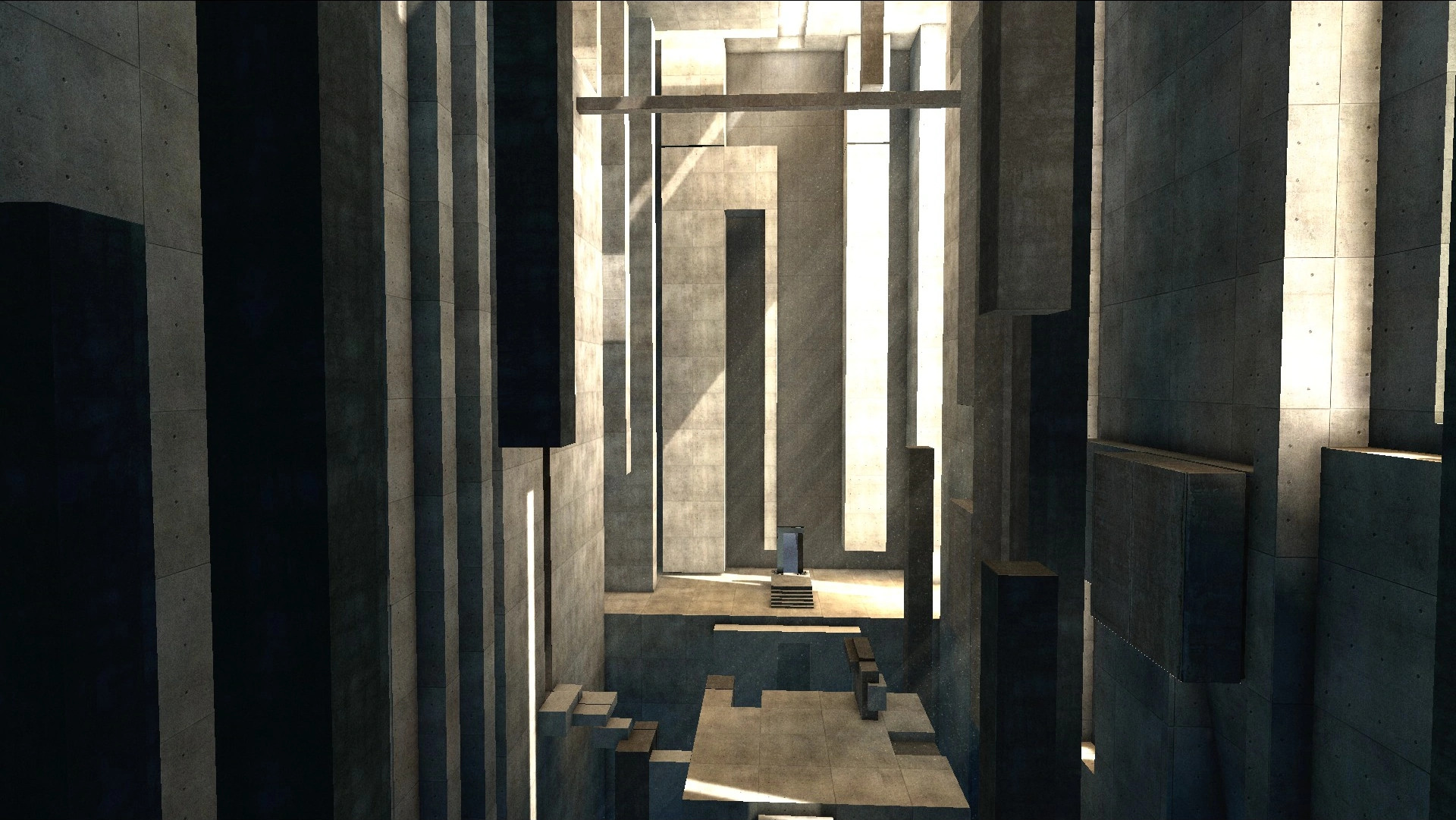
It is hard to reconcile the good storytelling and interesting worldbuilding that goes on in these sections with the genuinely painful, glacial pace of the gameplay. It is like watching paint dry as you trudge down corridors and place down platforms over empty space, like the saddest carpet layer ever. You have two kinds of blocks – flat or a triangular sloped block – and you use them to catch you falling to your death and bridge gaps while Desmond narrates.
Why, oh why, did they do this? I would have been okay if they’d just made one smaller hometown hub for a little Desmond to run around in, or even had those memories be entirely linear and gated with no open world. We could have had a fascinating, even heartfelt, examination into why exactly Desmond decided to run away, the relationship he had with his parents, and just generally further expansion on why the Assassin Order is so firmly on the backfoot in the Modern Day. This is all explained instead in supplemental materials and boring in-game codexes. The first one can be explained by the fact that this is UbiSoft we are talking about, and of course they have to make everything into an awful franchise that bloats its way across the world. The other… well, there is one thing players don’t want to do while in the middle of an action-adventure game with a relatively fast pace (yes, even a game with a pace like Assassin’s Creed), and that is stop to open optional submenus to read overly long bits about the world with details that aren’t relevant to the understanding of the immediate story.
I feel for whoever had to write those entries, because they can be genuinely entertaining or interesting – but their very presence in the game is self-sabotaging, as if there is any information in there that would help the game’s writing flow better and add to a player’s understanding of the game world, why isn’t it in the game itself? Even survival horror games with lots of notes to pick up include plot-relevant or thematically relevant details in their notes that the players pick up and read. They are an essential part of the game experience. Arguing that a bloated wiki on the other hand is part of the game experience just doesn’t feel like a good argument.
The modern day is finally somewhat interesting story-wise as it feels like we are getting some development of the world (and not just “development” of Lucy, Sean(?) and Rebecca, who are three particularly flat, dud characters if you ask me). But then it has to shoot itself in the foot with poorly conceived first person sections that are far too drawn out and sometimes too abstract with their imagery to even function as proper psychological trials for Desmond. Sometimes you’ll get an image on a wall, but more often than not it’ll be pillar platforming or laser grids instead, accompanied only by Nolan North’s narration. So bland white corridors only interrupted by “platforming” wherein your only jump (in an Assassin’s Creed game!!) is the most pathetic hop I’ve ever seen. No grabbing onto ledges, just placing down blocks and dodging moving lasers to find the button you need to press to open a door. That’s literally the extent of the gameplay here, and it bores me to tears.
Subject Sixteen, a character who up until this point has been a mystery, is revealed to now be a construct in the Animus and has gone understandably pretty insane. He is basically wasted during the main story though (he has about three mandatory scenes to watch) and saves Desmond from being erased by the Animus’ automatic cleaning system or something, sacrificing himself in the process. Well, a little underwhelming for a character who has been teased for so long, but don’t worry! UbiSoft were thoughtful enough to release a DLC expansion for Revelations that revealed more about the poor man. It comes free with the Ezio Collection, and is mandatory for the Platinum trophy… and… woe is me, it is another first-person platforming section.
The Lost Archives, as they are called, are an enormous missed opportunity. Some bits are incredibly good – you see Subject Sixteen’s funeral and jump into his open grave to find a secret tunnel as if we’ve jumped into Silent Hill; there are flashes of memory that allude to something to come (which in fact cleverly foreshadow the final rooms of the DLC, showing that this has all been one big loop); and you get great little bits about Sixteen’s strained relationship with his father, which ends in heartbreak after he goes missing and his father tries to salvage his relationship with his now-dead son. Some genuinely stirring stuff, but wrapped in a package so banal it makes me want to cry.
How infuriating it is to have the fact that Lucy Stillman is a Templar, a character who has been with us since the first game and was killed in Brotherhood, revealed in a side-DLC in a mode almost noone liked or would willingly pay for more of (I assumed). Her influence is underexplored – she’s just revealed to be evil. Her reasoning given in the email she sends to Sixteen is terribly flimsy and hypocritical (“Abstergo is helping people”, she argues, as she helps strap a mentally-deteriorating Sixteen to a table to destroy what’s left of his mind). This would have been good if the game had acknowledged it in any way as hypocritical. There’s no stated confrontation between Sixteen and Lucy. It feels uncomfortably reminiscent of Outlast 2’s plot being explained by a single note that’s off the beaten track – why make such a key detail hidden like that, and why hide actually good story fodder in a DLC for a dull game mode?
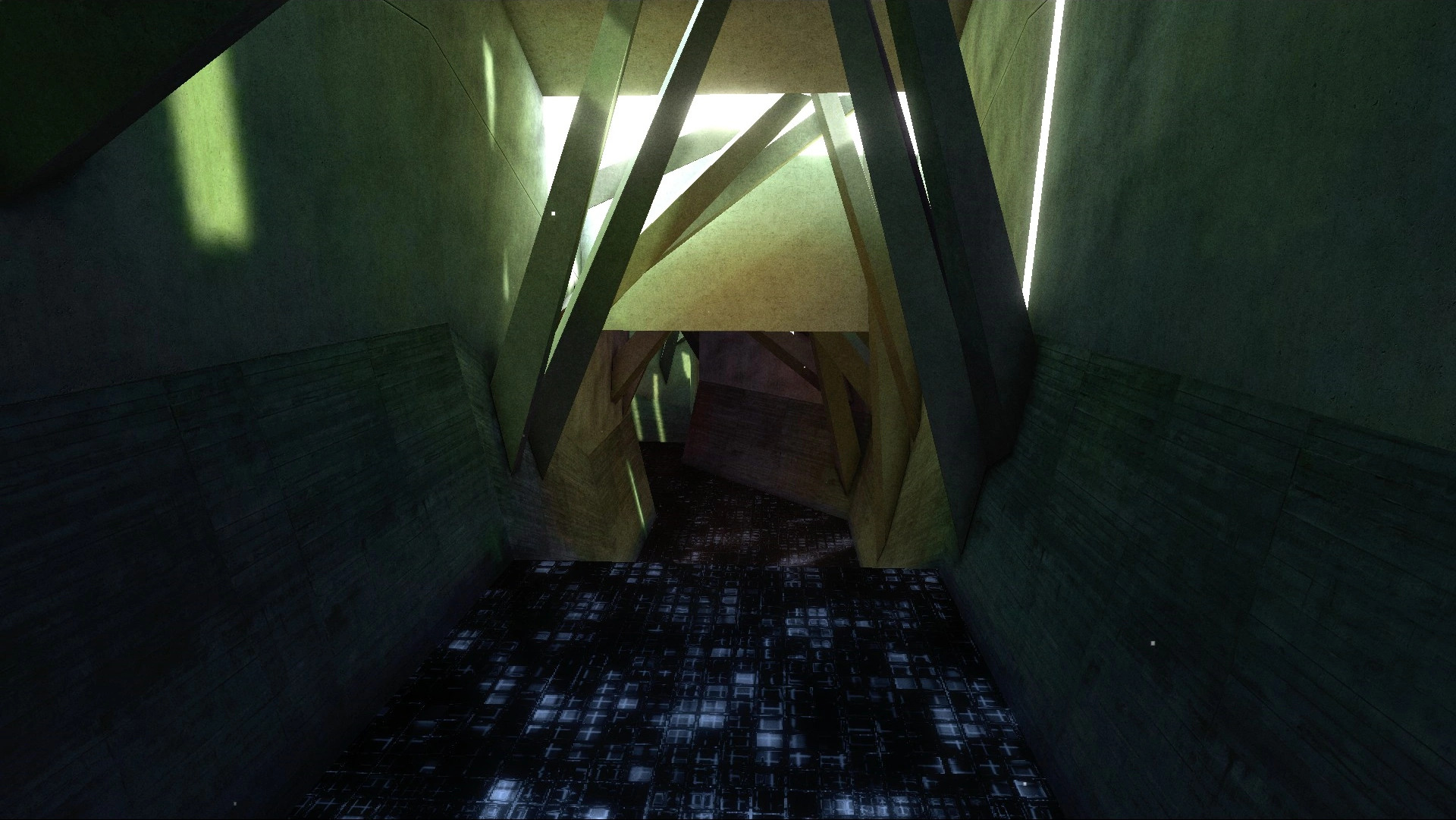
The Lost Archives add one new block (briefly, for a few levels), a mega-jump block that launches you high into the air. But it has iffy collision and placing it down can feel slightly delayed, as well as the fact that you’re never really sure how high exactly it can fling you. This makes one of the trophies required for 100% completion on the PS4 version really rather annoying, as you have to make it through a region without dying once using these untrustworthy blocks.
Worse, however, is the single rarest achievement in the game, which I think deserves special mention, even in a gaming blog ostensibly about game design and writing. I suppose this counts as poor game design – Impress Warren Vidic is a trophy also about getting through a platforming section without dying. But this section is long, and much more difficult than the other ones. There are five or six different laser grids and a long tunnel you must fall down at incredible speeds to avoid colliding with quickly rotating giant fan blades of doom. Take a boring game and make it frustrating, and you better believe that’s a paddlin’.
The Lost Archives is at points beautiful, at times intriguing, sometimes well put-together and well-thought-through. But it seems that more often than not these modern day sections are happy enough to put lasers in your way and call it a day, relying on narration (almost none of which is from Sixteen in The Lost Archives, which I felt was a very, very strange choice) to carry the story. And while the story can be good, the gameplay is so awful I am glad Assassin’s Creed elected not to touch it again. I almost fell asleep trying to get through the last of Desmond’s sections – at least The Lost Archives were new to me. But even they overstayed their welcome.
Like much of Assassin’s Creed: Revelations, these modern day memory sections seem to have some good ideas, but fumble the execution hard. With each successive post, I hope you can see why Revelations is really worth avoiding these days, as it adds almost nothing of any substance to one’s video gaming palette, and contributes very little of any lasting information to the series’ ongoing lore beyond the Altair memories and maybe some of the information about Desmond’s past. Though the way it is presented is so dull I couldn’t recommend that be the way you learn about it. Maybe in-game wikis aren’t all bad. At least you don’t have to play through first person “puzzle”-platformers.
What a depressing statement.
Next time: I wrap up the discussion about Revelations with some thoughts about 100% completing it, and draw some proper conclusions about its place in the series, and in a modern library of games.
 Horrorgameanalysis