
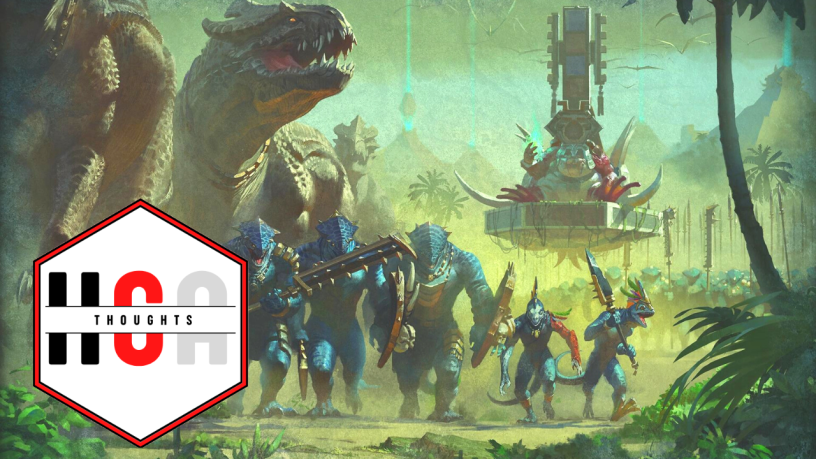
On booting up Total War: Warhammer II, I was immediately confronted by just how ludicrously sized the world ahead of me was. I was but a small fish in a truly gargantuan pond, and while surviving might have been easy, victory seemed remarkably difficult – for one reason only. Everything was too big. There was too much stuff. And what a complaint – surely the more things the better? Bigger is better is the saying, after all. But alas, that is not always the case, and for me, is becoming less and less true – at least when it comes to certain game design decisions.
Playing through Yakuza 0, for instance, is indeed a truly herculean task when it comes to lists of stuff to complete. I’m not there yet, and I think I’m going to have a short break after I finish all of the second character, Majima, and his substories (the last thing I have to do before tackling Mahjong, Fantasy Zone, and Outrun, a variety of minigames that are proving to be quite difficult). But there’s a key difference – everything feels manageable. The human brain likes to partition things, likes to break down large and complex tasks into small and achievable goals. David Kirsh, who writes on “The Context of Work” in his 2009 article, argues about the necessity of tools to manage this all-important task: “[a]n essential part of managing a project is to break it down into logical subcomponents and then to map these onto a timeline. Without a calendar or clock to convert this abstract mapping into here and now directives to action,we would fall off track, running behind our obligations or pointlessly running ahead.” This is only really possible when a game begins at a healthy level, and slowly begins to expand its scope as the game goes on. We need the game to give us tools to manage the content that has been placed before us.
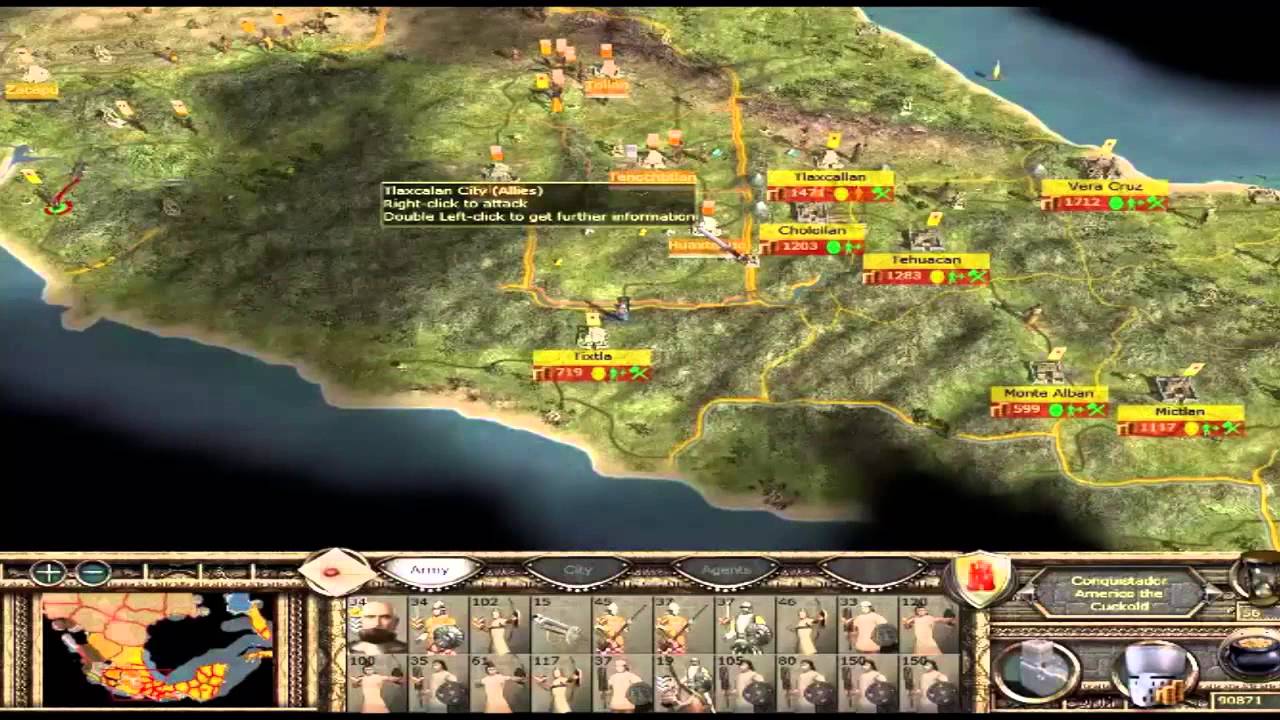
Often, large strategy games have the problem of hooking the player, while also teaching them an array of complicated mechanics that only become more complex the deeper you become invested in the game’s systems. I remember comparatively playing through Medieval II Total War: Kingdoms, the game’s expansion pack, about ten years ago. As much as I enjoyed the base game, I found the smaller map sizes and reduced number of factions in each of the four smaller campaigns (Teutonic, Crusades, Britannia, and the Americas) to be far more enjoyable because I could more easily see the goals I had to achieve directly in front of me.
I’m not saying games should make all tasks easily achievable and always within reach. But when your game starts with a bevy of factions and heroes to choose from, and countless different options to mess with before the game has even started, a feeling of intimidation begins to settle in. I remember the Americas campaign the most vividly, for some reason. Playing as the Aztecs and fighting back against the invaders was a clear objective that carried through the entire game. The collapse of my empire was always a failed defense away, and so each battle against the enemies of my empire was something that felt thematically cohesive. Mine was an empire on the brink of collapse, and so I had to work hard to keep it together, especially against enemies with superior firepower. Warhammer II didn’t offer that to me, at least not from the five or six hours I put into it. I was struggling against a variety of disparate enemies and the edge of the map – and my victory – was typically nowhere to be seen.
A lot has been said about the opening of The Elder Scrolls IV: Oblivion. It is a famous and noteworthy game for a reason, and there are a bevy of excuses I have up my sleeve as to why I’ve returned to it again and again for fresh playthroughs over the years. But that opening, as dull as it might be on a replay, helps the player compartmentalize aspects of the game before you are entrusted with being let loose on the world as a whole. Fighting your way through the sewers, experimenting with different modes of play in a variety of controlled and well-paced scenarios (rats, zombies, goblins) culminates in an option at the sewer exit to change and modify anything about your character that you’ve made so far. This is an extremely underrated option, because it allows the player to reflect on what they did and didn’t like about the play experience so far, and modify it before you head out into the big wide world. Didn’t like the feel of the rusty ax? Switch from blunt to blade, instead, and enjoy swinging around daggers or swords instead. Feel too vulnerable using magic? Better to switch to an archer instead.
While the game doesn’t offer the opportunity to respec or change class or race later in the game, Oblivion’s tutorial is still valuable because it allows the player to understand the systems they’ll then be messing around with for the rest of the game. So many RPGs force the player to go through a long (admittedly engaging) character creator, where I am caught up in the fun of figuring out where I want to take my character, and what kinds of situations I’ll be able to engage with, with my unique build and set-up. Then I find out that the game is more combat-heavy than I anticipated, or doesn’t quite anticipate what I wanted to get out of my character’s unique blend of skills. It’s not as adaptive as a human GM, obviously, but sometimes I am quite disappointed by the game disallowing certain builds. I don’t want to play through every RPG for the first time as just some sword-wielding warrior, but trying anything else often risks rocking the boat.
The Age of Decadence is one of the few RPGs that actually manages scope in a way that I would consider to be actively masterful. The game’s character creation screen is short – you customize the look and name of your character, as well as what “class” / opening you want to play through, then modify your characters stats. After that, you’re given access to the first town, Teron. Teron appears small but is deceptively large, packed with little events, hidden items, and things to find, even if just to add context to the world you are now inhabiting. Rather than dropping you immediately into a large-scale conflict or drastically loud setpiece to try and wake the player up, Iron Tower trusted that the players would be keen to just experience the world at their own speed (much like how Oblivion’s tutorial allows players to mess around with individual dungeon rooms at their own pace). Once you finish a guild’s main questline in Teron (which always has some relevant impact on the town), you are sent off to the game’s second act, which takes place in an entirely new town.
The simple way that the game is broken up into both easily digestible narrative and setting-based chunks helps players approach the game. Maadoran is huge – much bigger than Teron – but at this point, the player knows the game’s mechanics better. Sure, you’re still likely to die horribly at any point due to your character’s general ineptitude, but at least you as a player feel more prepared. It is a game about replaying, about going back and learning, about making a character who can survive challenges better the next time round.
Some games can work with scale that works well immediately out of the gate. Mount and Blade: Warband does what both Oblivion and Skyrim should have done, which is a skippable tutorial / introductory quest sequence. But that introductory quest gives you a good initial impression of the game’s various systems. Once you’ve helped the local merchant of the town wherever you started, the game sets you loose on its wide open sandbox. But the goals are also clearly signposted and directed, something I don’t get so much from strategy games these days besides achievements.
Perhaps length has something to do with it as well – Mount and Blade is very easy to pick up and play despite a huge world and self-directed goals, whereas Warhammer II I keep finding (or believing) to be frustratingly long. Battles can feel like slogs at times compared to the battles I used to find myself enjoying in Rome and Medieval II, heck, even in Napoleon. I don’t always need or want a measuring stick to quantify games – because despite my earlier citation of “The Context of Work”, we don’t want games to feel like work, like an obligation. But games can also utilize quiet strategies here and there to make even enormous, hundreds-of-hours long experiences feel digestible, even at the start, when the whole thing is still sprawled in front of you. Yakuza 0 sucked me in for one hundred hours and counting because it started small. The maps are easy to find your way around, but the setting is rich with detail, making it easy to fall in love with.
Assassin’s Creed: Odyssey I found to be a wretched experience (the few hours I played of it) just because the map was so big, and there was no promise of “getting better” at the game. I’d seen basically all there was to see gameplay-wise (or so it felt), and the map wasn’t rich enough with actual things to see, just trite UbiSoft collectibles that, once you’ve picked up one, you’ve had the experience of picking them all up. Turns out earlier Assassin’s Creeds also had a very similar issue.
I’ll have another go at Warhammer II, I think. I’ll also give Pathfinder: Wrath of the Righteous another go. But I still dread approaching new games which no doubt will throw me in the deep end, and give me nothing to contextualize myself. No signposts. Maybe it’s just an attention span thing – I have been slowly shutting down social media accounts to combat this, and trying to spend less time on my phone – but I do think scale needs to be accounted for in large games that I should otherwise enjoy. I don’t always have time, but I want to have time. Even if I chip away at a big RPG for an hour every week, if you can keep me coming back because you’ve parcelled your gameplay out into digestible chunks and not made it feel like I’m grinding away for hours at a task that I can’t see the point of, then you’re doing something right.
 Horrorgameanalysis