
What’s the sense in categorizing a game?
I have recently been reflecting on this question, considering the value in trying to collar games that are not so easy to categorize. In this particular instance, Ice Pick Lodge’s The Void (otherwise known as Tension or Turgor) seems impossible to define. Is it a roleplaying game? A dating simulator? A horror game? A resource management game? A literary game? The list can go on.
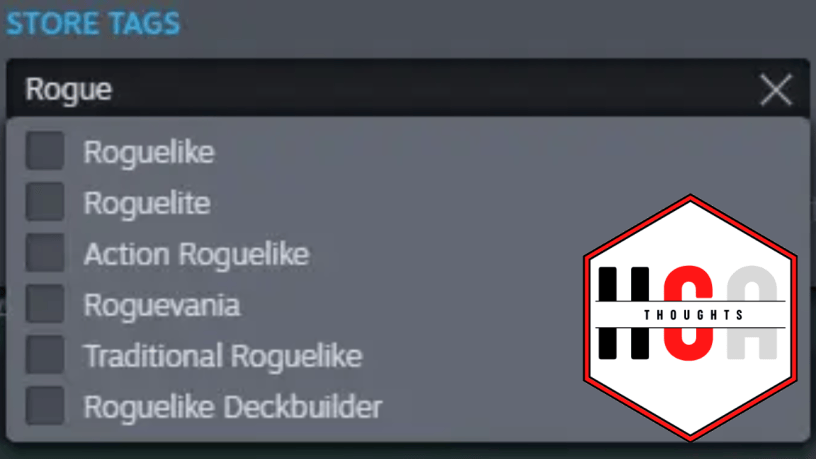
The benefits of strictly categorizing a game these days seem algorithmically driven. How can you market your game – how can you get it in front of the right people – if you don’t have the right buzzwords? The right conceptual model? This is further complicated by the Steam tags, which are user-defined. This means that how your game is conceptualized and conceived is, to an extent, out of your hands. The user-definition means that some games can be buried, whereas others can soar to the top of categories the developer might not have intended.
When it comes to developing and designing a game, I feel like as designers we often start from a genre building block. What kind of game do I want to make? A shooter? A fighting game? It is these early genre conventions that can serve us very well as we continue to develop and design our game. The fact that the genre is such a foundational building block therefore can lead us to question what elements define that genre? What makes something a genre?
The most complex genre these days – or at least, the least easily-defined – seems to be the role-playing game. Originally, there was a distinction between role-playing games and adventure games. The former distinguished itself by offering a variety of gear and, most importantly, stats that you could increase or decrease. These were ways of showing your character’s prowess mechanically within the game. Fallout is a good example of this with its SPECIAL system. The Secret of Monkey Island might have items, but these are all used for specific purposes, and are puzzle items, rather than items that give you a gameplay advantage in any significant fashion.
But that element of role-playing games is now fairly ubiquitous, stretching across countless genres. Everything is an RPG! So then, what is a role-playing game when a point of distinction kind of ceases to be? And does it matter? Perhaps not.
Totalization – the total mastery and definition of something – is almost impossible when it comes to language. As Jacques Derrida argues, “[t]otalization […] is sometimes defined as useless, and sometimes as impossible. This is no doubt due to the fact that there are two ways of conceiving the limit of totalization. And I assert once more that these two determinations coexist in a non-expressed way in Lévi-Strauss’s discourse. Totalization can be judged impossible in the classical style: one then refers to the empirical endeavor of either a subject or a finite discourse hopelessly panting after an infinite richness that it can never master. There is too much and more than one can say”. Hence the impossibility of mastering language or textual discourse, or analysis. Derrida continues: “If totalization no longer has any meaning, it is not because the infiniteness of a field cannot be covered by a finite glance or a finite discourse, but because the nature of the field—that is, language and a finite language—excludes totalization”.
Therefore, we are left wondering – how can we define something that ultimately escapes definition? The nature of the medium is constantly shifting and responding to a mind-boggling array of influences. Certain games emerge from, seemingly, nowhere, and change how we conceive of games and genre.
This question of categorization is particularly interesting because games can be particularly rule-driven. Games are defined by their mechanics, not necessarily by their narratives. Narratives can become a descriptor at times, to be sure, but genre is by and large driven by mechanics. Walking simulators might be known for their narrative, but they are defined by their approach to gameplay. Text adventures refer to the primary means of interacting with the game – typing in commands – rather than the fact they are delivered in text, as some modern text adventures have images. Again, another thing to muddy the water.
The question is particularly pertinent when comes time to introduce a game to somebody, or to write it in a script in a video. This is a… game. But what kind of game? Astrid Ensslin makes a valiant attempt to categorize literary games in her book called Literary Gaming.
Literary Gaming argues that literary games are games that showcase a “specific form of digital gameplay that happens when we interact with digital artifacts that combine so-called ludic (from Latin ludus: game or play) and literary (from Latin littera: alphabetic letter, or plural litterae: piece of writing) elements” (2014, 1). Ensslin, however, on the same page, comes to a sad conclusion about the value of her own work, arguing that “[t]his fusion is urgently needed to grant creative writing a more contemporary, media-savvy outlook, as well as to expand and advance the artistic and critical significance of games” (2014, 1). But, here we run into the issue – why do we need to grant creative writing a greater contemporariness?
Ensslin does well at defining literary games, and it is a great book, well worth a read for those interested in the side of games that leverages textual elements. Yet it is this raison d’être that troubles me when it comes to game categorization. Must we always be “levelling up” our games, ensuring that they can be conceptualized within certain bounds? Yes, boundaries can help with creativity – try writing a sonnet, for instance – but they can at times feel needlessly confining.
The great paradox of developing a game – of creativity in general – is beginning from a familiar place and then pushing it until it becomes unfamiliar. It is all too easy to fall into the trap of comparing one game to another. It’s like Dark Souls, like Zelda, oh, it feels a lot like Halo to me – these are familiar, even comforting, comparisons. They can help us understand a game. But they can also damn a game to live forever in shadow. Games are indeed developed in these long shadows, but the terms we use can force them to stay there.
Language is a powerful tool, and yet still within many video game communities, we undervalue the power of language and of writing. Do we need to modernize literariness? Or foreground the fact that games are building off of older mediums? These are not easy questions to answer. What is the sense in categorizing a game if in doing so you sink it, deflating its enigmatic qualities? Categorizing assists with archival – that is how I would first respond. We need categories – broad, multifarious categories, as well as narrow ones – to assist us in navigating a digital medium. If we cannot find games by certain artists or with certain themes, then the struggle to help new voices be heard in the games industry will remain difficult.
Tags are vital, but they are also dangerous. The way in which they act can cause us as players to adjust our expectations around a game. Literary scholars are quick to try to categorize things. Oh, this is a romance novel; this is a science-fiction thriller; this is a work of classic 17th century fiction – these are not bad things to do. We run into problems when tags become the only way to find things, when the genre defines our expectation of a text. If it’s an RPG, then why does it do this? If Shattered Memories has the name Silent Hill in front of it, a horror game, why isn’t it as scary as the others? There’s the classic “it’s a good game, but not a good ____ game”. These are issues related to expectation – some of which are totally valid – but how often does expectation come attached to genre or name?
We are less likely to give a game a chance if it upsets our expectations. With user-defined tags, who is to say that our expectations will align with others’? We’re back to square one, in a sense – the only person whose opinion we can truly trust is our own. Unless it’s been influenced by other, external factors. It’s a complicated issue, and one I’m really just starting to grapple with. What is the sense in categorizing a game? It helps us find games to buy, to archive, or to critique. But it also makes critiquing games an exercise in comparison. Does genre help us enjoy games?
So, if everything is an RPG, then what is an RPG?
2024, Games Industry, Thoughts
Games and Categorization
 Horrorgameanalysis