
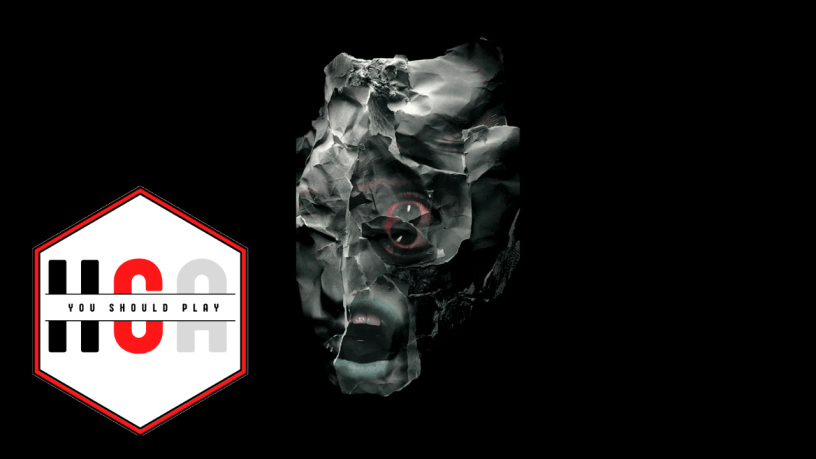
I’ve had Franz (Ice Pick Lodge 2023) installed on my phone, inert, for two years. She’s just been… waiting, I suppose. Waiting for me to begin, to say hi for the first time. It is the first game that’s upset me in a while. Rather than relying on the shock of serial killer snuff, or the feeling of terror that comes from running out of resources in a dire situation, Franz is outright emotionally confusing and manipulative.
The game’s framing is that you’re looking after Franz, a little nymph creature in your phone. There are three “voices” in the game – her voice, your voice, and the voice of some cautionary narrator. Each of these fight each other. Franz seems to just be a creature in search of meaning. You are a being looking to understand her. And the narrator insists you should never ever trust her. The game weaponizes language – you are Franz’s “owner”, with a lot of uncomfortable similarities drawn to the way that we talk about pets. Since Franz is a creature just trapped on your phone, she supposedly learns about the world through you – similar, I suppose, to Doki Doki Literature Club’s narrative framing. This feels like a manipulative relationship – and if that was as far as it went, yes, it would be uncomfortable for sure.
But the longer you play, the more you feel that Franz really is using you. Her demands that you treat her badly are tragically reminiscent of many real-life trauma survivors, who justify their own low self-esteem by asking that people treat them badly. That realization is uncomfortable enough, and you might think that you can just fix her by treating her like an equal, or at least like someone you love. Treating her nicely, however, might be an invitation for her to form a different kind of unhealthy emotional attachment to you.
The game kicks you out of the app at various points, typically after a conversation with Franz herself. The game is forcing you to wait for the perpetually-reclusive and nervous Franz (who doesn’t like answering awkward questions) to invite you back. The summons are buzzing, insistent notifications. Respond fast and she’ll be happy with you – but also recognize you as pliable. Respond slow and she’ll relish your cruelty, reinforcing her low opinion of herself. There are some great word puzzles where you have to use Franz’s own self-hatred against her by erasing letters in sentences to create new sentences that have more positive connotations.
Franz is not always successful. The three layers of framing sometimes feel a bit too confusing. There are some obvious tests of personality that, while fun, also feel a bit too on the nose as well. It is fun to try and untangle how the tests matter, but the tests themselves also disrupt the strongest part of the game, which is the interaction with Franz herself. The game’s insistence on using random jumpscares (such as the one seen in the header image) is charming more than frightening or unsettling, feeling like a particularly quaint artefact alongside the genuinely upsetting fourth wall breaks. At one point, Franz begins to insist that she is outside. So, she suggests, you should just, y’know… get up. Unlock the door. Take a photo of her standing there in all her glory. Let her in.
Franz’s effectiveness became terrifyingly obvious when I realized with some alarm that I was legitimately, genuinely afraid of going to open the door, just in case she was actually there, ready to say hi, ready to take my body for her own. I ask myself: how many games have ever got in my head like that? Not many, I can tell you, and Franz is perhaps the most potent of them all. It destabilizes reality using the crutch of the mobile phone that we all hold so dear in our modern society, making the buzzing notification something to fear rather than leap to answer. I remember thinking: oh god, I have to talk to her again. Franz weaponizes your own paranoia and fear of ritual, of games and stories escaping their bounds. And it does it so slowly that I didn’t realize until that moment I was actually feeling genuine fear and trepidation.
The tragedy of this kind of story, however, is that it successfully simulates dealing with a mentally ill, traumatized, depressed person who relies so totally on you, that it actually begins to exhaust you. I realized the game wasn’t just scaring me, but it was making me feel guilty. The poor, abused Franz became an obligation, and my good intentions simply weren’t enough. For another ludic example, you might recall Angela’s scorn in Silent Hill 2, where she observes that you can’t take away all her pain. Franz is disgusting, stomach-churning evidence that she was right.
Highly recommended, if you’re able to take the feelings of misery and discomfort the game will almost inevitably impart upon you. It left me nervous and frankly really upset, which is no mean feat considering most horror games hardly elicit a jolt out of me these days. Distinct, unique, and thought-provoking; it is Ice Pick Lodge’s modus operandi distilled into one awful little mobile game.
 Horrorgameanalysis