
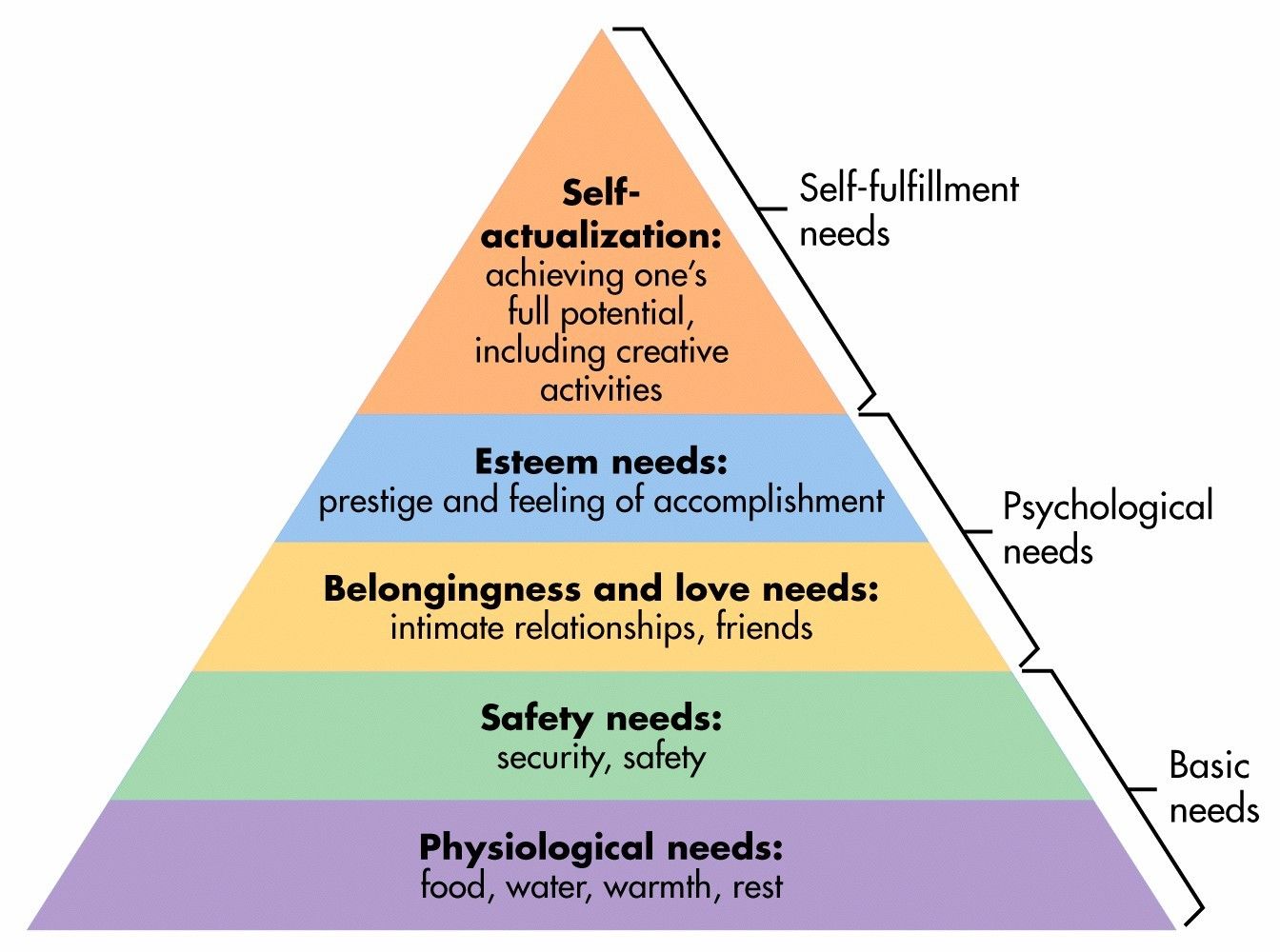
Self-actualization is the end point on Maslow’s Hierarchy of Needs. When you reach the top of this pyramid, you achieve your full potential; you capture lightning in a bottle. At the beginning of the pyramid, by contrast, you are scraping sticks together to create warmth. You seek immediate necessities to survive. These are your physiological needs in contrast to the almost magical nature of your full potential, when you have achieved all else.
Role-playing games generally follow this structure. Picture your character at the beginning of Skyrim. A struggling imprisoned character must fight for their life and scavenge for any useful resource that gives them an edge – even little bits of food are necessary to survive on higher difficulties.
By the end of a particular character’s “life”, they are a demigod. You have surpassed all the other needs. You have more than achieved esteem, (the need for prestige and accomplishment) by performing great, inhuman feats of heroics (or villainy), love and belonging (intimidate relationships, friendships or connections) through marrying, joining a guild, and most definitely you have achieved safety a long time ago. Nothing can touch you when you are high enough level in a role playing game.
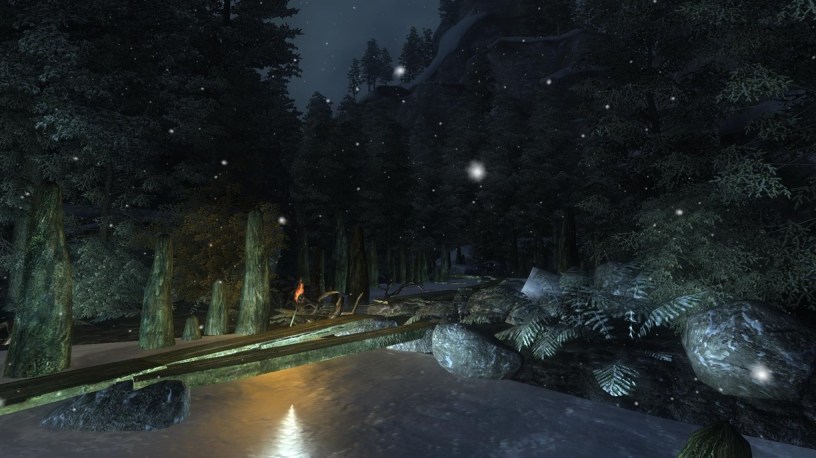
Nehrim, a total conversion “mod” for The Elder Scrolls IV: Oblivion, is really a game that also focuses on this idea, as with many RPGs. But it takes it to its perhaps logical conclusion – godhood. It is a game obsessed with the idea of godhood, deity and the divine. Although it starts with humble beginnings, your character quickly becomes swept up in something “far bigger than themselves” – this typical idea of divinity.
Fate preoccupies Nehrim too. It opens with a quote from Beethoven, asserting man’s agency over this mythical idea of fate. “I will grab Fate by the throat, it shall never drag me down.” Fate is instead implied to be something tied to you – you aren’t tied to it. This is something else that a lot of RPGs tend to try and bring up in an interesting way. Games too like Bioshock love the idea of fate. They are restrictive, and self-referential in that restrictiveness. Games like Bioshock know that video games are finite. There comes a point where, in every game, you have done everything that interests you. But more importantly, you have done everything that has been coded. There are not infinite hours in a day, nor in a person’s life – undoubtedly, inevitably, a story cannot go on forever. There must be an end point. Choices are finite, and the consequences are also ultimately finite.
A lot of game developers chase after the elusive ideal of a pen and paper RPG that they can transplant onto the computer screen. They mistake the potential of the two very different mediums as being an entirely overlapping one. While it is an admirable goal to make a game as reflexive and powerfully immersive as a well-done tabletop roleplaying game, rarely do the two worlds actually collide. Isometric games like Divinity: Original Sin or Planescape: Torment are what I consider to be, personally, an apex of this kind of thinking. They sacrifice presentation (i.e. flashy graphics) for consequence and immersion. While presentation is always helpful – especially if not enough time is placed on presentation to make the characters look ugly or the art style doesn’t mesh thematically – it is ultimately a less important goal for these games than emphasis on writing, themes, and reflexive mechanics.
So I’ve written a lot about design and the ideal of a good RPG. But not too much about Nehrim itself. I do have to inform you that it’s not on my “gold standard list of super fantastic fantasy RPGs you should play over and over again” – maybe I should write that list…
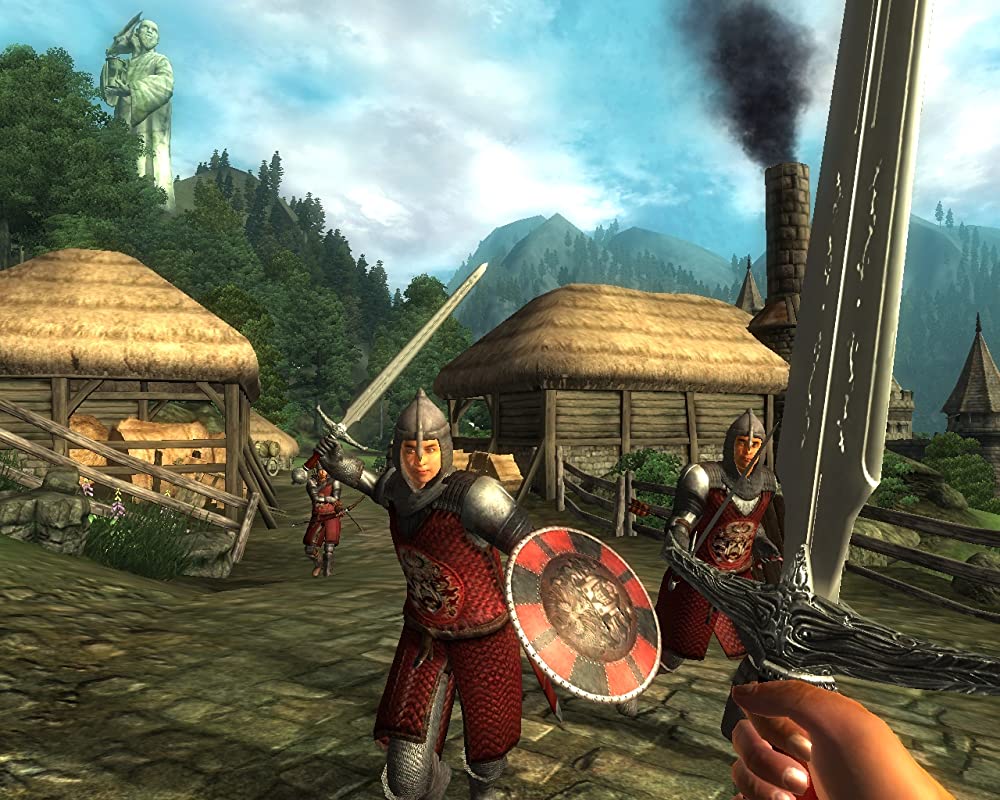
That said, Nehrim comes closer than a lot of games to this idea of self-actualization, of “full potential”, I think. It is built on the framework of Oblivion, meaning that all the work that would have to go in to developing assets, some scripts and the game’s art style is basically decided for them. While the mod is all in German, the English subtitles do a good job (I think) of conveying the meaning that the developers wanted it to convey. Where it stumbles I think is where Oblivion also stumbles. The combat can be fairly slow or floaty, and the developers do ask you to do a lot of combat.
Dialogue trees are also hardly inspiring here either, though there are a lot more options in terms of asking for more information on the world. The world itself is far better than Oblivion‘s Cyrodiil, however much it pains my younger self to say that. Cyrodiil, as I discovered, was a basically randomly generated landmass in terms of hills and forests. It made the place feel random and haphazard – good perhaps if you are aiming for a world that auto generates at the start of every new character, but not for one that you will be asked to explore for hundreds of hours. When you have seen one forest, you have seen them all.
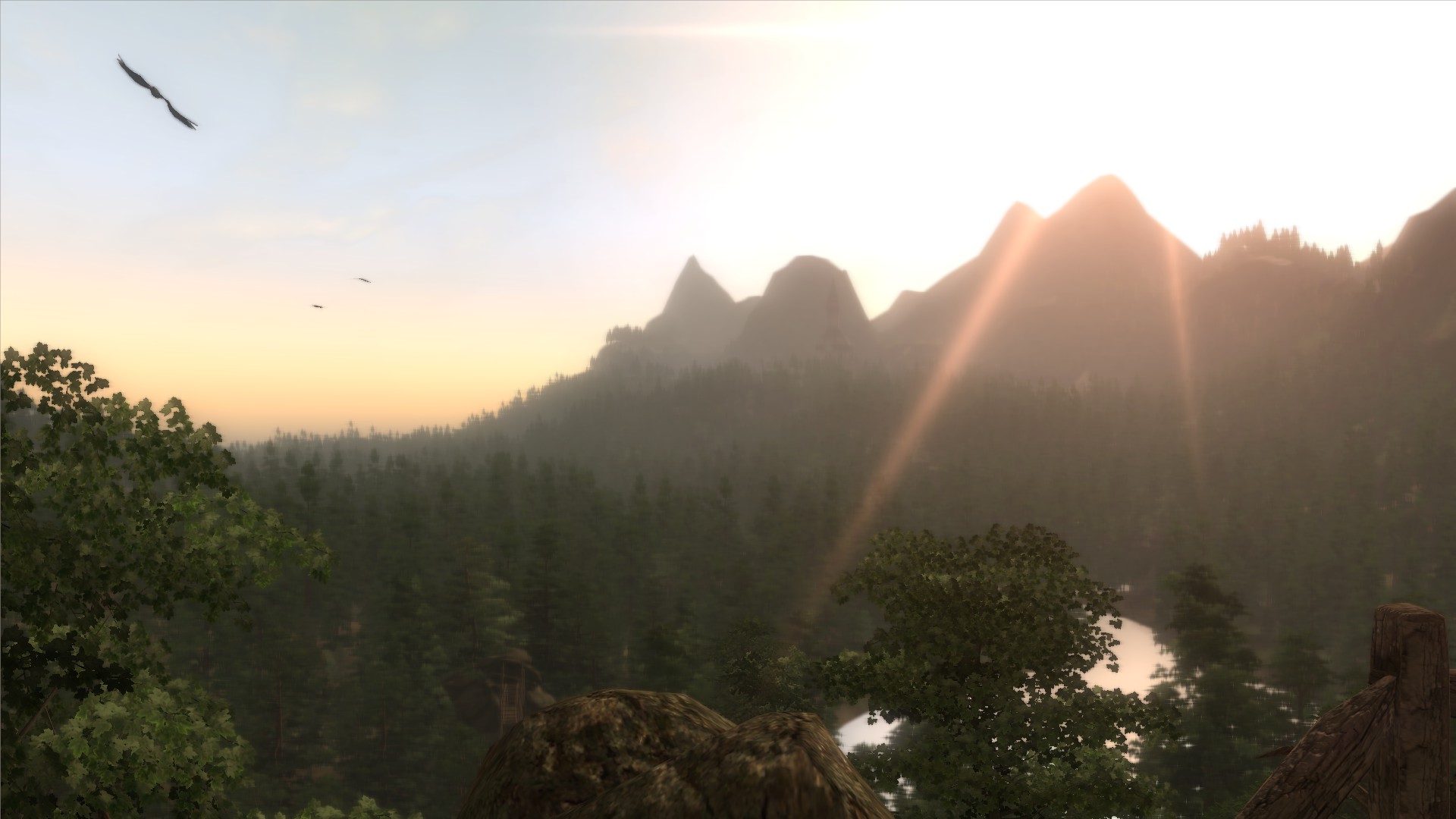
By contrast, Nehrim‘s world is far more inspiring. It captures the promise that Oblivion’s sewer escape scene (when you see the world laid out flat before you) and ups it to eleven, spitting you out of the starting dungeon at the top of a tall mountain, and when you look left and right you see other mountains, tall and imposing. It is a world of solid architecture. It is a designed world. It feels natural because it is designed. Randomness did not benefit Oblivion. A computer cannot reliably generate a world that feels natural. A computer has not lived in the world, it can only attempt to replicate the idea of the world that you have fed it.
Nehrim does away with Oblivion’s infinite level scaling. While I actually quite liked this at the time I first played (meaning my adventures always stayed tricky) there reaches a point on the exponential graph of leveling where enemies start to become more powerful than you, unless you have specced to absolute perfection. Nehrim sets you free to explore, but does tend to go a little hard on you if it turns out you were up against a nastier enemy than you were strong. That’s okay though. It’s good to get a little feedback like that. It lets you know that there are limits – and that if you come back later, you can push against them, stronger than before.
I could keep writing, I think, but Nehrim at this point should probably speak for itself. I don’t want to get in the way of what it tries to do. It is basically Oblivion but with a bit of modded jank and an extraordinary amount of loving polish, thought and writing put into it. It is well worth your time, especially if you either a) loved Oblivion to bits and so would love an excuse to boot it up again or b) tried Oblivion and liked it but could have enjoyed it more if some of the mechanics were more traditional and well thought-through.
You can get Nehrim on Steam if you own Oblivion on Steam, or ModDB.
 Horrorgameanalysis