
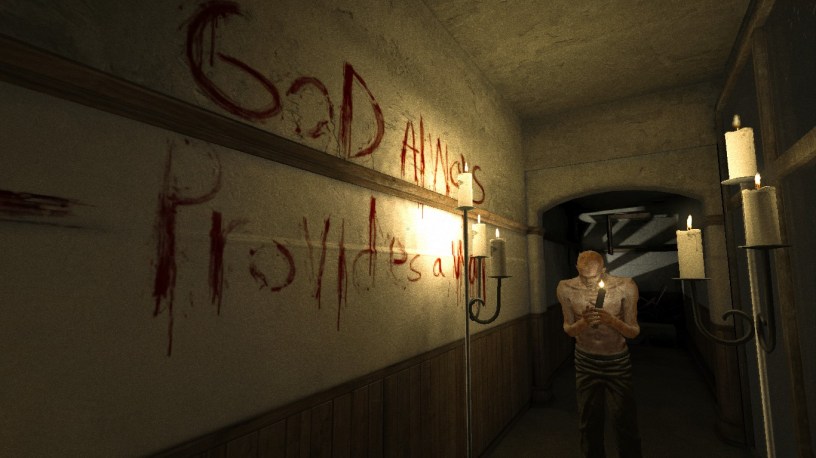
God help me. I think I’ve seen the Walrider.
Spoilers follow for the main storyline of the 2013 horror game Outlast. If you have any desire to play the game through blind for yourself, I would not recommend reading my thoughts until you’ve played it through yourself.
Horror is entirely subjective. But I am beginning to think that what I find scary and interesting about horror games is entirely different from other people. I’m still nowhere near convinced that Outlast is the scariest game ever. Throughout almost the entirety of the game, Outlast has a lot of trouble letting moments sit and breathe. Chase sequences are ubiquitous and relentless. Their reliance on tired tropes, gore, and shock value rather than genuinely psychological scares is disappointing, but expected at this point. Outlast also has missed opportunities in abundance.
There’s a scene where you drop the camera you’ve been using after jumping across a chasm. The camera is a vital tool to see in the dark. At this point in the game you’ve been relying on the camera’s night vision ability to stay one step ahead of the enemies, who can’t see you in the dark. They might have machetes, but you have the advantage of being able to see where you’re going. The knowledge that your camera’s battery is drained while this mode is on is fairly moot, as there are more than enough batteries to get you through each area.
Anyway, the camera falls off the ledge and through a crack in the floor below. Still, Miles (the protagonist) climbs up the ledge. To the left and right in this area is complete, pitch-black darkness. Below, you see some inmate walk across the dark room. This is Outlast at its best. This is defenseless horror that has subverted your expectations. Now you are without any crutch at all.
The camera is almost dissociative. With the camera up, the comforting trappings of the UI make it seem like found footage horror. It might be you controlling it, but it’s not your physical body being murdered by nasty inmates. It’s some other person that you are watching. This might still be scary to some degree, but I found that when in dark areas with the night vision camera on, or just generally recording a scene with my camera up, I was rarely, if ever, frightened.
With the loss of the camera, you are thrust back into a role of responsibility that makes it difficult to avoid fear. Outlast’s smartest move was the lack of omnipresent UI. The only UI elements that pop up are when you can interact with something, it has a prompt to do so. This makes the game seem entirely immersive, stripped of any possibility of gamification. You are closer to the game than many other horror games achieve. That’s something I have to give Outlast.
The scene works really well too because Miles doesn’t jump down of his own volition. Instead, he makes it up the ledge where his camera didn’t, and it is your decision to drop down into the darkness. Horror games get their power from confrontation, from moving forward into the darkness, rather than sitting in a locker and hiding all the time.
Unfortunately, the trek to the basement is mostly devoid of scares. Stripped of your most valuable tool, you feel at your most vulnerable. There is one jumpscare, which does come at the perfect moment. It’s the first (and only) time in the game where a scripted jumpscare got me, as Outlast had let me stew in vulnerability for a while. But about two minutes after that, you pick up the camera – and oh no! There’s a lot of inmates who’ve been waiting until you’ve reclaimed your most valuable tool!
I didn’t find this part particularly effective, though there was a moment of initial shock. But then I escaped them very easily without even seeing them after that initial “oh crap!” moment.
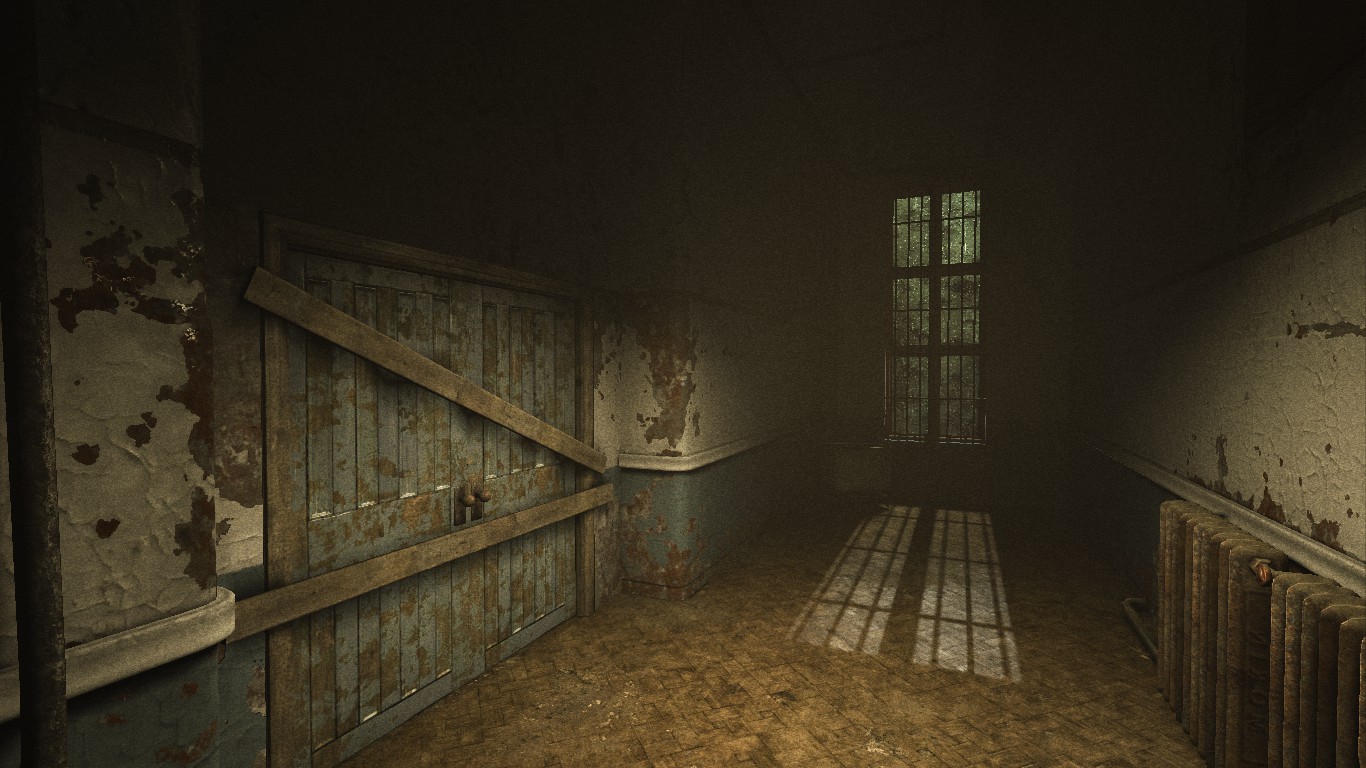
There are other sequences that are similarly disappointing, that don’t quite claim their full potential.
When you are captured by Doctor Rick Trager, two of your fingers are cut off. I was fully expecting for there to be some penalty now inflicted on Miles. Maybe he’d be slower to open things, or can’t climb things as quickly. But it turns out that he’s just as quick as he was before. Not to mention the fact that it’s after his fingers are cut off that he actually attempts to put up a fight (in a cutscene, of course. Can’t have you doing any of the heroic stuff.)
This shows Outlast‘s modus operandi to a tee. Instead of inflicting more difficult gameplay on you, or even giving you a choice as to whether you are good enough to escape Trager (if he caught you, maybe instead of killing you the first time you had to sit through the scene as an optional thing), the only consequence is that you now have to see bloody bone stumps every time Miles reaches for something. It’s of the “gross-out” kind of horror, the kind that I think is the weakest, cheapest kind of horror. And at this point in the game, chances are that you’ve already become desensitized to gore, blood, etcetera.
In one particularly promising sequence, you step outside. Suddenly, your camera is basically useless as lightning flashes blind the night-vision mode on the camera, but you also can’t see without your camera, since it’s too dark when lightning isn’t striking. I was fully expecting some tense game of cat-and-mouse in this open courtyard, where you are at an inherent disadvantage. Instead, a non-hostile ghost provides a few cheap jumpscares. The only interesting part of this sequence is its potential, and the building up of the Walrider entity that is the focus of the game. This was one of the most disappointing parts of the game when I realized there was no danger to be found here.
Danger in horror games is difficult to get right, as I’ve already demonstrated. I realize there’s a certain amount of hypocrisy to the above criticism. I’ve been asking Outlast for more moments to breathe, yet seemingly panning it when monsters don’t jump out and go boo. I think the problem is that the moments I want it to breathe in are moments of horror that are so generic and predictable that they feel weak. That, plus I don’t like it when all the monsters do is go boo, play an animation that kills me, and restarts me scot-free at the start of the area. I was hoping for moments of horror that challenge me as a player (and a person) in some way. Instead, the game continued the whole time to throw scares at me in narrow corridors, round bloody corners, and by bashing down doors at the end of the corridor.
Outlast’s most unique horror sequences turn into generic ones fairly quickly. A bit where you open the door and see the two naked twins standing there is abrupt, scary, and feels like a natural, non-scripted scare. And then it turns out since they’re armed with machetes and can kill you in one hit, you will undoubtedly be frustrated.
After you retrieve the camera in the Women’s Ward, it’s pretty easy to notice that there’s a giant crack in the side of the camera, and occasionally there is a weird, staticky buzz that discolours the footage and makes it near-impossible to see. But after you escape the initial chase from those inmates waiting to ambush you down there (who are incredibly easy to avoid), most of the areas are well-lit, meaning a reliance on the camera is basically nonexistent. I was hoping for a sequence that forced you to use this unreliable tool as your only means of progressing. Again, nothing.
Miles’ descent into madness is also chronicled through notes, if you care enough to explore and record things (which I did). This was one of the most interesting parts of the story to me, but wasn’t utilized nearly enough. Imagine a horror game where your protagonist becomes an unreliable narrator? Actually, you know what, I’d love to make a game like that one day. Thought I’m sure someone’s already explored this idea a little. I can think of one game that starts with your protagonist as unreliable, but can’t think of one where your perception of the world properly shifts alongside theirs.
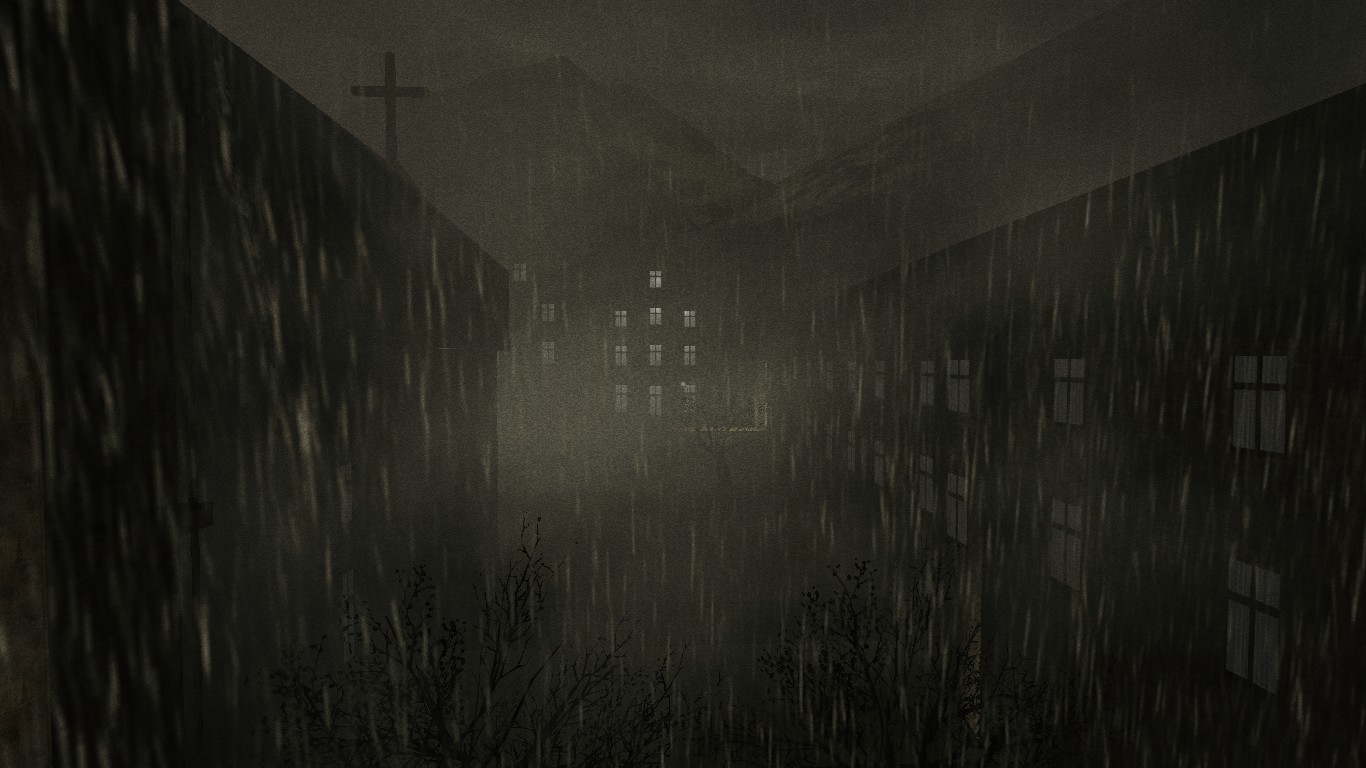
The ending of the game is probably my favourite part of the whole game. Red Barrels might have missed several opportunities to use darkness to their advantage, but they don’t fail to use light hallways as claustrophobic and disconcerting. It’s a great change from the dirty halls of the asylum, and it feels as though the game has shifted into the final act through visual design alone. It’s a great change – and it’s the cleanliness of this area that makes the entire place feel spiritually dirtier. It’s just too short. The revelations come too quick, almost. I wanted a slower descent. But hey, I like longer and/or slower bits followed by bursts of intense energy. I become apathetic, dissatisfied, with 24/7 high-octane horror.
I’d prefer to see Outlast‘s developers tackle a project that didn’t rely on the “gross factor”. If they made a space that felt wrong but didn’t show you prisoners smashing their heads against the wall over and over again, or had giant burly ex-soldiers chasing you and trying to rip your head off basically every ten minutes, then that would be genuinely frightening, effective, and smart. Smarter than a doctor hacking your fingers off for mere shock value. Outlast, to me, is “okay horror”, which occasionally dips into “really bloody bad” horror, and then rarely reaches higher and grabs “good”. It’s clear the developers have the passion and a lot of great ideas. I just feel the execution could be refined and changed, the core formula retained but a greater understanding of what would make the defenseless horror game scarier. It’s not easy, though – but it would definitely be worth it. P.T. demonstrates that defenseless horror can be truly terror-inducing.
The bit at the end of Outlast where you wander through hallways filled with worshippers of the “God”, Walrider, was great. It’s quiet, unsettling, and atmospheric. The choir chant is fantastic here. Though my favourite ambience was the cloying and draining piece that accompanies the Walrider, which you can listen to here.
Outlast is rarely scary in any long-lasting or effective way. Aside from a few memorable bits (the opening bit where you approach the Asylum is genuinely fantastic), Outlast is much like its sequel, but far less awful. I’m still grumpy that Outlast is held up as the horror gold standard, but having finished it, I can see why people like it. It’s still pretty predictable, and fairly juvenile. Good horror doesn’t have to do with turning up the volume. Louder horror can work, but not for any long period of time. Outlast’s six hour running time doesn’t do enough different to justify it. The story is the only thing that was really seeing me through. I’m just glad that it paid off, and the final hour transformed the game from a fairly boring gore-fest into a sci-fi horror game with an interesting horror concept.
A shame again that this idea had very little time to breathe. After an easy half an hour in the underground lab, the game ends.
Typical.
 Horrorgameanalysis