
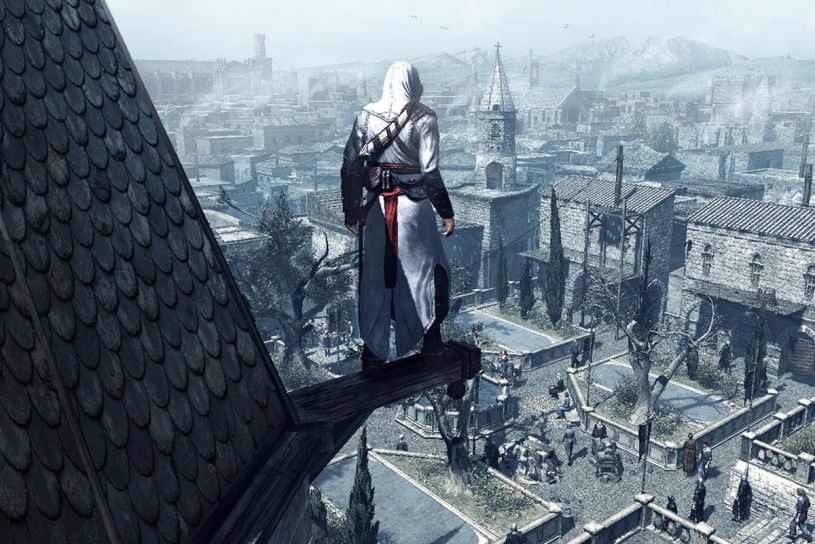
2007. A different time.
North Korea had just agreed to step towards denuclearisation by disabling its nuclear facilities at Yongbyon. Steve Jobs introduces the original iPhone, bringing us to a different, terrifying age of being constantly connected, whether we want to or not. Windows Vista releases. Tumblr launches. Mauritania outlaws slavery, meaning slavery is illegal all over the world.
And Ubisoft hasn’t yet run their Assassin’s Creed franchise into the ground by churning out annual releases, and then for some reason turning it into a hack-and-slash XP grind. In fact, they’ve just released their first game in the series, an interesting experiment in historical recreation in video game form.
You play as Desmond Miles, a generic white dude who is way out of his depth and is clearly being manipulated in an extremely grey office by an angry, stressed old scientist called Warren, and his nice, younger assistant Lucy.
But no, really. Desmond doesn’t become interesting until Assassin’s Creed 2. And by “interesting” I mean “shows any kind of personality beyond bemused or annoyed”. Which I think qualifies as interesting.
No, you actually play as Altaïr, a Middle Eastern assassin, a member of the fabled Order of Assassins, who dress as conspicuously as possible to break into places and stab people in the neck. Altaïr begins the game with his full arsenal of abilities, but after he is stabbed in the stomach for being a bad assassin who lost his cool, loses most of his equipment, as well as the ability to grab stuff while falling.
Yeah, it’s a little illogical. But Ubisoft, even at this point, is using the crutch of “but it’s the Animus” to wave away any silly things in favour of doing cool things.
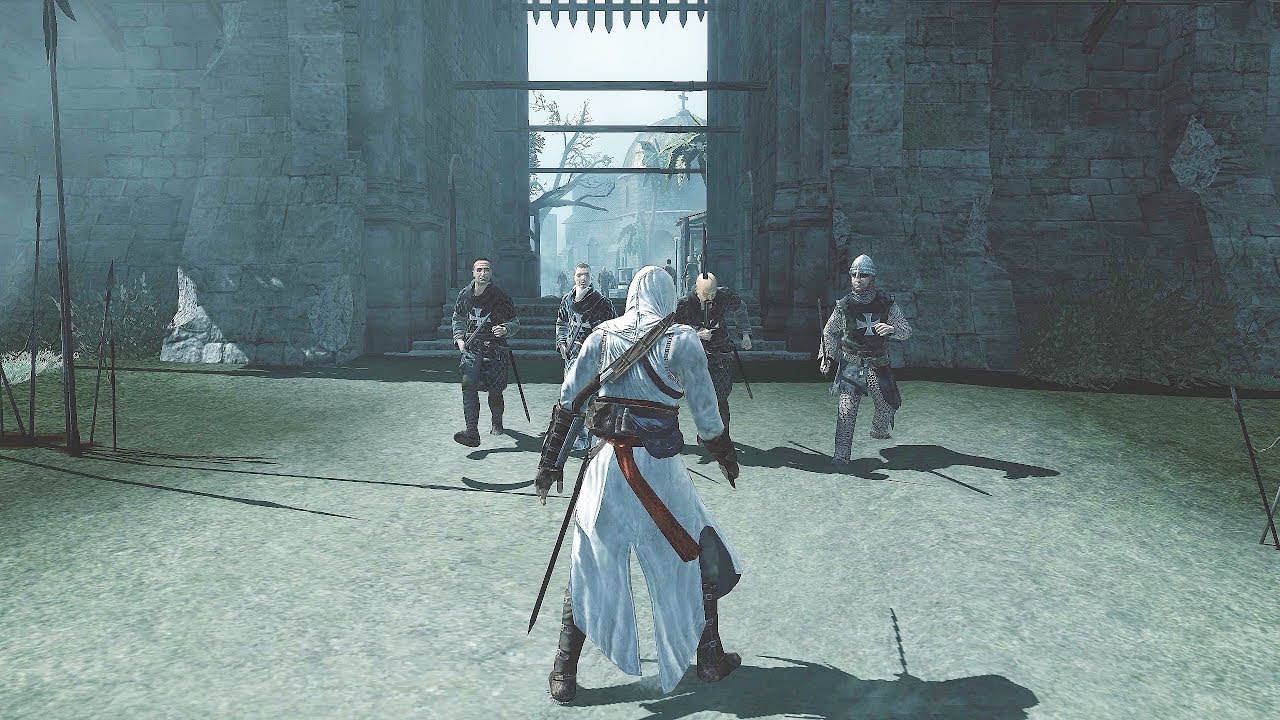
The original Assassin’s Creed is focused entirely around actually assassinating people. For each target, you can choose to collect as little or as a few bits of information about them, or learn everything about them by beating up orators, pickpocketing information, and eavesdropping on people. The information that you get from them determines the approaches you can make in order to assassinate them, and discover their weaknesses.
While this approach is fairly repetitive (you have to harvest the information all over again for every target), and could do with some more complex quests attached to them, more difficult circumstances or twists in the tail, it’s still fun. It’s nice to be able to identify that a target can be taken out with throwing knives, or there’s a secret entrance that can be accessed if you look hard enough round the side of the building.
There’s no aerial assassination, ability to take cover, and some other features that you might come to expect from later games in the series, and Altair can’t be customized in any way beyond regaining his abilities and inventory as you progress through the story. But the way that assassinations are open ended, and how detailed and gorgeous the cities are, is enough to recommend to fans of the series, as well as those interested in this period of history.
It’s not worth forgetting this old game, especially as the series carries on into the future. As it drifts further and further away from the stuff that made the original games interesting and playable, it’s worth stepping back to the roots of the series. A game about exploring ancient cities, a portal to a different time period, while performing assassinations to root out evil conspiracies, wherever they may lie. Now – well, I’m not sure what they’re about now. Origins was a poor man’s Witcher, and besides, grinding for XP wasn’t why I played these games anyway. I played them for the history storylines, the feeling of historical immersion, and the sheer fun of fighting through legions of guards, and diving off of tall historical landmarks.
If that sounds like you, Assassin’s Creed is worth a revisit – or a first visit.
 Horrorgameanalysis