
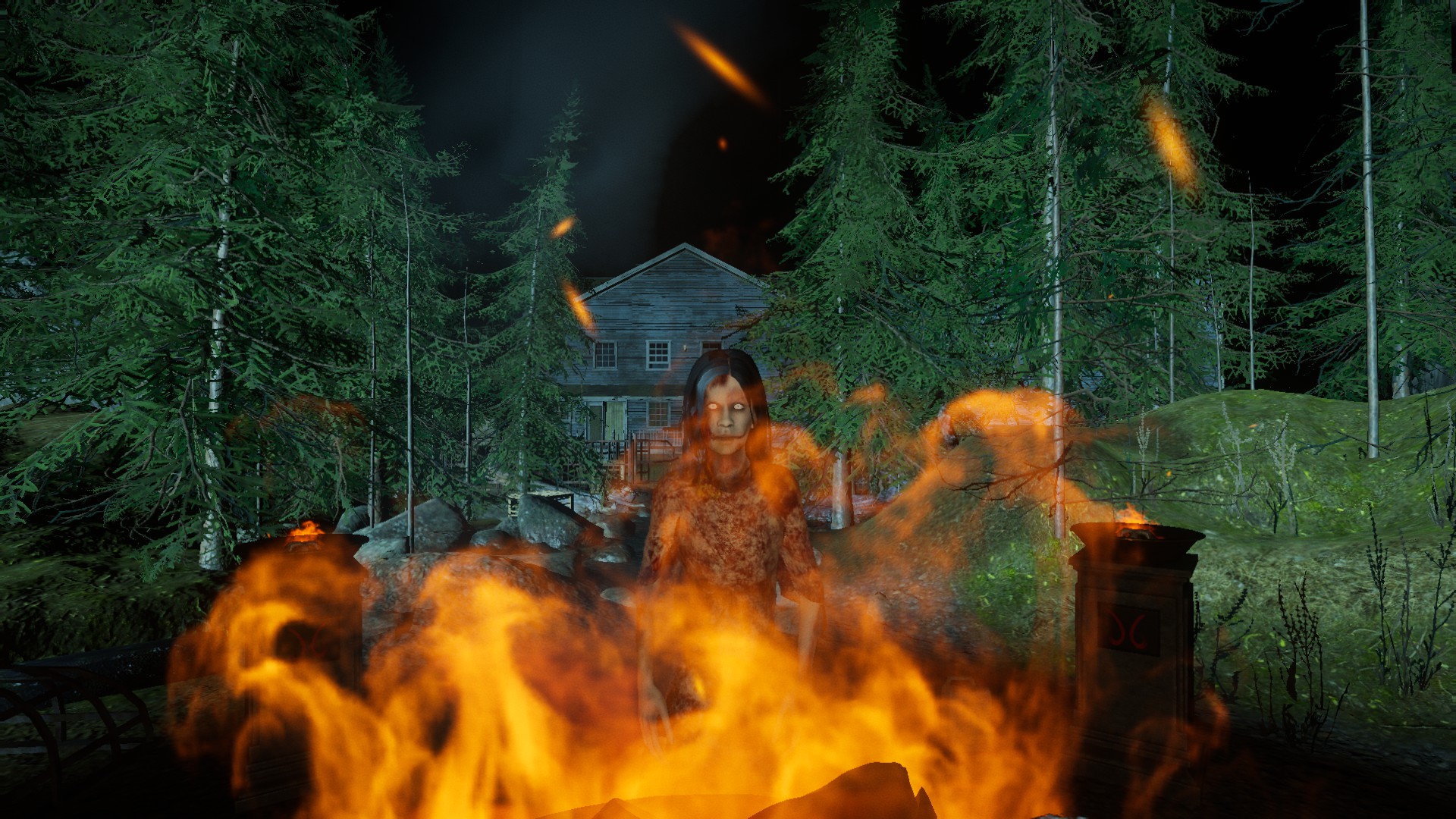
In an abandoned house belonging to a cult, I make my way through the empty hallways, hearing only the restlessness of the house creaking beneath me. As I round the corner, a shadowy figure looms at the end of the corridor – a gangly, long-limbed woman, but with disfigured features and a bloody outfit on. As I continue through the house, picking items up and dodging the woman’s repeated attempts to strangle me to death… I am struck by the fact that this game isn’t particularly scary.
Devour, a first-person multiplayer horror game, seems to emulate exactly what Silent Hill did on the physical level. It has the long-limbed, jerkily-animated woman (her counterpart in Silent Hill being the Nurses), the need to collect items to survive, a creepy (if b-movie esque), isolated slice of rural mundane life, and a reliance on distant sound cues to make you afraid.
Silent Hill does much more with far less technical superiority. Of course, I have to respect the folks who made Devour, as it’s just two people who made what was obviously a passion project. But they seem to merely continue a trend of horror games skewing towards the cheap, a lack of understanding as to why horror is truly marvelous.
When in Silent Hill, I’ve noticed that even in the areas that I know are safe – they have a save point in them, and I know from experience that Team Silent aren’t going to put any monsters that can hurt me in the same room as a save point – I am still unsettled. Silent Hill is disturbing. Part of that comes down to the graphics. I think I’ve said before, but there’s a lack of understanding that comes from the grainy graphics, an understanding that can only be filled in with the imagination. While I’ve heard plenty of people disparage the old animations (especially Harry’s janky run), I think Silent Hill works in spite of those animations being less than pretty.
But the real reason that Silent Hill is disturbing is that, on several occasions, Team Silent have subverted your expectations. They aren’t afraid to make you, the player, uncomfortable, and not just in a “boo!” jump scare fright kind of way, that makes you jolt out of your seat, annoyed at the game for using such cheap tricks, but in a “I really don’t think I should be playing this,” kind of disturbing. When Harry opens the locker and finds it empty but for a thick coating of dried blood, you breathe a sigh of relief. Silent Hill has done the expected “fake-out” scare, and you step away, looking for your next clue. And then Team Silent strike.
What about the instance where you trudge through the tunnel under the clock tower, and find yourself right back where you started? Where the school is some demented nightmare prison, with walls slabs of blood, and you have to fight children armed with knives? It’s a disturbing confrontation that turns everything you previously knew about the town on its head, and you have to come to terms with the fact that no space in the game is normal. Silent Hill is not normal, it is not regular, it is an actively hostile entity.
Outlast attempts at this, I think. It gestures in the general direction anyway. It tries to subvert your expectations with the Walrider, but they never use the Walrider as an actual hostile entity until the final half an hour of the game. As such, the Walrider never really gets a chance to build beyond an interesting tidbit of lore. Dahlia Gillespie, a creepy woman with something she obviously isn’t talking about, meets several times with Harry, and we get a sense of her insanity, but perhaps some raw sanity behind all of her mutterings, lucidity framed by our imagination. Dahlia Gillespie might not be some strange ultra-murdering entity, but I find the subversion of mundanity to be a far scarier thing than some ultra-gore fest. As I said to a friend the other day, I’d never be chased by a lunatic armed with a chainsaw, dressed in human flesh, but I do need to go to my fridge, or I do need to wander round town. A subversion of reality is far more effective than putting a gangly screaming demon lady into some random house. Without time to breathe, a horror game is not scary. Without an opportunity to exist in a space without horror or enemies, the norm is already set to “horror”, and your mind switches into “horror” mode, right? You engage with things with the expectation that they are already going to be scary.
As with all my examples, it boils down to Silent Hill 2 doing everything right, basically all the time. Silent Hill 2 lets the atmosphere build to oppressive, awful levels, and only when it is finally satisfied that you have scared the crap out of yourself, does it release the monsters. The monsters actually relieve tension, almost – you can see and fight them, whereas the noises, the scuttling, you can do nothing about. There are some areas filled with awful, awful noises that follow you everywhere. The jail cells sit empty, but you can hear people moving around in them. These are threats you will never understand. It will never be explained to you what lurks in those cells. The things that burrow beneath the ground will never be explained. There will never be any knowledge gained as to what the true threat is. And that is why Silent Hill is brilliant. Genuinely, gobsmackingly brilliant.
Silent Hill lets you exist in areas before the trap is sprung – most of the time. Sometimes, you are forced out of the formula, and have to sprint into new, distorted areas (like the mall) where they spring more nasty noises and spine-chilling plot developments on you. Hearing Cheryl call for help both reminds you why you came here and disturbs the hell out of you. How did the TV screens turn on? Is Silent Hill trying to help you? Or taunt you? Again, something you do not know.
Notes give just enough information to tantalize. They serve both gameplay and lore, but Harry can mostly only guess as to the true nature of most of the stuff that he sees. He knows enough to pass the obstacles, but will never understand exactly what the obstacle symbolizes, where it came from, and whether it properly exists in the “real world”. The question of course always lingers – is Silent Hill itself actually real? Is the grey fog world just the “least unreal” world on offer? It’s the one that most closely approximates reality, sure, but maybe the reality we know is in fact just a facade? Of course, it’s all semantics, the luxury of folk in a position to debate the nature of reality, when in fact there are inalienable truths about existing, but should it not be the place of horror fiction to play with reality? To start to ask these kinds of questions, to find chinks in psychological armour and leverage them just a little bit to make the player think about them later? It’s perhaps risky to try and mess with the player this way – many will step away for a variety of reasons, but there should be a good reason to keep going – i.e. a good mystery, a story to be resolved, the prospect of a satisfying ending.
Of course, Devour is far more approachable than this kind of extreme psychological horror, yes? Devour is actually quite fun, when you disregard the fact that it isn’t, and will never be, scary. Perhaps a reason that Silent Hill doesn’t exist in the modern age beyond expansion packs for even more co-op horror games. Is the package just too intense for the marketing? How do you market a Silent Hill game to those who don’t know what Silent Hill really is? I don’t think a lot of people really know.
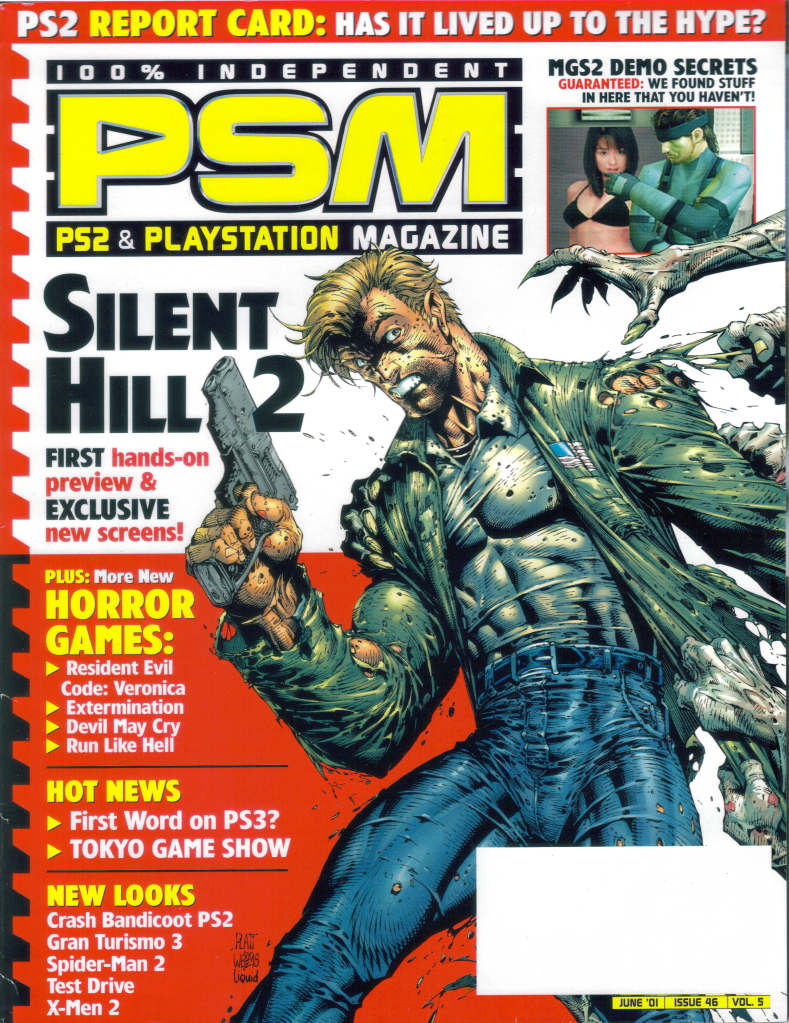
I’ll leave you with this misguided attempt to hype up Silent Hill 2. Thanks for reading, it’s a real pleasure writing these!
Enjoyed this article? Consider visiting the virtual tip-jar of Patreon and helping me out. It would mean a lot.
 Horrorgameanalysis