
This is my experience with games, and obsessively completing some of them.
“Don’t mistake activity with achievement.”
― John Wooden
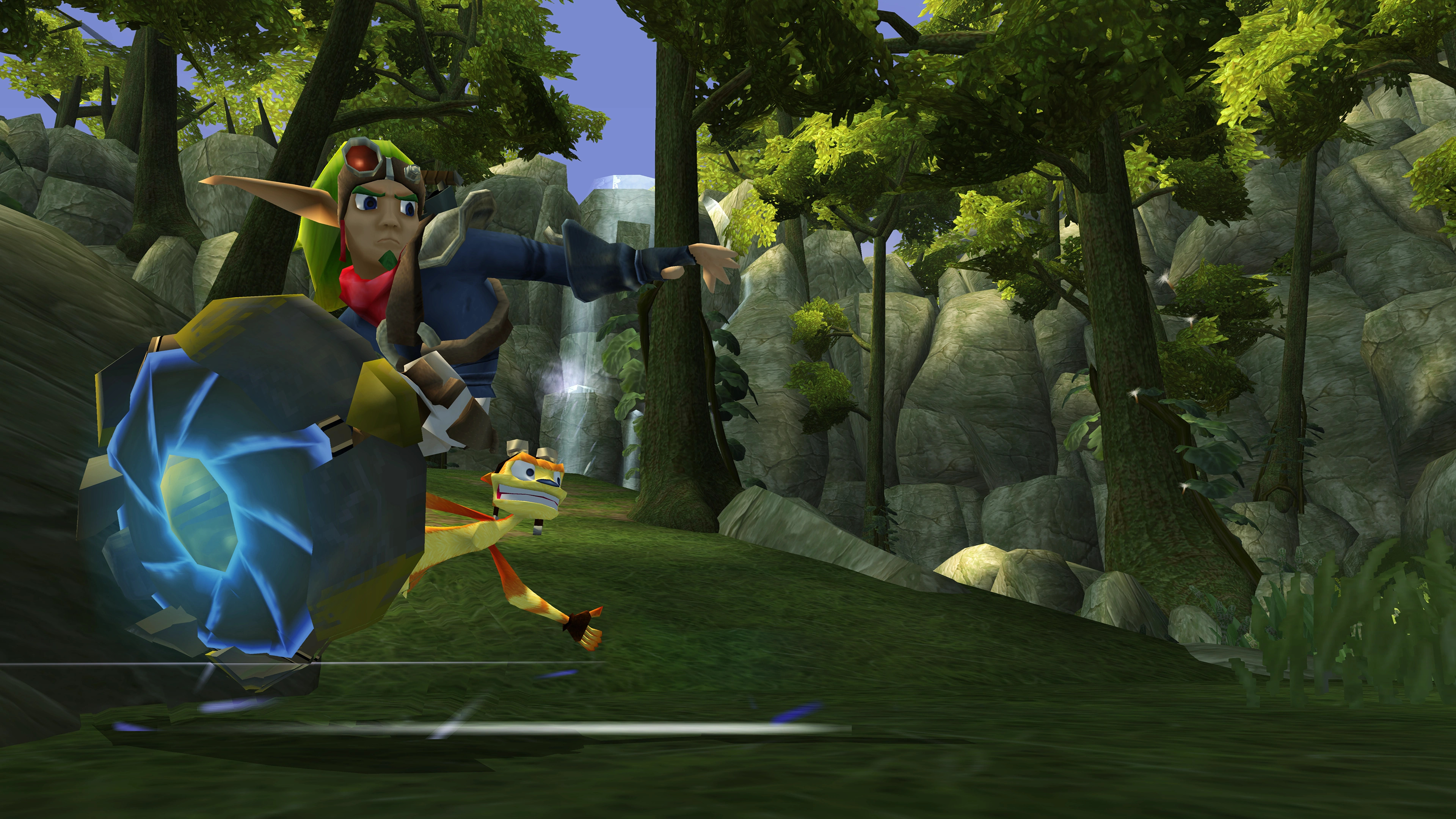
Jak 3 stands as a game I have always loved. A cherished childhood game that, for all its flaws and imperfections, remains a nostalgic beacon, and a game I can still run through in a day or two today. And yet, here I am, at 10pm on a Wednesday evening, wishing for the game to shrivel up and die. Why? Because I am trying for 100% completion, collectiling all the collectibles, which are locked behind challenging bonus objectives scattered around the open world, all for that shiny, shiny Platinum trophy. And this goddamn jetboard challenge is still screwing me over – but, I’ll get carried away if I travel down this path.
What is it that drives players like me to obsessive completion? Why do I feel the need to do this to myself? Jak 3 came out in November of 2004 – no-one around today will care if I suddenly break the 100% mark – especially considering there are players who can finish the game to 100% completion in just under four hours. If I ran around to my friends, shaking a print-out of the Jak 3 platinum in their face, no-one would know what the hell it was I was talking about, or why they should care. And, in the end, the completion would just be another tally mark, something to be added to the digital trophy pile. So, I quickly crossed off “impressing my fellow man” to the list.
A game like Life is Strange does not have trophies that you will be particularly proud of – they are collectible trophies, one for each, and when you have found all of the collectibles and completed the game, the game has been thoroughly “content-mined”. A flag placed at the top, and happily abandoned. But, you say, that’s not the point of a game like Life is Strange. Why should there be a complex trophy list? Well, indeed, why should there be an achievement list at all? Should trophies and achievements be relegated to the realm of “I’m tough and badass and look at my awesome gaming skills”? Of course not. That’s silly and elitist thinking. But did the experience of going back and mopping up missing collectibles in Life is Strange add to my appreciation for the game’s story and what it was trying to achieve, or enhance the gameplay in any way? No, it did not. Perhaps if it had included trophies involving variable choices, it would have had some gameplay consequence, some improvement of my appreciation of the game.
It is worth mentioning, in fact, a select few trophies I am genuinely proud of – trophies that had a right to be included in the game, and actually added to the experience, rather than merely padded it out, or even detracted from the experience in the worst cases. I have, I think, about five achievements off the top of my head that I really, really thought improved my gaming experience, as well as actually feature as fine centerpieces for the discussion about “hey, look, I’m good at video games too!” These are achievements I hold up as a shining beacon, far above the rest.
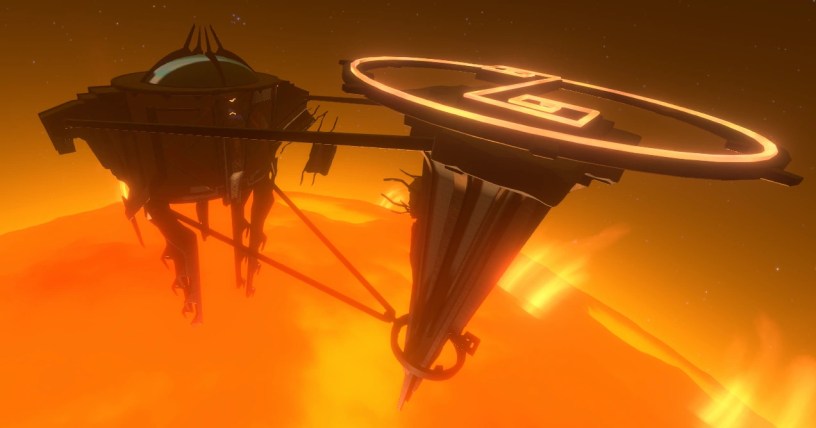
The most recent one in this elite and admittedly niche category is Outer Wilds‘ fantastically difficult achievement, Hotshot. I don’t like to brag, but I must admit – this was one of the greatest moments of my gaming life. I wish I still had the clip of my winning attempt. The premise of the achievement is that you must land on a tiny, fast-moving space station that is as close to the sun as it’s possible to get without burning up. The winning attempt was delightfully stressful, because, genuinely, I must have spent, in total, upwards of two hours (perhaps even three) attempting to land on the Sun Station. I could tell you, towards the end, I was perched on the edge of my seat, heart hammering in my chest, and palms as sweaty as if I was, myself, piloting a real ship around our own sun. Landing on the station requires three things – a perfect understanding of timing, a perfect understanding of the ship physics, and just a little luck. With practice, I chipped away at the feat, even as I threw myself headlong into the sun, time and time again. But with almost every new attempt, I managed to improve my technique of hanging around the sun, staying within its gravitational pull and using that pull to drag me closer to the Sun Station itself.
There was a feeling of intense bliss, a beautiful calm, as I made the final, daring jump to the Sun Station’s airlock, and walked inside. As the achievement popped, I simply sat and stared out the window at the sun. I remembered the moments just prior to this – moments where I barely kept my cool. Attempting to leave the ship without it flying off into space and dumping me into the sun was perhaps the most stressful part of it all. But I did it.
The question remains, why? If Jak 3 is unenjoyable to complete, why have I been trying? If Life is Strange offered no particularly gratifying or special reward, then why bother?
“No one has a problem with the first mile of a journey. Even an infant could do fine for a while. But it isn’t the start that matters. It’s the finish line.”
― Julien Smith, The Flinch
When you start out playing a game, is the objective always to finish it? In this age of instant gratification and seemingly endless choice, should our first instinct be, “I’m going to finish this game”? Is it always our goal to squeeze the equivalent amount of fun or even just hours spent on a game in relation to the amount of money we’ve spent on an experience? Is that a healthy or sensible way to live one’s life?
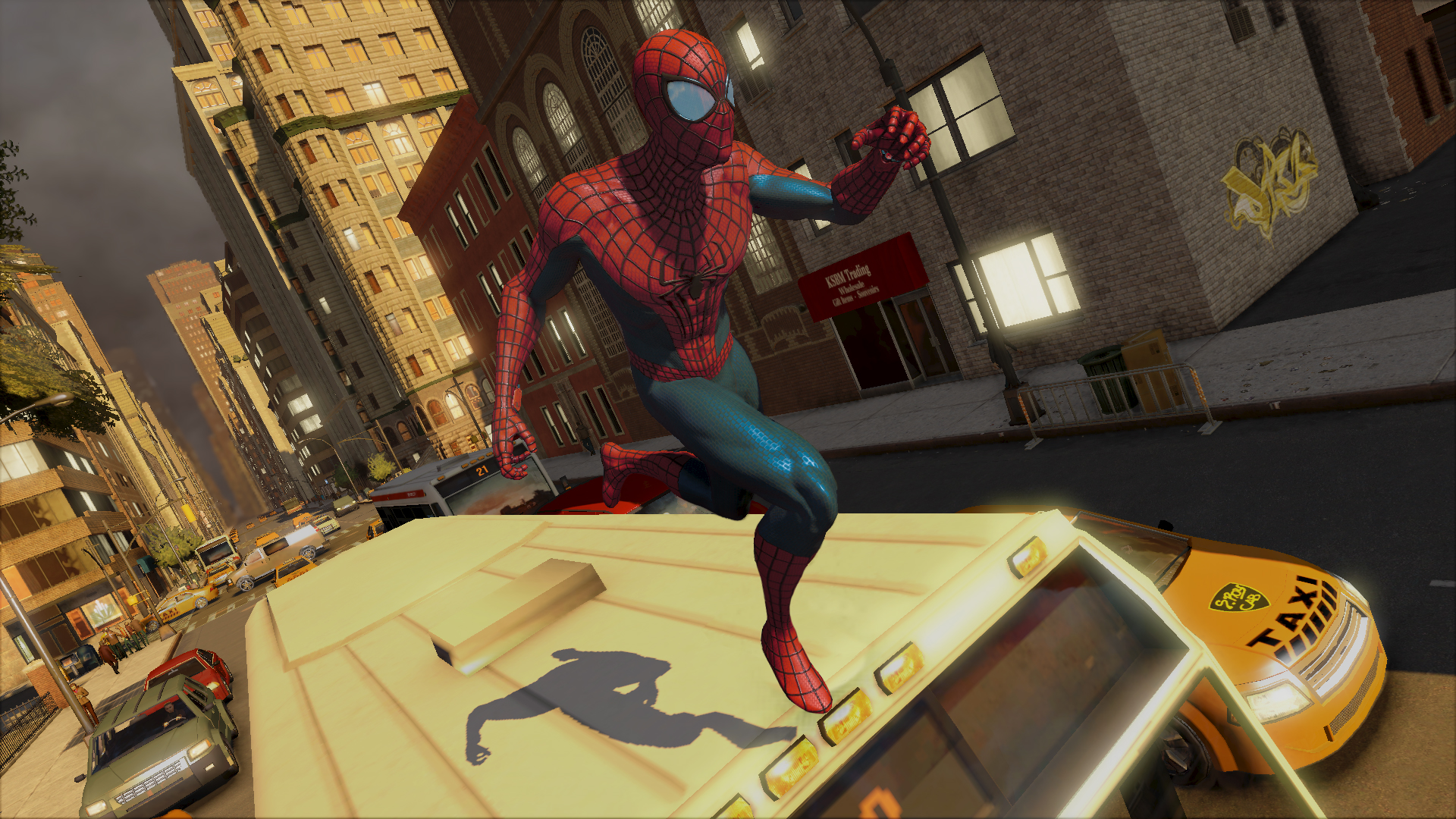
I think one of my biggest gaming regrets is, when I was a bit younger (I think back in 2015-2016), platinuming The Amazing Spider-Man 2. It is an appallingly repetitive and boring experience, which involved levelling up every Spider-Man suit to the maximum rank. And yet, I saw it through. Mainly through listening to music and watching YouTube videos while I repetitively grinded – but should I have been playing that when I could have been a) playing something more worthwhile, b) socializing, or c) just going outside for a walk and enjoying the fresh air? I think the answer is that no, I shouldn’t have been playing that. It was, frankly, a waste of my time.
Yet, I still climbed to the top of that particular mountain, and planted my flag at the top, before sliding back down and picking a new mountain to scale. Was it simply that I didn’t know I could be having a better experience elsewhere? Was I really just derived of entertainment, so bored out of my mind, exhausted from studies and work, or stuck with writer’s block, that I’d rather play one of the most boring superhero video games ever made?
It comes back to this value question, I think. We all have different ideas of what constitutes “getting our money’s worth”. We want to see a return in investment for the money we’ve spent on something. I bought Life is Strange, therefore I wanted a digital badge that said “I’ve Finished Life is Strange“. It was a love for the game in that instance – a love which has since faded a bit – but love nonetheless. It was both a desire for “my money’s worth”, as well as for others to see that I was a huge Life is Strange fan. That I bothered to go back and gather the collectibles, however mundane or uninteresting they could be.
For Outer Wilds, my desire to get 100% was to show my love for the game. It is one of my favourite video games of all time – with Echoes of the Eye included, it is a perfect distillation of everything I love about the medium; a smart, confident game that I wanted to show off to others. The Arkham series of Batman video games are that to me as well. I’ve got all the trophies in Arkham Asylum three times, and played it through a total of nine times – I’ve run rings around the trophies in Arkham City twice, and achieved everything in Arkham Knight, including all of the often-painful DLC trophies. Yet, I still don’t quite know for sure why. Love and value are two reasons, certainly. But, there might be a third reason.
“Perfectionism is self-abuse of the highest order.”
― Anne Wilson Schaef
Do I want to prove myself, and assess my own worth? Is a video game something you should find self-worth through? Is a human player’s self-esteem ever tied to prowess at a video game, and should it be? How quickly can I make it through this level? How can I circumvent this obstacle? How can I break the mould? How perfect can I play?
I am a big Crash Bandicoot fan. I’m sure in total I’ve spent hundreds of hours of my life with the series. I did everything in the original trilogy on PS1, and I did everything in the remastered trilogy on PlayStation 4. And yet, when it came to Crash Bandicoot 4… I was defeated. Those words feel like something serious to me, but I’m sure to you it means precisely nothing. But you see, my ability as a Crash Bandicoot player was something that, quietly, I held myself up with. I didn’t go around yelling at people how good I was, nor did I put down anyone that wasn’t as good at the game as me. In fact, I helped others play the game if they were stuck. But, while I can finish the levels of Crash 4, and even get all the gems, I’m just not good enough to beat the Platinum time trials. I can nab a few, but the ones that still stand in my way seem insurmountable. The simple truth is, I’m not good enough at Crash Bandicoot 4 to add that to my final tally of “completed games”. I can’t plant my flag at the top of that video game. I can’t say to the world, “look, I did it!” So, the question is, should we be happy with that end goal? With that realization? Not every game can be completed. And that’s kind of a let down, you know? At least when it comes to games you’re personally invested in.
Outer Wilds was one of the exceptions. I proved myself better than the game. I understood the mechanics, and I got a bit lucky. I achieved something that made me feel proud of myself, and of my skills as a game player. The game gave me its hardest challenge, asked me to understand everything it had taught me thus far – and I passed the test. Tests like that, that you come up against and succeed against, are what drives me to keep going. With everything, not just video games – challenges are something to be attempted, within reason, but if you can overcome these challenges, you will be stronger for it on the other side – provided it was a challenge you enjoyed doing.
Perfection is a goal that you can strive for, but you must understand it can never actually be properly achieved. That’s the strange thing about it. No-one, and nothing, can be perfect. Yet the quest for achievements in video games is just that – a quest for perfection. A way to say, “I am one of the best”, or one of the biggest fans. The truth is, being a fan shouldn’t have to be tied to how much of a game’s content you’ve seen, or whether you defeated the ultra-mega-death-dragon on dungeon sub-level 99. If you’re anything like me, cut yourself some slack when it comes to these kinds of challenges. Because, quite frankly, some of them just aren’t worth your time.
 Horrorgameanalysis
It’s funny, this is exactly what I’ve been thinking about for a while now. Most games feel like little more than a simple way to pass the time to me, but when it comes to a handful of the gems out there, it’s like I can’t stop thinking about the game until I experience everything it offers. After that’s done, I still feel the need for more, and I inevitably end up watching/reading as many analyses and opinions as I can just to feel like I’ve taken in everything I can. Not just games either, it’s the same with music, movies, books, etc.
Really nice seeing another person’s thoughts on this. Very nicely written as well.
LikeLiked by 2 people