
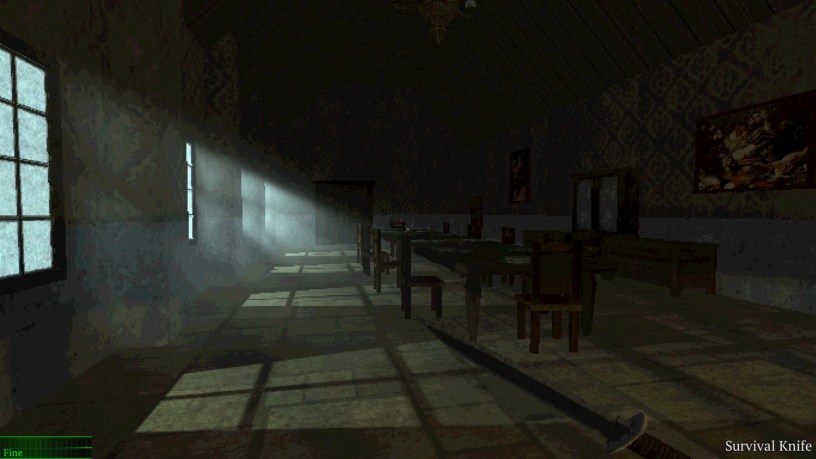
When a game sells itself as “nostalgic”, or “inspired by ___”, the expectations normally come up hard and fast, as though you’ve just made a poorly timed jump and the ground comes rushing up to meet you. Deciding you want to recapture the magic of PSX survival horror is something that a lot of developers want to do these days, but it’s hard to do. The best of the best survival horrors from that era – Resident Evil, Silent Hill, Clock Tower, etc.– all do something different, and, perhaps most potently, survived the test of time. Living for over twenty years in people’s memories is a long time to be held up as a gold standard.
Nightmare of Decay labours under the shadow of about every mainstream survival horror title of the last twenty-plus years. It contains homages to Dead Space, several Resident Evil games (to the point of absurd shot-for-shot remakes of certain cutscenes and ideas for boss fights, looks for the zombies, etc), Silent Hill 1, 2 & 4 (at least), Amnesia: The Dark Descent, Blood… this is not including references to Monty Python (a genuinely funny one too), Dungeons and Dragons, Dark Souls… I’m sure the list goes on. The love that the developer, Checkmaty, has for the medium is quite clear.
The game itself is a homage in not just graphics and all of its references, but in the way it plays as well. The gameplay is essentially a first-person shooter version of the original Resident Evil. You play as a fish-out-of-water guy (see: Silent Hill 1) in a haunted mansion, stuffed to the gills with zombies and other nasty monsters – including zombie dogs. Along the way you have to solve puzzles – generally inspired by other survival horror titles again (Amnesia comes to mind here) – and you can at times get the sense that the game is wholly unoriginal. And, in actual fact, it is. There is very little new to Nightmare of Decay, little that actually separates it from the games that it wholeheartedly emulates. But the game is so polished, so obviously made with a love for the genre, that it grows on you quite quickly.
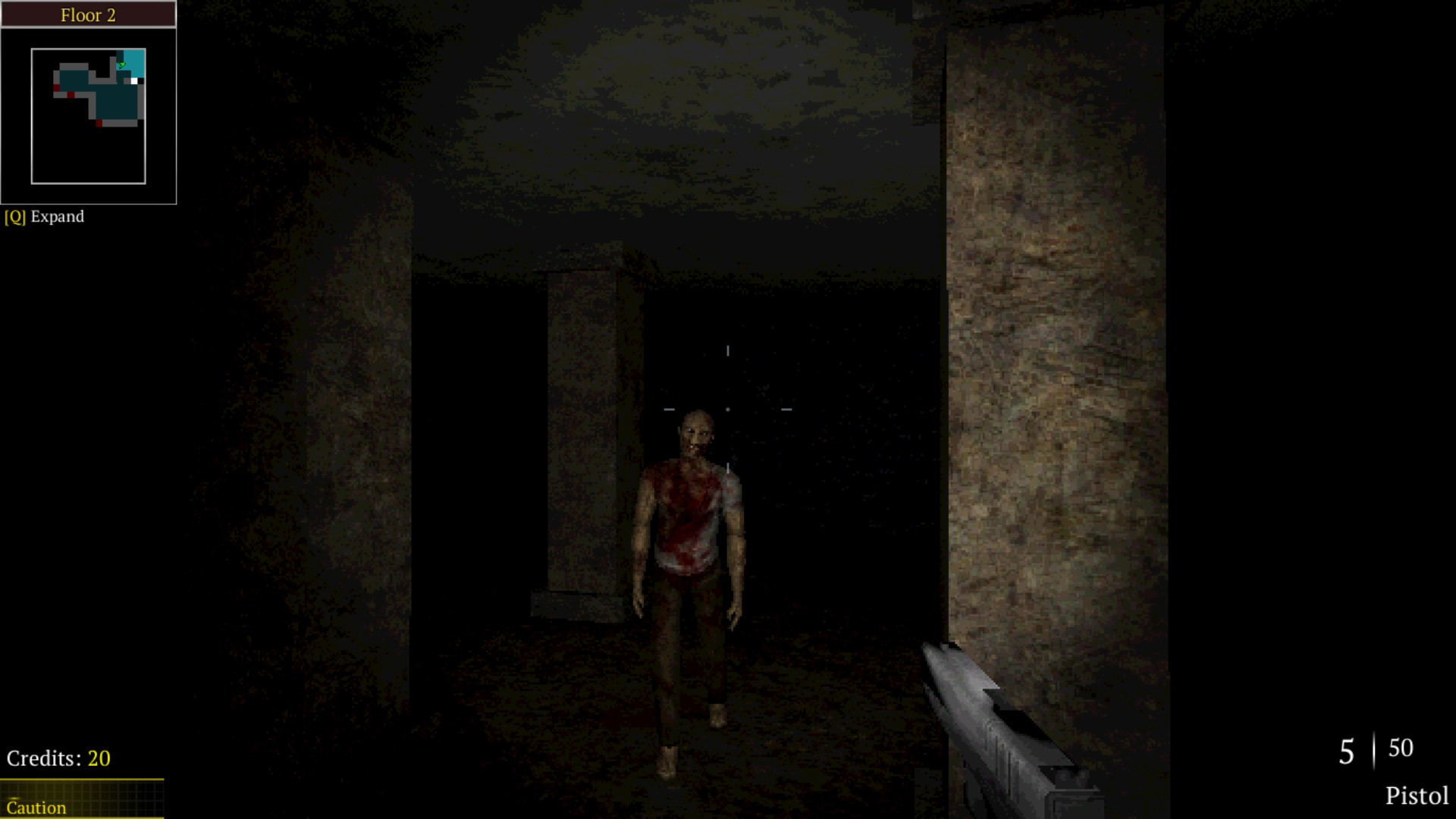
The shooting is punchy and fun – you have to hold still for accurate shots, just like in Deus Ex, and this can become tense in tight corridors filled with ravenous zombies. Carefully timed blasts of a shotgun can explode a zombie’s head in a satisfying eruption of gibs, and dynamite does the trick on clusters of enemies. Zombies aren’t the only enemy here, but they are the most prevalent, and still some of the most fun enemies to fight in video games. You know the drill – easy alone, but dangerous in packs.
Nightmare of Decay is not particularly scary, but it is surprisingly addictive, even if it is only about two and a half hours long for survival horror veterans, maybe even a bit shorter if you’re really rushing things. But the game tempts you to explore for extra resources as well as just to see each individually modeled room in the mansion. There are some neat side quests that reward you for your troubles, and it can be fun to see what’s being referenced in the next room. The game remains on the easy side for most of it – though again, I may just be speaking as a survival horror veteran.
It functions probably as an entry-level game into the genre for newcomers, who aren’t looking for anything particularly confronting, new, or scary, but it is a wonderful melting pot of ideas that, in spite of their unoriginality, come together to form a cohesive whole. It remains satisfying to blow up a zombie’s head after moments of careful deliberation, and it is always fun to triumph over a new boss the game throws your way. There are a few neat scares or bits of foreshadowing, but nothing a fan hasn’t seen before.
Still, don’t let this come off as strict criticism of the game. It’s cheap, for one, but it’s also made with an endearing amount of love and no small amount of craftsmanship and skill. It might be derivative, sure, but the game understands how RE1 works in particular, with the actual structure of the game’s pacing and how levels open up functioning in basically the same way, to similar effect. It ends up with a really lovely difficulty curve, some more unique challenges in the final stages of the game to keep things interesting (though you’ll recognize most of the set pieces from elsewhere), and a fun but really quite challenging list of achievements that will keep the die-hard horror fans (such as myself) from putting it down. Well worth your time if you can accept the fact this won’t be breaking any new boundaries, or pushing any envelopes.
The game is very good value for money, and the optional extra modes (as discussed below the in-text image) add a meaty chunk (or even just a sliver of sweet dessert, depending on how you’re feeling) to the post-game stretch. I hope to see more from the developer, they’ve done a wonderful job recreating the feel of Resident Evil 1 in first-person form.
You can buy Nightmare of Decay from Steam.
 Horrorgameanalysis