
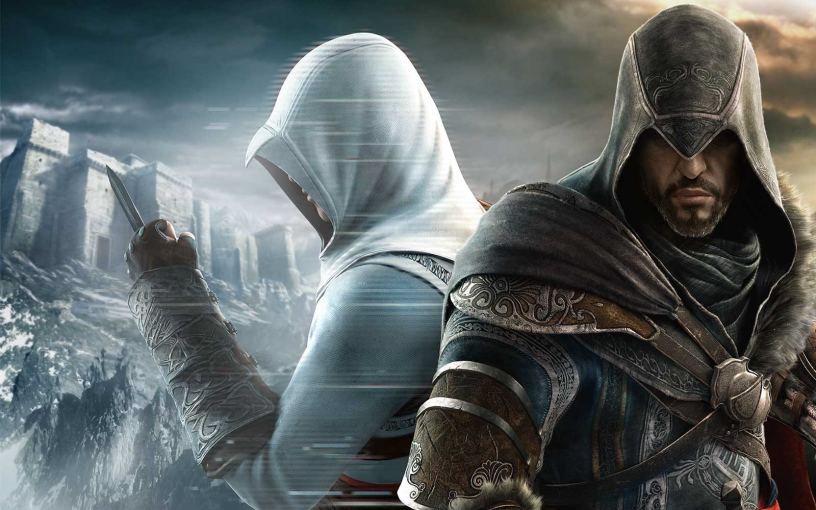
When I decided to revisit Revelations, I also decided that I might as well get the Platinum Trophy, the PlayStation’s primary method of telling you “you did everything, go home”. Nothing wrong with a bit of digital silverware, just as there’s very little more painful to me than a game I started but never even came close to finishing. Revelations’ 100% marker comes after you’ve done all the modern day stuff, as I’ve described in the previous entry, as well as completing basically everything there is to do in Constantinople.
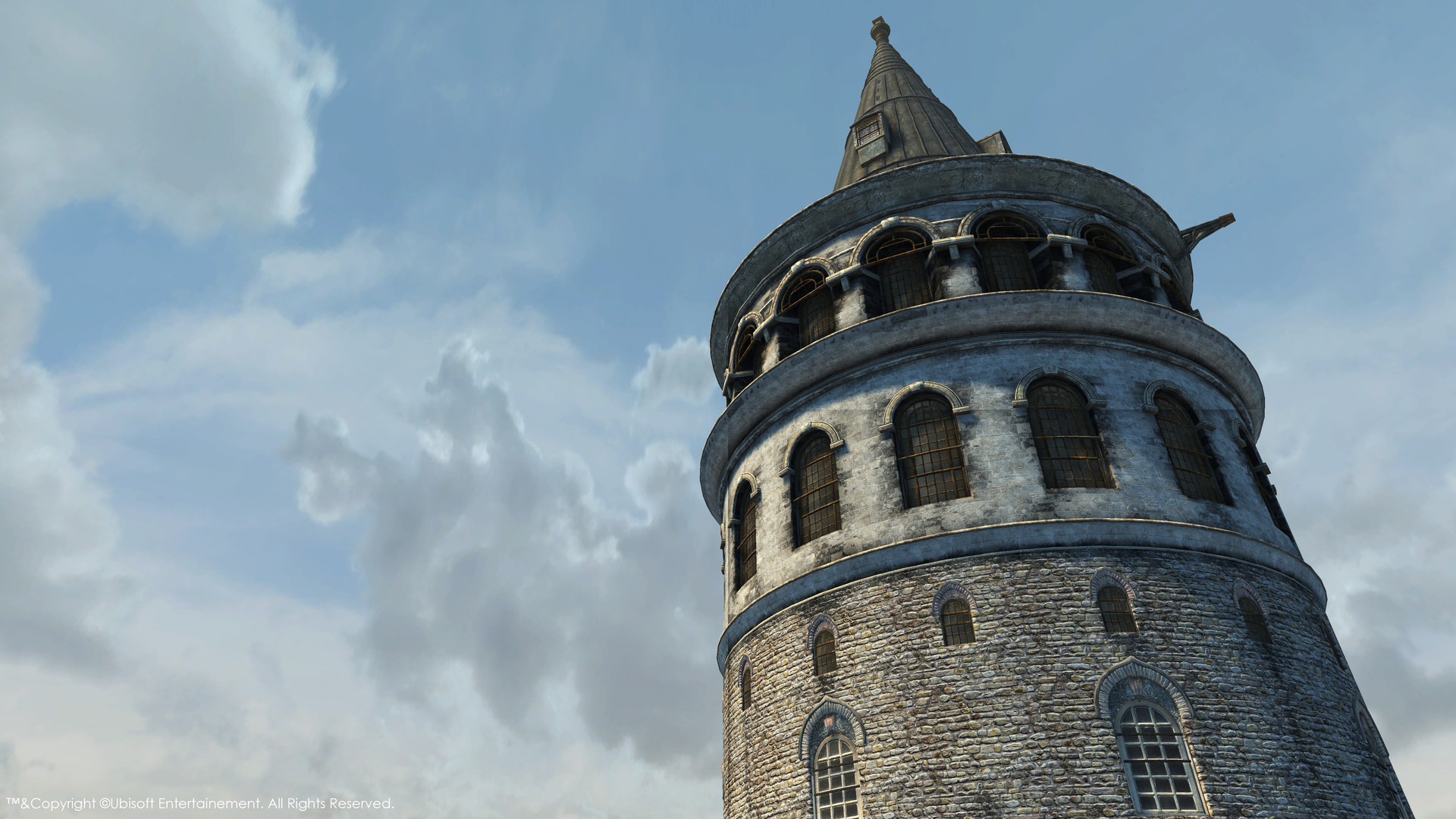
I can’t speak to how well the city itself is simulated in this game, as I’ve never travelled there, but it feels authentic enough. The streets can feel a bit samey, mainly due to the colour palette of earthy browns, but the big landmarks, such as Hagia Sophia and Topkapi Palace, as well as a few aqueducts and Galata Tower, are hugely fun to scale. Making your way through the Grand Bazaar is quite good too, even for those dreaded tailing missions. If there’s one thing that Revelations is still good at, it’s the sense of movement. Even as Ezio becomes theoretically less spry, he never feels better to handle than in this game. So while Constantinople is good to run around, there ultimately feels like there’s not very much to do in it.
This is a double-edged sword of course. Assassin’s Creed Brotherhood, the preceding game in the series, is awfully (emphasis on awful) bloated with side content, and some of it is hardly inspiring (while others are actually quite awesome, i.e. the War Machine missions). But it’s just too much – the map is cluttered with icons in that game, so much so that the map almost becomes useless at certain points.
So on the one hand, I am glad they took the machete to it and cleared out the horrible jungle of extra stuff to do. Sadly, as I’ve already discussed, they don’t replace those missing side missions with anything worthwhile. Bombs are no substitute for the side story about Ezio’s lost love, or for piloting a prototype tank. There’s also only one solitary Assassin’s tomb, which you unlock after doing the obligatory “find ten scraps of paper in the open world”. At least you can get a map for that, unlike in say, something like Omikron wherein finding objects is a guessing game at best.
Strong open-worlds should have two qualities that make the game eminently playable – a distinctly interesting world that allows for a player to get immersively lost in a different time, culture, or place, and things to do in that world that encourage a player to spend further time immersing themselves in that world. Revelations manages the first part pretty successfully, with sprawling districts that even in their sameness construct a compelling picture of early-Ottoman Istanbul. But after spending an hour or two running around, after having liberated all the dens (that’s about how long it takes to free the whole city from Templar rule – not sure what Yusuf was complaining about), you realize there’s not much left to do. You can buy shops, but buying shops arbitrarily increases your Incognito meter, meaning that attempts to increase your own revenue mean you have to do more copy and paste herald bribing just to engage with the economic minigame.
The myriad shops all over town increase revenue streams, which just mean every twenty minutes you get a little chunk of cash. And as you buy more shops, you merely increase your revenue stream more and more until you really don’t know what to do with yourself. Money comes easily in this game after you’ve renovated a district or two, and once you’ve bought even just the starting armour you have enough health to make it through the rest of the game fine, thanks to the combat being so trivial.
The one thing shops are useful for is obtaining another terrible trophy, “Sage”, which requires you to obtain every book in the game. That requires the completion of all of one of the few sidequests types in the game, the “Book Quest”. This means you climb to the top of one of Constantinople’s landmarks that aren’t already monopolized by the main story, which doesn’t leave many, you scan around using “Eagle Sense” (this game’s version of Detective Mode from Arkham Asylum) and find the arbitrary symbol. Then you go over to the symbol and collect the book. While I can respect the effort to add something to the dry open-world offerings, Constantinople is hardly livened up by these quests. At least they encourage you to climb to the tops of things you’d otherwise just sprint past on your way to the next mission.
Sage however doesn’t stop there. See, you need that revenue stream badly if you’re as obsessive a completionist as I am (sometimes), because you need a whopping sum of 453,104 akçe. That’s an absurd amount, given that by the time I had done everything else required to 100% the game, I had only obtained about half that. The books add nothing but a small data entry on the book anyway to that in-game wikipedia that feels very unnecessary. “But HGA”, you say, “it’s an achievement meant to make you get the most out of your game, to make sure you spend as much time as possible in Constantinople, and that you’ve understood the economic system.”
Ah, but strawman, you must understand – the absurd monetary requirement does nothing but lock you in place, waiting for a clock to run out. It’s not skill-based, and understanding the economic system is not difficult – buy more properties to earn more money. It’s the most basic capitalist theory baked into the gameplay here. The more you have, the more you get. So on top of being a murderer, a destroyer of cities, and a hypocrite, Ezio is also a dreaded landlord.
I think “Sage” brought to light for me the big issues with Revelations and its city. The only real way to earn any large sums of money is to renovate things. In order to renovate things, you just run around and tick off icons on the map by dropping money in front of shops. Nothing in the shops is really worth buying after you’ve obtained the bare essentials – maybe the crossbow, if you want yet another thing to deal death with, or some pouches to stuff more death-dealing implements into – and so you’re just roped into waiting for your money to go back up so you can buy more shops.
It’s a meaningless loop that lays bare UbiSoft’s design philosophy – pad. Pad like hell, and the people playing the game at least can’t complain about longevity. Well, I mean, I still can, but y’know. That was the theory, anyway. I guess Revelations shows its hand here, in that I exhausted everything there was to do long before I managed to save up enough money to buy all the books. One hundred percent was hardly fulfilling, as I never felt challenged during the process as I am supposed to feel when going for mastery of a game. The optional objectives are on the easy side – which is a good thing, compared to say Brotherhood or 3 – but a bit too easy, meaning 100% completion always felt pretty trivial, not to mention restrictive. I couldn’t play the missions the way I wanted to, only the way Ezio was supposed to have played it. Meaning that in some missions Ezio was randomly meticulous, whereas in others I was allowed to be as gung-ho as possible. It’s more mixed messaging, objectives that fight what the player has been taught to do and what we are allowed to do in later missions.
Most damningly, the side objective “don’t get detected” is the game’s hardest, its most wretched – in a game all about sneaking and being an Assassin, this is the last fun route. Ezio can’t crouch, can only clumsily jog away from an investigator or poke his head behind some scaffolding so they break line of sight. I am glad the series added more compelling stealth gameplay later, because Constantinople’s “stealth” constitutes chucking poison grenades at people from ten meters away, waiting for them to (instantly) die, and repeating the process.
I don’t want to claim that I know a lot about the period’s history (1511 – 1514). I did some cursory reading after I had finished the game to see the basic validity of the game’s events, and what happened afterwards with the new sultan, Selim the I. I can’t provide any solid criticism or assessment of this because historical analysis, especially of this time period, is not my wheelhouse. I would, however, like to address one final point before I wrap up this short series on Revelations, and that is, I feel the game misses an opportunity with the conflict between the Ottomans and the Byzantines.
This is not to say that this is the first Assassin’s Creed game to misrepresent or even underrepresent a real historical conflict, nor would it necessarily be the last. In fact, the first Assassin’s Creed game mishandles a real historical massacre, wherein King Richard is made to look horrified and annoyed that Konrad ordered a massacre. In reality, research indicates that it was Richard who ordered that massacre. This is also still a fictional game about secret societies battling it out through history, and so I don’t expect the historical conflict to take center stage. But Revelations really feels like it misses an opportunity to characterize either side with any depth or nuance.
I don’t claim to have a time machine, or all the historical facts, but why are all the Byzantines still hanging around Constantinople in full Byzantine gear, and in plain sight? Why aren’t the Ottomans doing anything about it? Who knows. Why are the Ottomans presented as the good guys, and why do the Assassins, the faction that are supposed to stand up for the little guy, choose to side with the imperial power rather than any group that might be experiencing difficulties in the transition of power? Why is the one Templar Ottoman, Prince Ahmet, treated as a one-off rather than a potential indicator of further corruption in their ranks? All these questions and more are never answered.
The story of Revelations is painfully simple, and paints a similarly painful picture of Ezio, going to extreme lengths to characterize him as the good guy and everyone who happens to oppose him as the bad guy. Everything has a simple resolution, and everything has an accompanying easy answer. While there might be a bit of adversity here and there, Ezio comes out on top and his enemies don’t because that’s how power fantasies work.
Revelations is a power fantasy in its story, but a vacuous plod in its open world. Devoid of anything left to give the player to do, the best the game can seem to suggest is an economic minigame that doesn’t offer any enjoyment and constitutes waiting for things to happen rather than proactively engaging with a challenge. Revelations has no meaningful side content, a swing too far away from Brotherhood’s incessant bloat, which at least had some fun stuff to deal with, and as such suffers dearly for it. Constantinople feels like half the city Rome is, just because there’s much less to do in it. It’s still lovingly rendered and designed, but has no depth to it. If there’s no challenge to the combat, then there’s no reason to experiment with different weapons or bomb loadouts.
Revelations in the end is a shell of a game. A disappointing finale to a trilogy of games that date more and more with every passing year. It is a game that tries to waste your time with open-world busywork and frustrate you with missed storytelling opportunities. For every good hookblade idea, there is nothing in the gameplay remotely interesting to draw you in. The only part of the main game that retains any worth to a would-be first-time player are Altair’s sections, and they constitute probably less than an hour’s worth of gameplay in total.
Revelations, sadly, is a game that I once enjoyed, now forever consigned to the dustbin of my mind as an immense disappointment. What it tells me, however, is that at least my tastes have matured – and I am capable of figuring out more coherently why the story rubbed me the wrong way, even back in the day. Oh well… at least I got some digital silverware out of it before I demolished it.
Next time: I move onto another game!
 Horrorgameanalysis