
The following contains discussion of suicide, self-harm, and depression.
No game, not even Pathologic, has been as lived-in for me as Life is Strange was.
It is no exaggeration to say that Life is Strange transformed my life. In fact, I would say it saved my life.
I was bitterly depressed and unsure of myself and my place in the world at the time I played Life is Strange. Quite often (at some points on a daily basis) I would confront suicidal thoughts and consider self-harm. These were thoughts I struggled really deeply with, and are something I still carry with me today in more sweeping melancholic moods, or when I wonder what my life still holds in store for me. I am coloured, irrevocably, by what I went through for those years. It does not compare to what some people go through, and those people have strength I cannot even imagine. Yet for me it was a total period of uncertainty and self-loathing.
A part of that was ascertaining my own sexuality and gender: heck, what even am I?
Life is Strange was one of the first works of queer fiction I ever consumed, I think. Not only did it have queer themes (which, admittedly, aren’t the best in the world upon reflection) but it also contained new ways of living, new ways of carrying myself. I was one of those obsessives who delved into the soundtrack, living on the soundwaves from Daughter, Sparklehorse, and José González, among countless others. My musical horizons were torn to shreds and expanded beyond what I had ever imagined before. (You haven’t lived until you have listened to How by Daughter).
It was a reflective game that challenged my ideas of morality and causality, and pressed me to examine what exactly love was to me, and what it meant to be with someone who you really loved, who you really trusted.
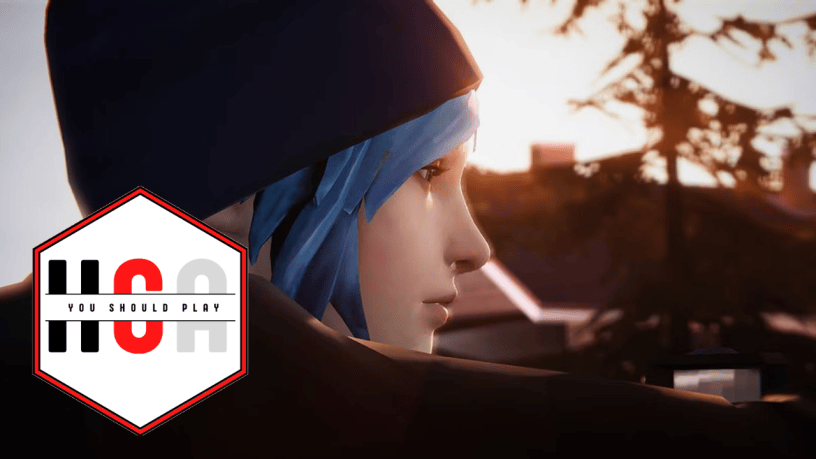
I know a lot of people hate Chloe Price, the best friend (and queer love interest) for main character, Max Caulfield. But to me, Chloe was a total solidifying of my world. All of a sudden I had someone to look up to. There’s an uncommon amount of bitterness about her, and a debate about her manipulativeness towards Max. But I have always been sentimental about Chloe, a girl who lost everything good in her life and now finally has a chance to get something good back in the form of Max.
At a time when I felt isolated from long-time friends because of internal torment, Chloe reflected something in my pain. She might have been riddled with teen cliches like “Shaka brah”, but in her there was something painfully human. Behind everything, behind all the bluster, there was the essence of a human, wanting to be loved. Wanting to discover herself, and everything that entailed. She taught me to be deeply empathetic about myself. She moved me in a way no other video game character had ever touched me before. A digital character who so many people outright despised centered my whole universe and made me slow down. It made me reconnect with family, reach out to those who valued me, and start to right my sinking ship. In some way, I can thank DONTNOD’s game, and Chloe, for getting me to where I am today.
Life is Strange, as a point and click adventure with time-travelling elements, is a great time. It has nice puzzles that make you feel clever but don’t take very long at all to solve, and the limited-time time-travelling allows you to see the immediate consequences of your actions, which admittedly is a fiendishly clever system. But those mechanics turn into questions of temporality, which are reflected in every aspect of the game.
Video games are spaces where you can, in some sense, freeze time by pausing the game or just standing in place. You are in control of the world, you dictate the pacing of scenes, and when you leave spaces. There are moments of intense privacy afforded to you in video games – no-one is pushing you on, making you leave at closing time. You choose closing time. But Life is Strange slowly takes your hands and separates your shaking fingers from the scenes where you feel safe and guides you gently into tearful seas. It is one of the few games that has ever made me cry more than once. The world might have evil inside of it, it argues, but there is human goodness that emerges out of acts of love and bravery. That was what it taught me. ultimately – that to love is to be brave. And that to live is to be brave. To accept the randomness of the universe, to carve what little you can out of that randomness.
I revisited Life is Strange last year, and it was like visiting a place you have outgrown. But it retained its core essence; slightly dorky, but totally earnest. It has a human heart – how many popular games can you say that about? Sometimes I wish I could return to that time, where I was playing or experiencing something for the first time. Sometimes I am sad or bitter about an opportunity lost, or just about how I handled yesterday. But that’s just part of life. I can’t rewind, and maybe I shouldn’t, even if I did. I know who I am, I know where I am going.
Life is Strange taught me to accept what I cannot change, yet to fight to change what I cannot accept. Love is love, and trans rights are human rights.
You Should Play: Life is Strange
 Horrorgameanalysis