
Sometimes there are games that have impacts on me that I don’t appreciate at the time. These kinds of games are often very good in the moment – I enjoy them a lot – but I don’t quite factor in just how cool or interesting some of them are. Vampire: The Masquerade – Bloodlines was one of those games. So was The Dream Machine.
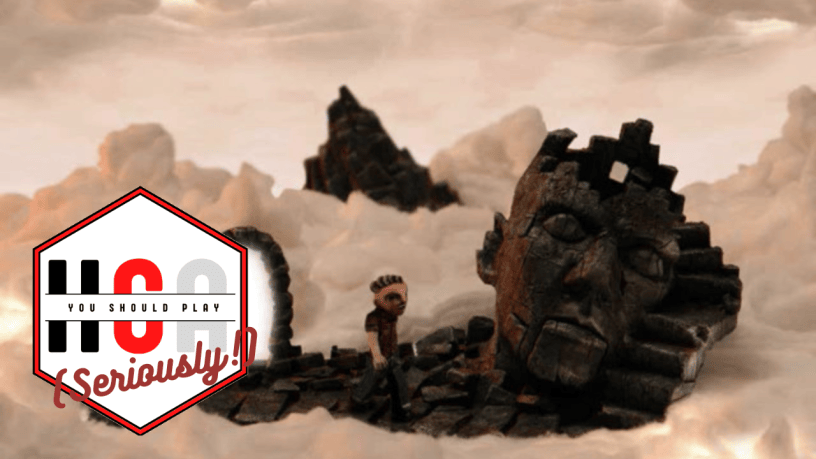
The Dream Machine is a point-and-click adventure game in the classic style, for sure. You walk around environments, clicking on stuff, sometimes picking it up, and talking to people. But The Dream Machine is to my mind the most interesting utilization of that formula. It is hard to break new ground in such a well-trod genre, particularly one which has been not just codified and then broken down again, disestablished time and time again as its popularity waned and waned. But The Dream Machine succeeds in its scrappiness, for a start. It is a game made entirely by hand, in a literal sense. Everyone notices this the moment they set eyes on it. It is a striking game. Clay and cardboard, united together, make the game material. Materiality as the key part of the game’s aesthetic is such an interesting contrast for a game centered around conflicts of the subconscious; things we normally cannot touch. The characters are all weird, vaguely-human things, but it doesn’t take long to get attached to them, no matter their oddities. Everything has a vivid style that never compromises.
Developed by two people over a decade, the game’s episodic structure and release schedule means that we get to witness the craft of two very talented people improve over time. Where the puzzles in the first chapter are fairly straightforward and “regular”, as far as point and click adventure puzzles go, the game’s logic quickly improves. Puzzles become more interesting (and at certain points more horrifying), but most importantly, it is the writing that begins to shine.
While the writing is never bad, the moral conundrums and depth of each character become more and more pronounced as the game goes on. By the end, you are having discussions that blow countless other adventure games out of the water. There are moments of real humour, heartwarming flickers of humanity, but there are also moments of serious darkness. The maw of death is present here, but not necessarily always in a malevolent way. The game touches on a wide variety of things, but rarely does it feel trite. The game is well-considered in its approach, and builds towards an extremely… memorable ending that has stayed with me – for better or worse – for many years. I played it with a friend of mine, and I valued that communal experience. Sharing a game like this is a special thing; and it so rarely eventuates.
Part of me certainly does remember the experience, and I have allowed that to colour my perception of the game – a shared discovery. But that is not all there is to it. It is a game that lingers in my memory because of what it represents as a bit of interactive storytelling. It is something that changed shape over the years. Where once there were intended to be multiple endings, all being tracked throughout the game and in minute dialogue decisions; now there is only one. But, in some way, that poignant ending becomes really the only way it all could have ended.
It is a delightfully haunting game, one about regrets and longing for the future. It contains a variety of interesting insights into the human condition. Whether you agree with them or not, the fact important questions are being raised makes the game worth exploring. What is the nature of a dream, anyway? Like many of the best works of horror, The Dream Machine explores its themes with a thorough consistency. Voyeurism, privacy, the nature of reality itself; what right do we have to disrupt other’s lives? What right do we have to destroy things?
Sailing through a dreamscape, watching as our life hurtles past us, we grapple with the fact that we could be sitting in God’s seat, our vantage point is so great. Everything stretches out before us. Yet, nothing is clear at all. We are simply not equipped as human beings to absorb totality. To define the universe – is there a greater goal, or a greater hubris?
All these questions, all these sublime views, are tied up in a slick, smart, funny traditional point and click adventure, that functions as a taut work of art. It is fun to navigate through, and also capable of drawing out deep emotions. With a fantastic soundtrack as well, The Dream Machine is more than deserving of your time – which is why it is a shame it remains so obscure. Perhaps a video is in order.
You can buy The Dream Machine from Steam or GOG.
Seriously, You Should Play: The Dream Machine
 Horrorgameanalysis