
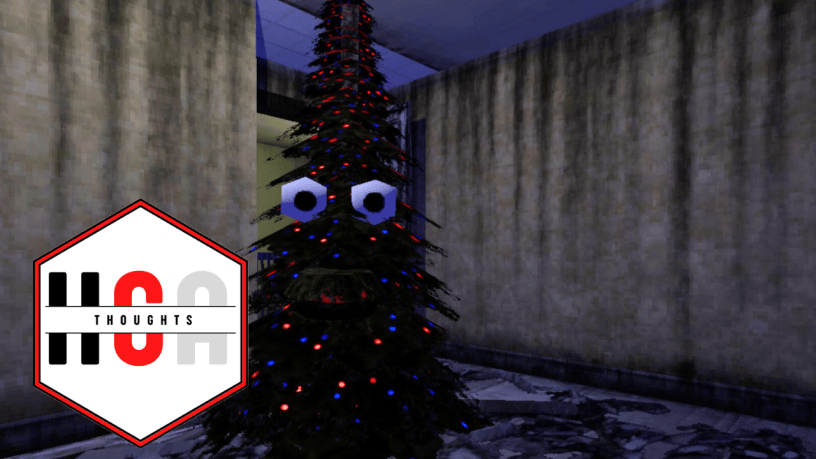
The following piece spoils Christmas Massacre.
I like to think I have played a good number of horror games that push the boundaries of the video game experience. Horror is pretty perfectly situated to push the envelope. Horror is at once expected to provoke negative emotions, and horror is not really the biggest genre out there, so expectations are set for gaming experiences that challenge how traditional video games are made.
Christmas Massacre is one of the strangest games I have ever played. Maybe one of the most vile, and certainly one of the most disappointing. I don’t know what I was expecting on going into a game where you play as a ruthless serial killer who dresses in a Santa outfit and takes orders from his murderous Christmas tree, but there’s so little substance to Christmas Massacre. Before we look at the game’s themes and subject matter, let’s look at the way the game actually plays, which was also disappointing to me.
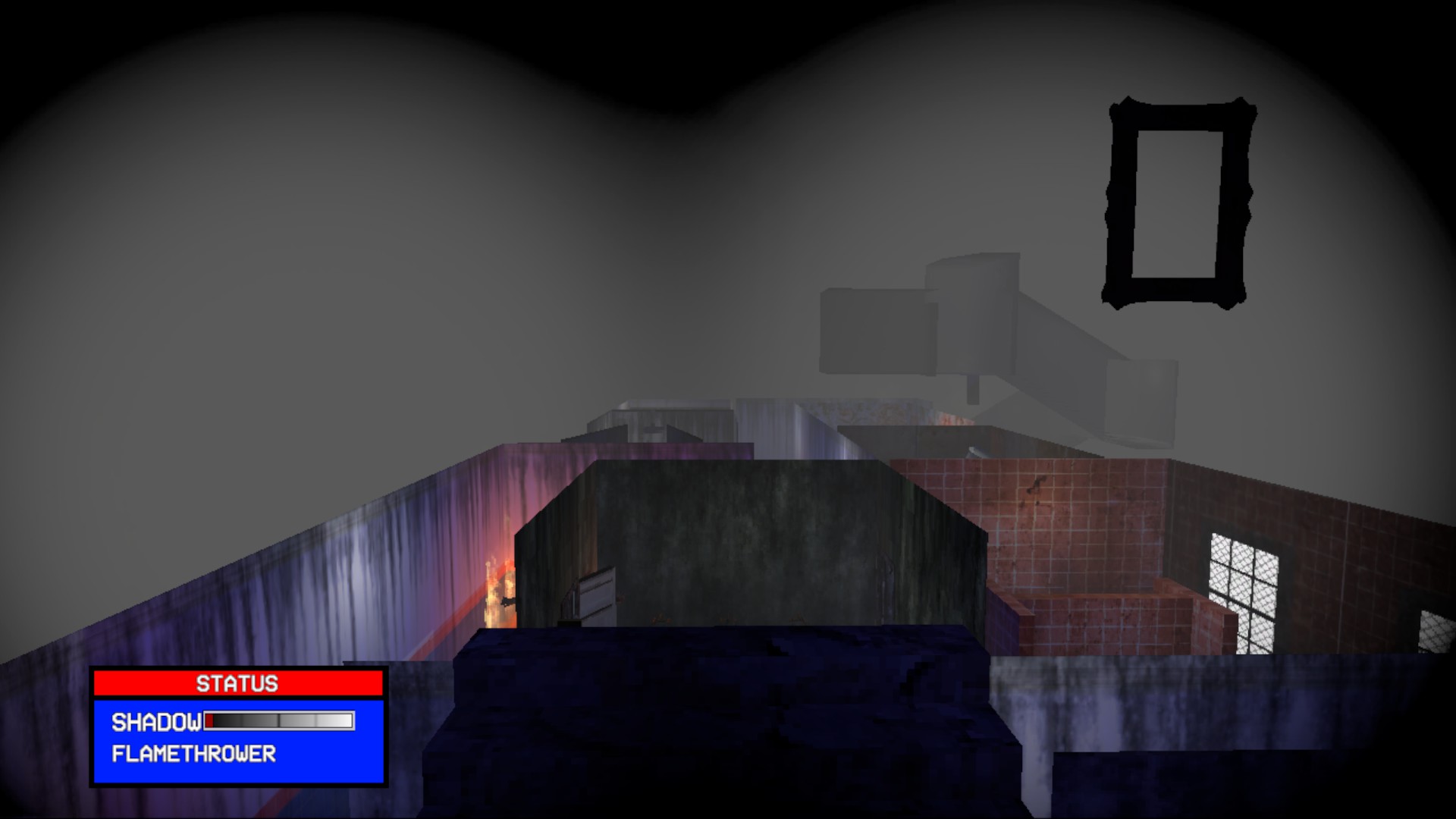
The game’s mechanics are extremely trite and uninteresting. Rather than the tense scarefest of Nun Massacre or the complex and interesting level design of Stay Out of the House, or even the atmosphere of Bloodwash, Christmas Massacre so rarely offers anything worth your time. Levels are cheap and easy – you rush into a room, holding down the left mouse button, and hack people to death on contact. Most of the time – sometimes it just doesn’t work properly, and the hit detection fails. The basic goal of each level is to kill rooms full of innocent people, and prevent anyone from escaping. There are three weapons throughout the game – a knife, throwing knives, and a flamethrower – and none of them are particularly fun to use. You can burn yourself to death all too easily with the flamethrower, and wonky aiming means it will happen more often than you’d like. People will slip by your knife or inexplicably dodge your previously hyper-accurate throwing knives whenever they feel like it.
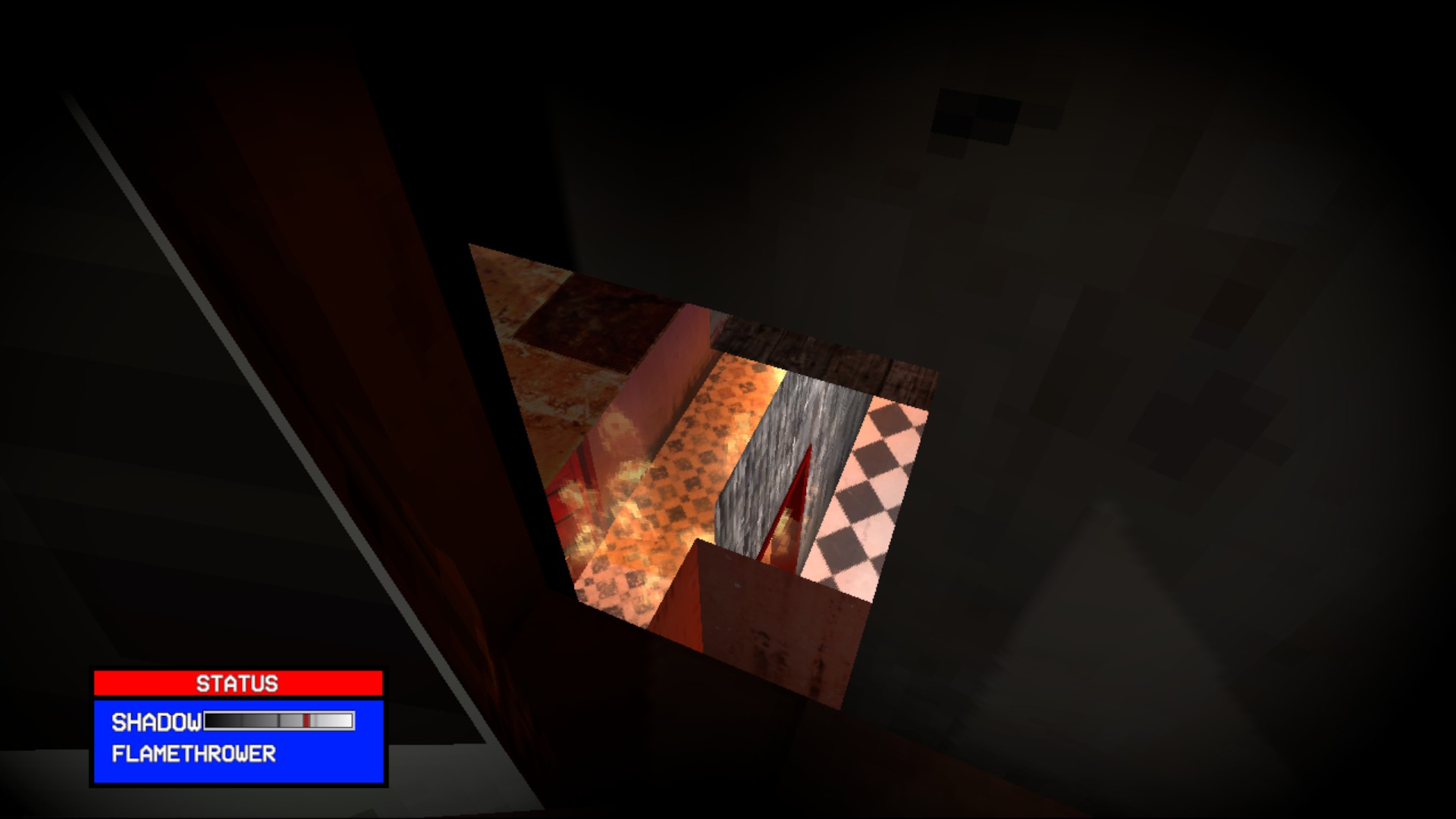
Only one of the levels actually felt challenging and remotely captured my imagination, which was the level set in a movie theatre. In this level, you actually did have to sneak around a bit, and properly time your attacks. In every other level, it felt like blind luck whether you succeeded or not – but this level had depth, atmosphere, and even just a little bit of challenge. At the end of each mission, you are given a letter grade based on both your time and your score (which is increased the larger your “kill streak” is). The movie theatre was the only vaguely interesting level – and part of that was the dialogue given by some characters, or the ability to lurk in the shadows and watch the movie, breathing heavily behind your mask. The game can be played from either third or first person, but first person was by far more enjoyable, given the wonky camera controls and turning in third person.
Christmas Massacre is this hollow meal of a game mechanically – it reads on paper like it should be an entertaining stealth-em-up / hack’n’slash – but it becomes, frankly, kind of sickening when you consider the shock horror the game is going for. I’ve written and talked about shock horror before, but I wish I’d played Christmas Massacre before I wrote those pieces. I want to say firmly that I am not in favour of artistic voices being silenced or censored, as artistic pieces can have depth and meaning, or at least can generate discussion about why they are bad and should be rejected. Putting something in the darkness privileges it – dragging it out into the light can expose its rotten core for all to see. And I also want to say that Puppet Combo makes some sterling horror games, and they have done great work publishing and supporting other horror game developers. They have my full respect and I am a big fan.
Christmas Massacre, however, does not do enough with its central premise. It tries to have its cake and eat it too by having a few sequences where the killer, Larry, is told he will burn in hell, or where he is tormented by the ghosts of the people he has killed (who he must kill again in the dream sequence). Christmas Massacre runs into the classic video game problem of trying to guilt the player into feeling bad for actions that they were forced to take. Sometimes, this works really well. Sometimes we get so invested in a character’s story, we feel the same things as them, and willingly commit atrocities because of those strong emotions. But it is a risk that developers take, isn’t it?
Larry is a nothing of a character. Beyond the fact he is a rampant mass murderer who likes to dress up as Santa, we don’t know anything about him. There’s no attempt to characterize him, nor do we get any lines or narration from him. This leaves the onus of “feeling guilty” on the player, who is probably not really feeling guilty at having stabbed a bunch of innocent people. Disgust, maybe – and maybe a desire for Larry to get his comeuppance – but it nonetheless remains our job to guide Larry through to the end.
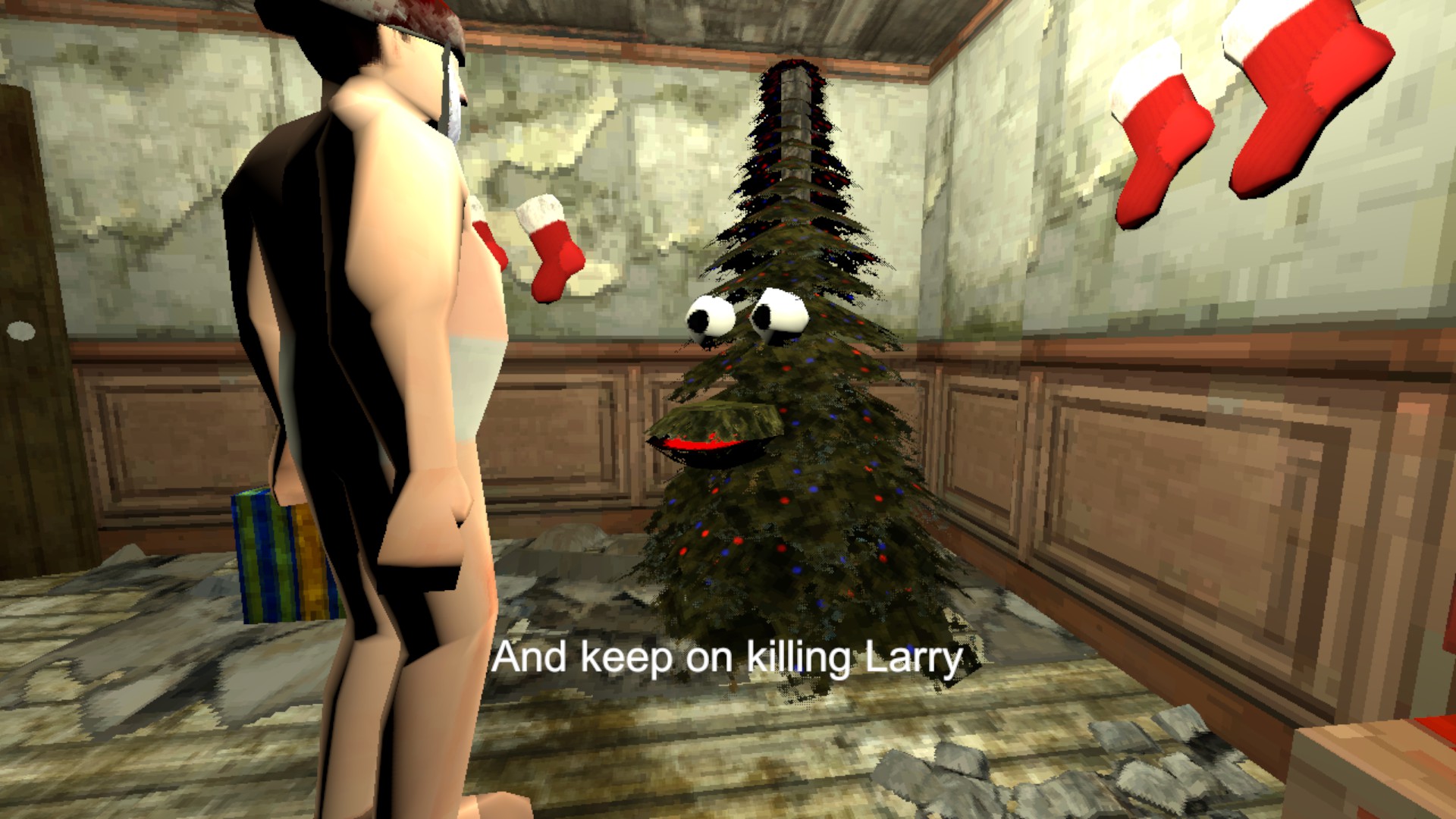
The open nature of the character and the game means that we end up feeling deliberately repulsed by Larry, while also engaging in empty violence to complete a video game we paid for. There’s nothing badass about being a serial killer, no satisfaction about killing evil bastards that other games at least give you an excuse to believe in. This is fine – horror games often call into question the necessity of video game violence. For its part, Christmas Massacre feels like it is struggling to find a way to articulate a higher message about video game violence, and our consumption of extreme violence. At the same time, we are also being rewarded for committing faster and bloodier atrocities, being given high scores for continually stabbing an already dead person until they explode into a mess of gore.
It does call into question, I suppose, our enjoyment of killing human beings in video games if they are actively defending themselves. Does blowing up a person in Fallout with the Bloody Mess perk active produce the same grimy feelings as stabbing an innocent woman in a bathroom stall as she screams for help? No, it doesn’t – because context is all-important and situational.
The first level of Christmas Massacre requires you to get a knife from the kitchen and stab a nun and a bunch of other children to death. Then, you head upstairs and stab some showering nuns to death. In the penultimate level, you set children and nuns on fire and watch them flail around and scream. Now, obviously, playing a video game like this does not make you inclined to leap up off your couch and start committing rampant killing sprees. If it does, it wasn’t the video game’s idea – you were probably hanging by a thread anyway.
What playing a video game like this does do, however, is provide a very nihilistic and hollow viewpoint of the world. Perhaps, we could argue, this is the intent. Larry, after all, doesn’t get away with his crimes at the end of the game (the Christmas tree sells him out). The game’s mechanics and design are all calibrated to make killing this broken, empty experience; the only reward is this meaningless number. But that’s letting the game get away with too much, being too charitable.
Christmas Massacre is a game where you systematically end the lives of characters with faces, personalities, and schedules. Someone’s friend goes to the bathroom – the friend says “but you’ll miss the best part of the movie!”. Moments later, you can wander into the room and stab them to death, wait for the friend to get back, and stab them to death too. It is not that I am not interested in the potential of evil in video games, and the potentiality of video game cruelty. Those things are interesting. But Christmas Massacre does very little to facilitate the idea that it is anything more than a game where you can butcher people and explode them into little bloody chunks. At one point, a teenager winds up in the basement of Larry’s house, and you have to kill them. Over the next few missions, the body decays; flies get to it.
I have long been uncomfortable with the idea of true crime – the voyeurism of peering into real human suffering. Christmas Massacre‘s exploitation / slasher movie vibe, and its moments of true depravity, make me question the purpose of video game violence. And I do keep asking myself this question, don’t I – maybe that’s the point? Maybe Christmas Massacre is meant to be prompting these questions. Is it like watching a cow being slaughtered so that you become vegetarian? Is it meant to make us reflect on violence in video games?
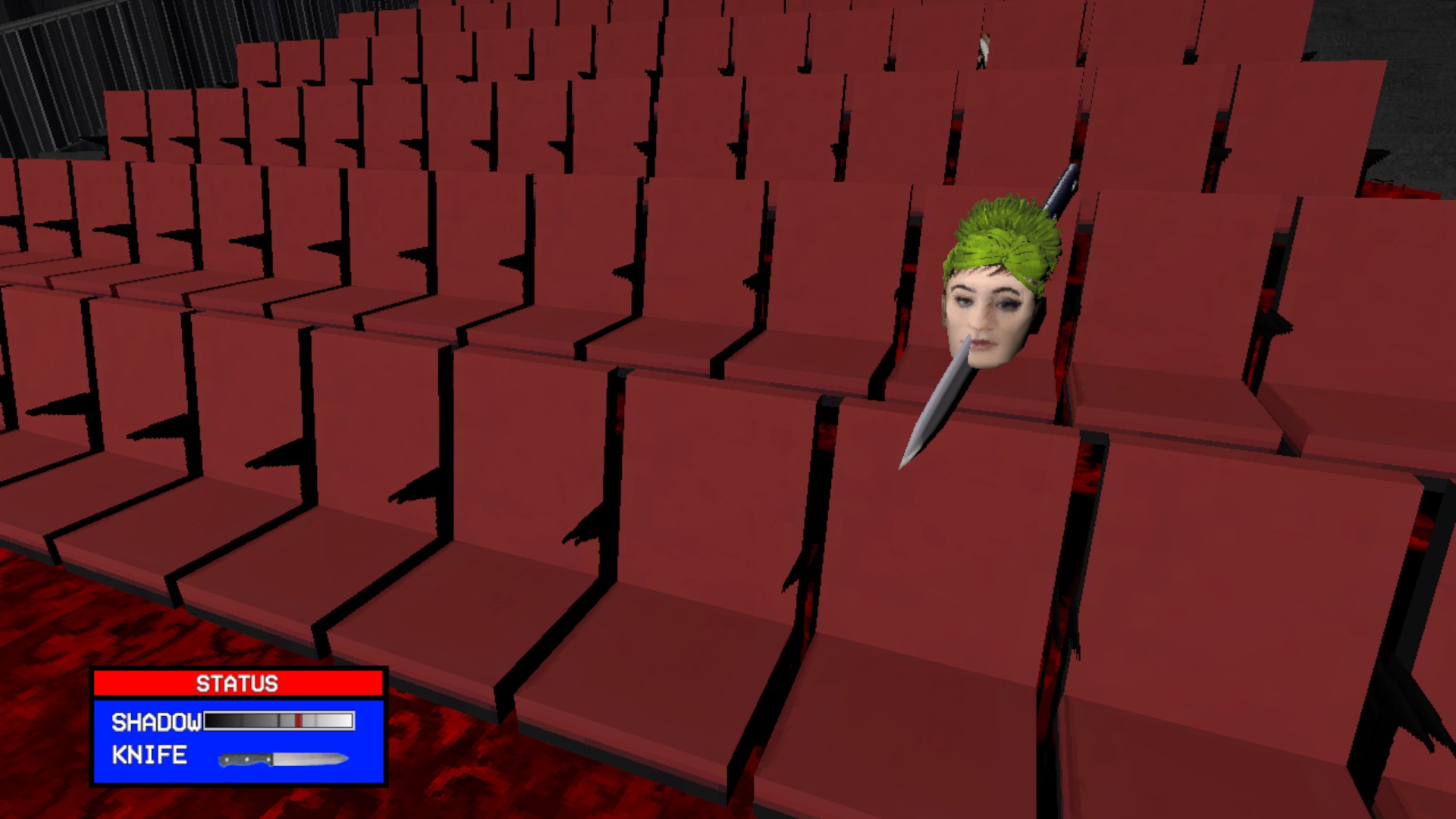
The only method of interacting with Christmas Massacre‘s world is violence. You burn classrooms full of children to death, along with their teachers. You systematically abuse your position of power as a respawning, knife-wielding psychopath to butcher innocent men and women. It is a vacuous power fantasy that offers very little interesting in the gameplay department, no story beats that feel considered enough to actually land as criticism of the game’s function, and an ending that just kind of happens. Larry gets arrested after he burns a disabled nun to death, the end. Yes, the game does try to indicate that “no, this is actually pretty fucked up”, but it just doesn’t work for me. The whole game feels like a vapid experiment of video game violence that crumbles under its own themes and mechanics. It’s not scary, it’s not challenging, it’s not even anywhere close to fun. The story of a person feeling guilty over killing people has been done countless times, all many times better than this, and the novelty of being a serial killer in a Puppet Combo game wears off the moment you start to kill children (about sixty seconds into the game). It feels like a demo for a game that does not yet exist. Would I want such a game to exist? I don’t know. Probably not. The only funny part is the Christmas tree. The people have too much personality to even get a darkly comedic enjoyment out of exploding them.
Can I recommend this game? No. Can I say it is an interesting thought experiment? I’m not even sure about that. Christmas Massacre is a game with not very much to say; a game about killing people that doesn’t reflect on the meaning of killing any longer than about a minute. And yes, the game doesn’t have to offer that – but I was left wanting a game that at least tried.
 Horrorgameanalysis