
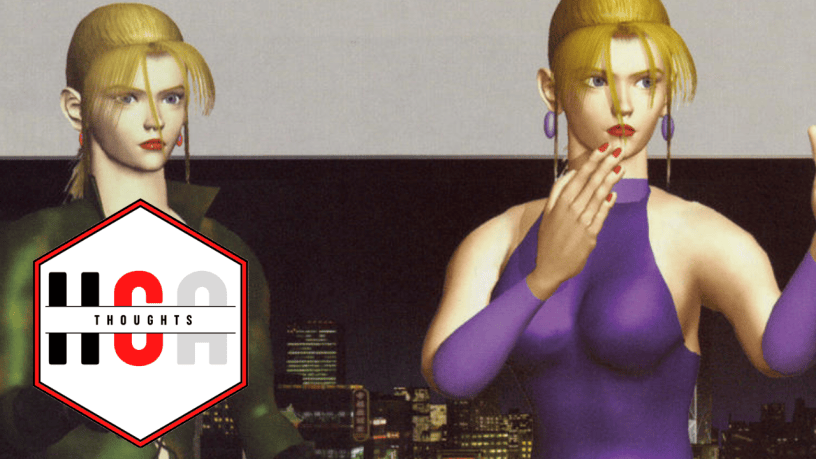
One of the things that drew me towards playing Nina Williams in Tekken – even when I was very young – was her sense of dress. It’s pretty silly and cute to look back on now, but I idolized her in this really quiet way that only awe-inspired little kids can. I’m gonna grow up to look like Nina Williams from Tekken 2 (Namco 1995)! I was after the high heels, the opaque purple tights with suspenders, a purple bodysuit, purple sleeves – I was going to be purple!
In the last year, I’ve realized just how important clothing is to our construction of self, and the person we present to the outside world. Out of a sense of denial more than anything else, I refused to engage with my desired dress sense in any serious way. Putting aside how unhealthy emotional repression is, the disappointing thing was that I wasted years of not wearing purple tights.
Clothes in video games were a way for me to modulate and express myself, even unconsciously. That’s what’s important about them first of all – the ways that players can choose to modify a character’s appearance to better suit themselves. For me, this manifested in The Elder Scrolls IV: Oblivion’s (Bethesda Softworks 2006) modest standard clothing options that came alongside armour. For instance, I loved being able to have my character blend in to the place they chose to live. When my first major character – a Dark Elf wizard – got home to his shack at the Imperial City Waterfront, he’d throw on his fishing waders to walk around and converse with locals. When it was time for him to make an appearance elsewhere, he’d dress himself in luxuriant aqua silk robes with which to display his wizardly abilities.
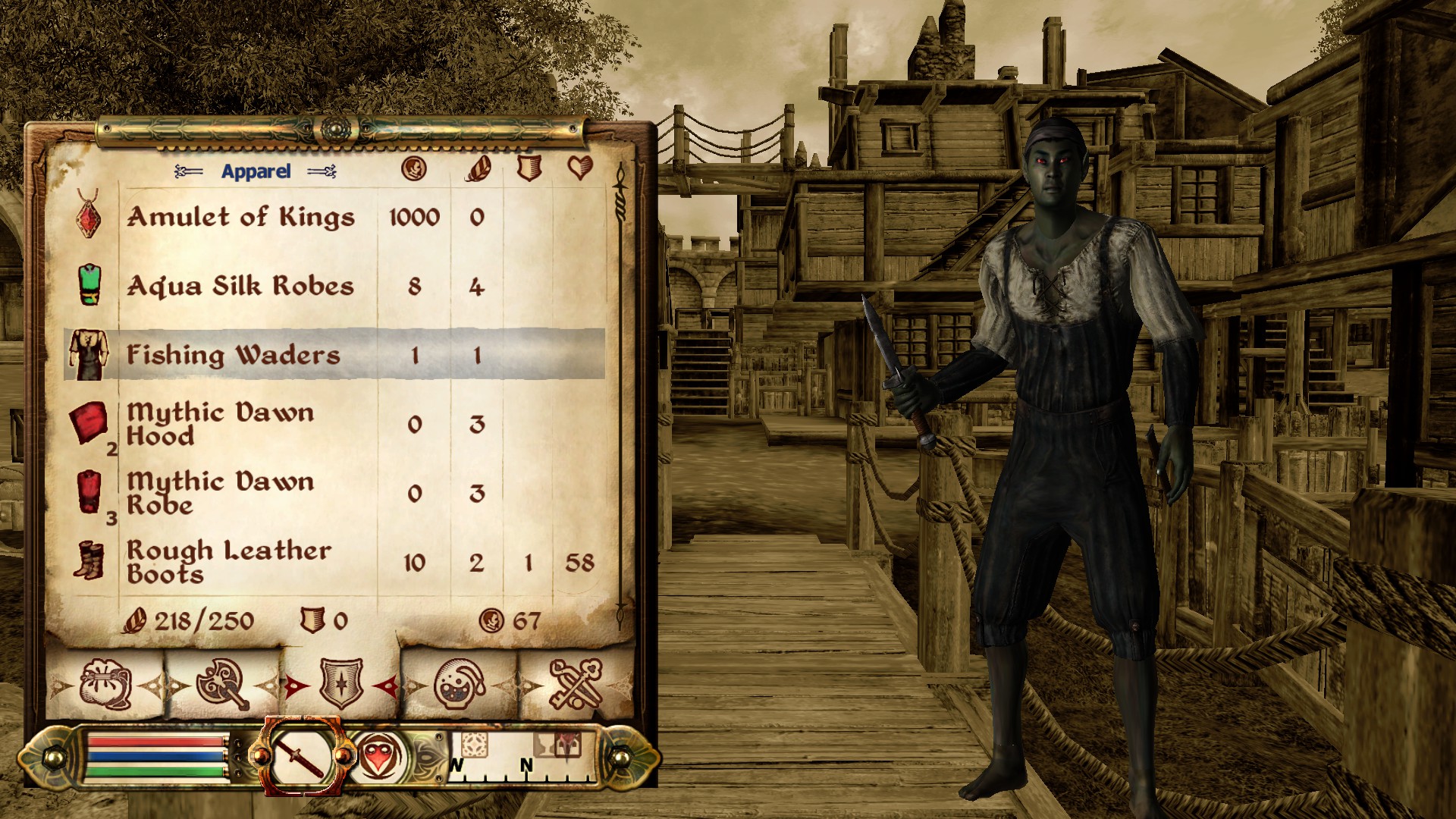
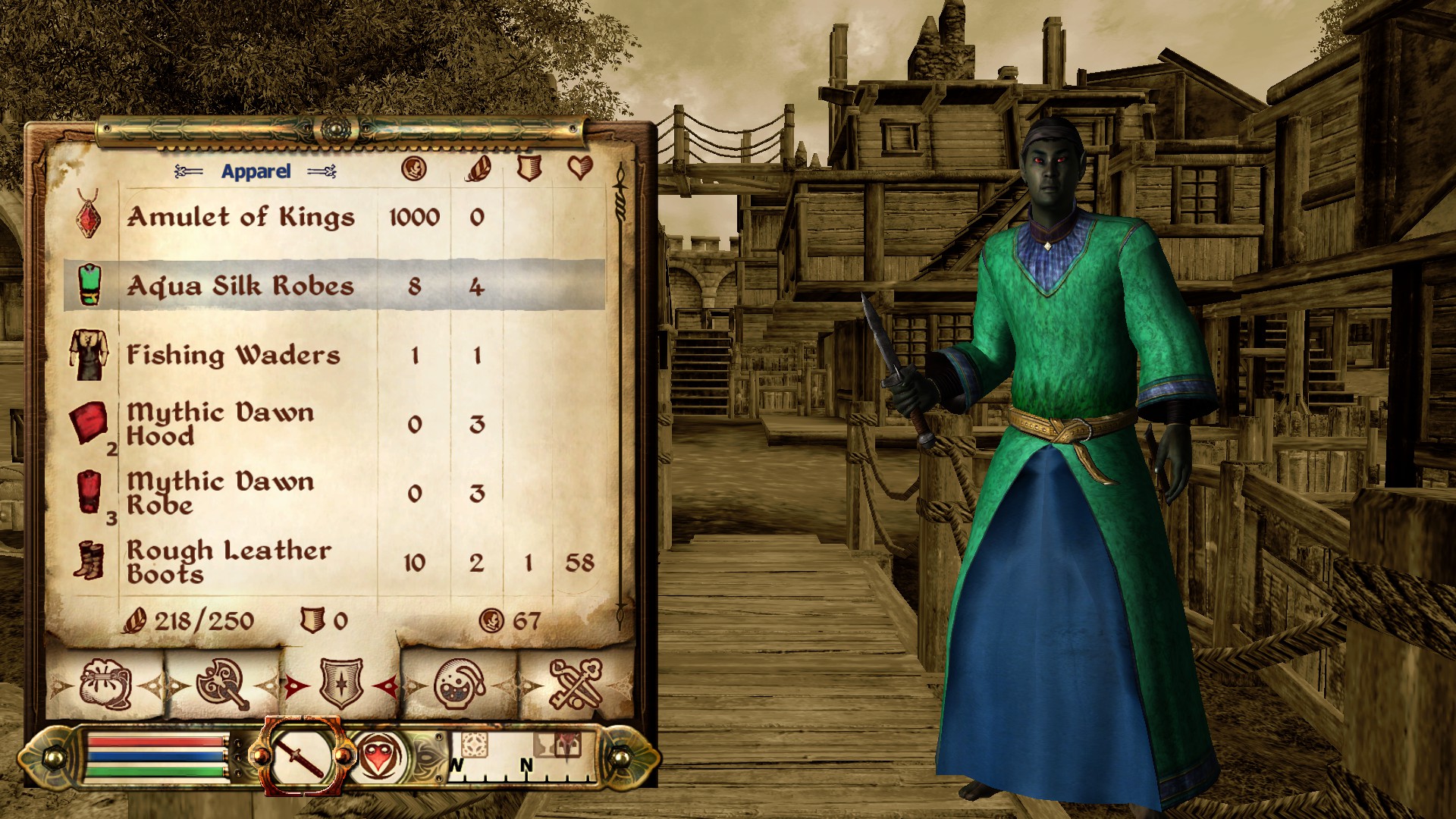
It was very simple, very low-level roleplaying, but nonetheless it was very effective at immersing me in the world in which I was playing. Clothing was the first step towards transforming my imagination and putting me in the shoes (ha!) of the character I was playing as. Roleplaying games are such a fertile field for this. In the post-apocalyptic Roman-esque society of The Age of Decadence (Iron Tower Studios 2015), your player character’s clothes are altered depending on what class you opt to start the game as. A mercenary, for instance, comes equipped with leather armour, whereas a drifter just has a red toga. Clothes assist roleplaying and assist inhabiting a role, as they help externalize one’s personality and how they want to be perceived. I enjoy getting merchant
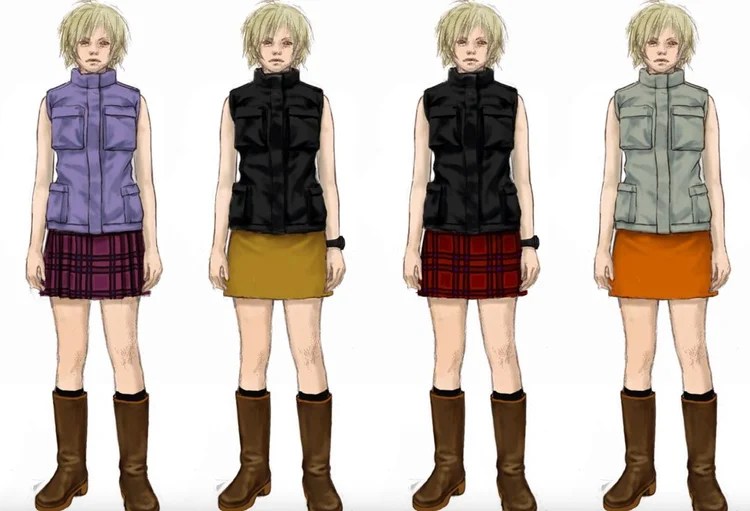
This same principle extends to characters that developers design. Some characters’ entire personalities are on display through the outfit they choose to wear. I think Silent Hill 3 (Konami 2003) has some of my favourite characters for this. Heather, the protagonist, wears a vest and short skirt to emphasize her youth – relevant at the time to the turn-of-the-century Y2K fashion. As writer James Elliot says, “Lead character designer Shingo Yuri—while fleshing out the details of Heather’s appearance—took inspiration from French actors such as Charlotte Gainsbourg and Sophie Marceau which resulted in an initial design that was perceived to be a little too friendly and nice. After taking the counsel of the female members of the team, they settled on a look that was edgier and more fashion-forward. With her disheveled hair, knee high boots, Heather was a reflection of the Y2K fashion scene at the time, bringing a more fashion-conscious sensibility to an industry that is not always known for its style” (https://gatamagazine.com/articles/culture/architecture-of-fear-the-making-of-silent-hill-3). There’s Claudia, too, eyebrowless and barefoot in a robe, stern, austere, and obviously a true believer of her cult’s religion. Compare her to Vincent, who is dressed in a vest and glasses and other nice clothes – also part of the same cult, but clearly not a fanatic as she is. We can tell these character details just from their clothing (and their hair) – we don’t need anything else.
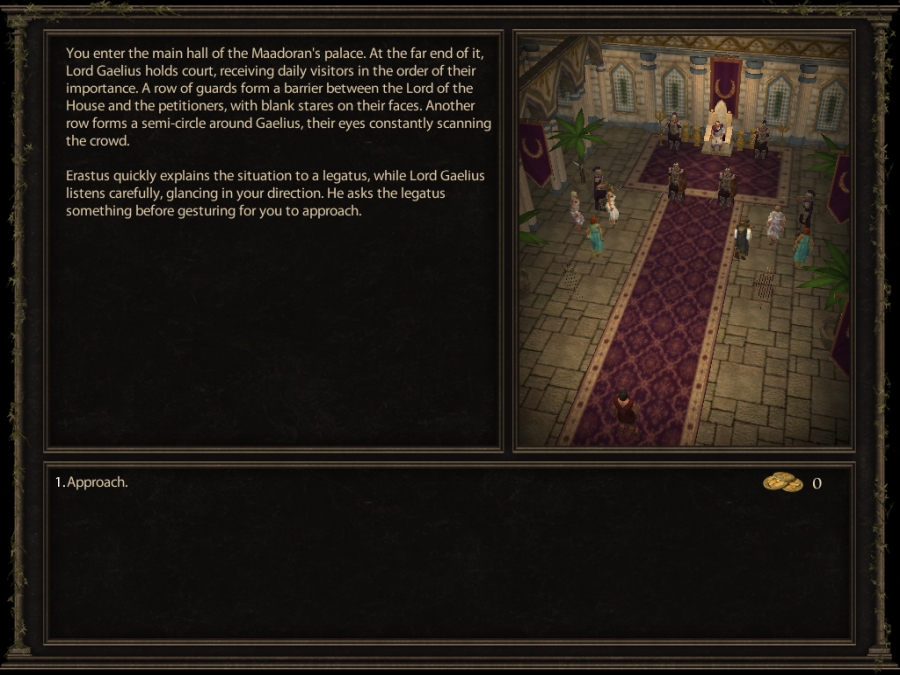
The sense of dress of a faction can be enough to distinguish them visually on-screen. If you have an enemy faction dressed in bold, uniform colours, they’ll pop off the screen in such a way you can easily identify them. Obviously militaries are big on this. Returning to The Age of Decadence, for example, we have various legions, each of which are given unique colours. The one I still remember, even years after having last booted the game, is the purple(!) capes of Maadoran’s legions. I love purple, but also having such striking colours lets me remember who is who. Colours in particular also can symbolize a lot of things, albeit depending on who you ask. I see purple as a calm but regal colour – the colour of lavender, and of legions. Yellow is both the colour of joy and the colour of cowardice, and green’s meaning varies depending on its shade. Your opinion, though, might differ from my own, generally depending on the art you’ve been exposed to and the culture you live in.
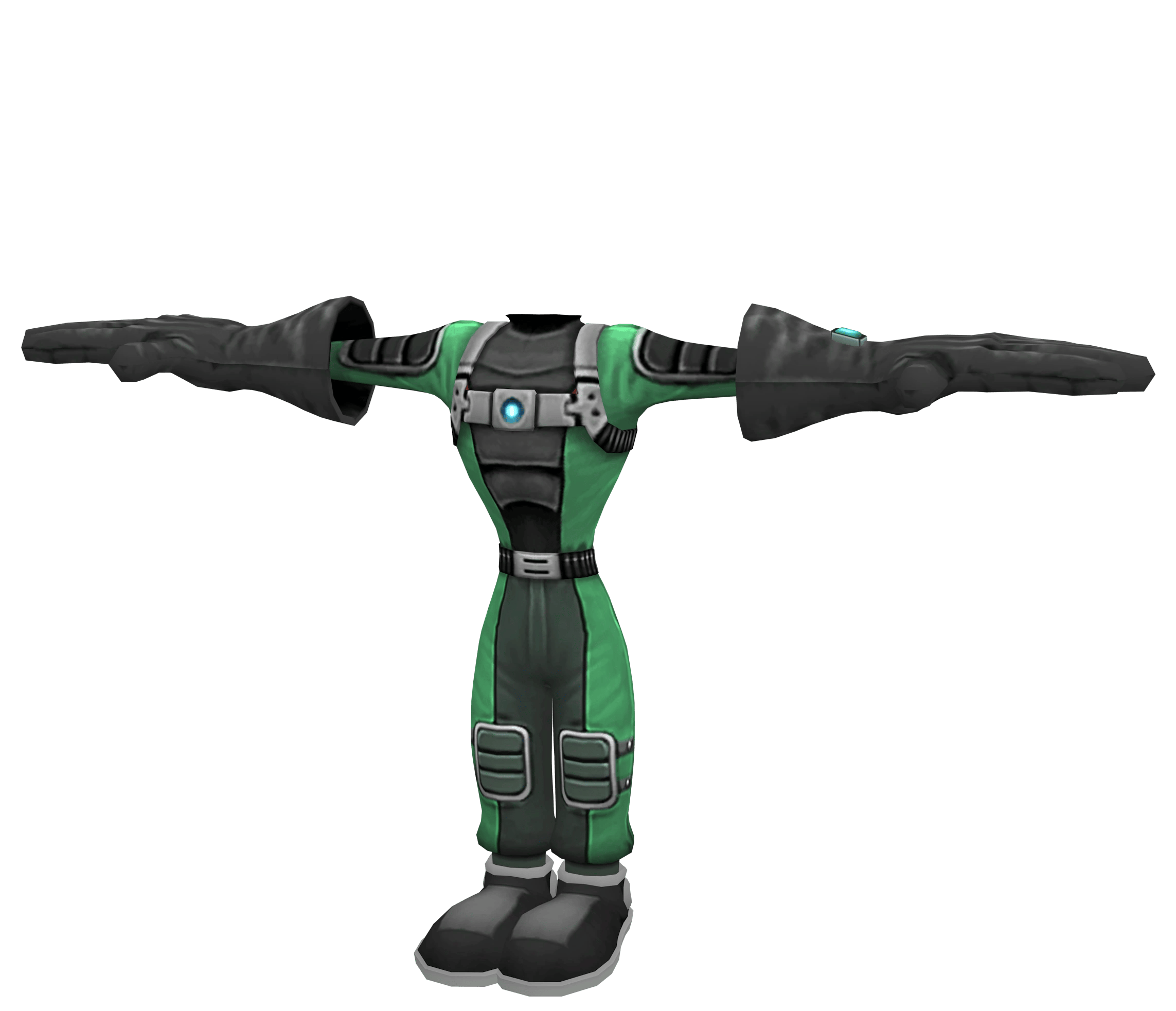
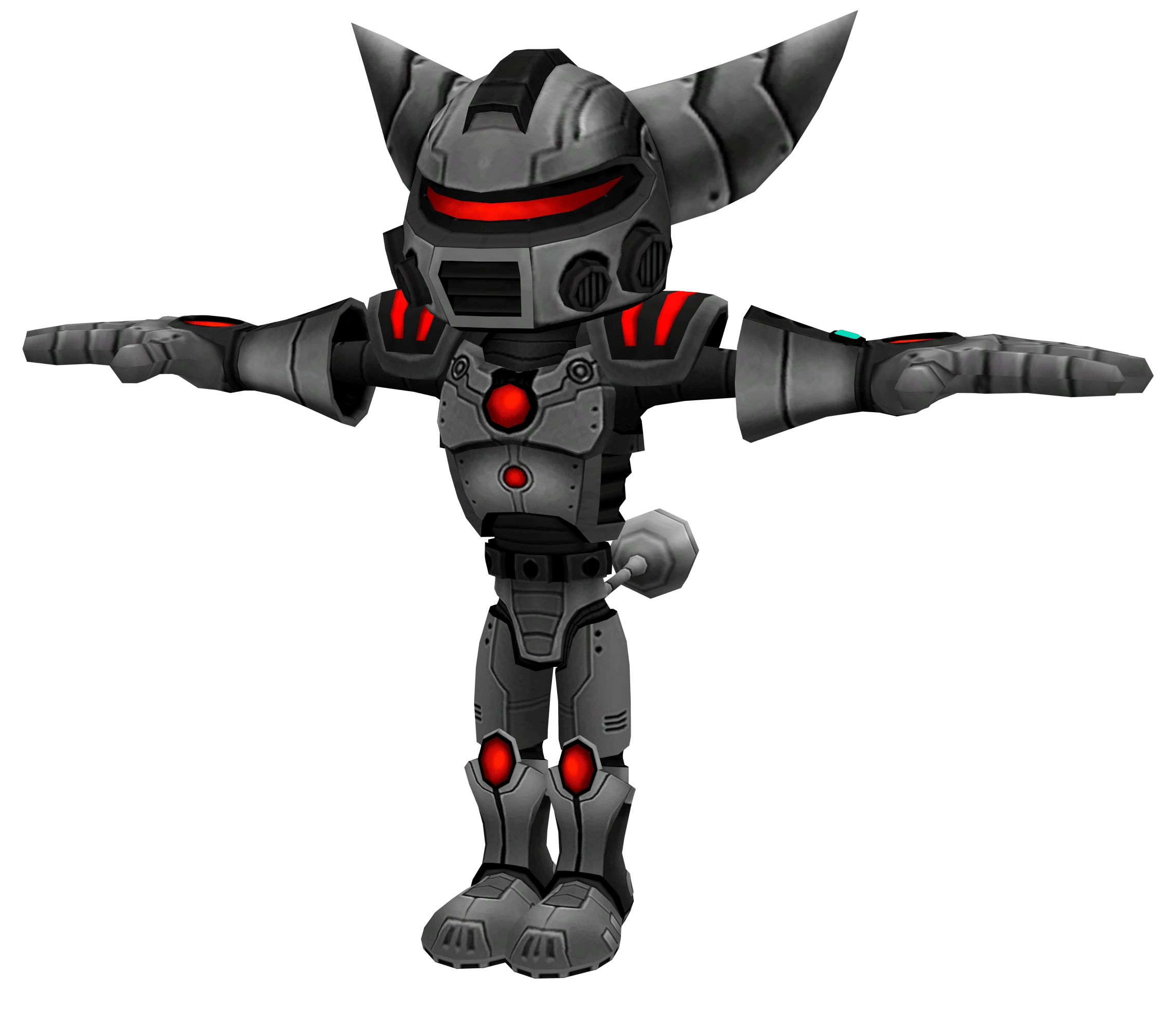
Clothes in video games also often symbolize one’s progress through a game. At the start of Ratchet & Clank 2: Going Commando (Insomniac Games 2003), for instance, the player character Ratchet sports a simple green and black get-up. By the end, you can splurge on a shimmering red and chrome battlesuit that covers his entire body for a million of the game’s currency, transforming him into something far more intimidating than he was before. RPGs, again, use this as a form of storytelling shorthand to deliver information about how formidable an opponent is. In Fallout: New Vegas (Obsidian Entertainment 2010), players determine the difficulty of their enemies based on the outfits they’re wearing. Fighting members of the New California Republic army dressed in typical army uniforms doesn’t provoke any worries about the difficulty of the challenge. However, facing up against armored soldiers with red-eyed face masks signals that you might have a problem.
There are also games that use disguises, where clothing becomes a game mechanic unto itself. New Vegas is an example of this too, where you can disguise yourself as a member of certain factions by donning their armor. Hitman (IO Interactive) makes clothing into a legitimate mechanic, whereby you’re constantly searching for someone with the clothes you need to get you into the area you want to be in. Clothes as symbols of status are transformed into things you need to have in order to successfully stealth your way through each mission. Subdue a fumigator, move through a closed off part of the hotel, lure a hotel clerk inside and knock them out to progress to the next floor.
Clothes are part of how we relate to the space that we play in, and how we express ourselves through clothing extends to how others perceive us in the clothes we wear. Clothes are a fascinating part of being human and also constructing the outward facing persona we present to the world. It may be a small thing somedays, or a subtle thing you don’t care to think about, but how we use clothes in video games often tells us a lot about the player. Clothes tell us not only how to navigate space at times, and perhaps to a certain extent how a person is feeling on a given day (though of course nothing should be totally assumed), but they inform us about the history of an area, and of a culture. While clothes aren’t always an indicator of how someone is feeling – someone might want to dress another way, but societal pressures won’t let them – sometimes clothes can be useful social cues. And of course much of what I’m writing about here doesn’t apply to the actual world, with actual human beings – because human beings aren’t characters. Character design is different than everyday human existence.
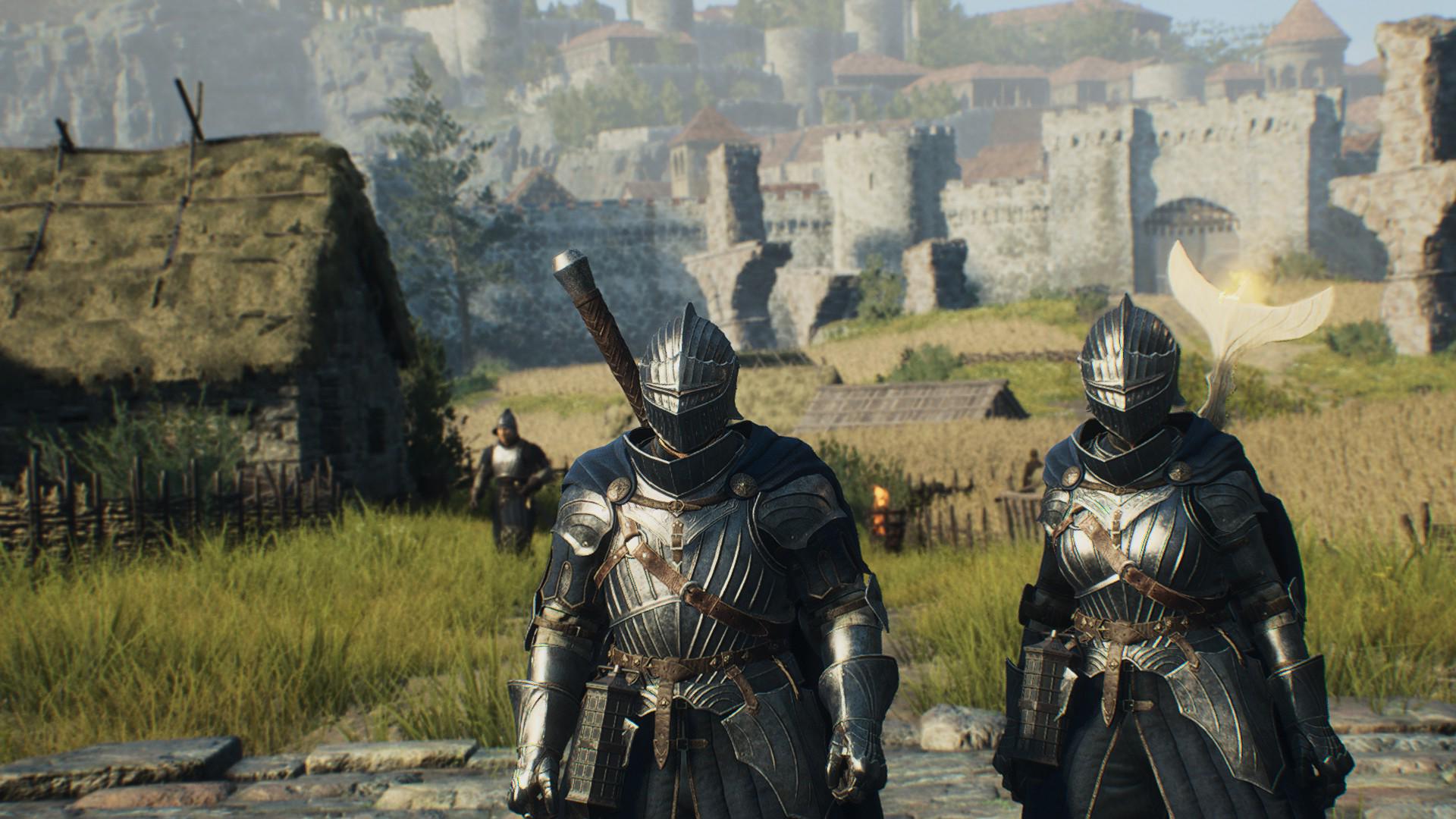
Clothes can also be used to control in a very negative way – think of the split between female armour and male armour in many video games. Female armour tends to leave a lot of exposed flesh, whereas male armour seems perfectly functional. Dragon’s Dogma II (Capcom 2024) actually did a very good job with this, so perhaps things are improving on that front – but there’s still unconscious gender norms put into place with this kind of practice, definitely something to be aware of. As I wrote at the end of my piece on Clock Tower 3 (Sunsoft 2002), games that offer critiques of the traditional perception of how women are perceived through society’s eyes can’t turn around and say “here, have a sexy cowgirl costume for an underage protagonist that is resisting the awful sexualizing impulses of serial killers”.
I’m taken back to Oblivion to finish this piece, I think, because there’s something very simple about the way that I performed my character’s perceived class through the clothing and armour I was afforded. By class in this context, I don’t mean RPG character class, I mean social class. My Dark Elf wizard, I imagined, came from difficult times and poverty. There was a sense of humility about him, even as he rose to the top of the Mage’s Guild. He could, theoretically, have opted to live in the opulent tower quarters of the Guild. But there was, I thought, a quiet joy in changing him out of his rich robes, and returning home to sit at the simple shack in his fishing waders, and then as night fell, go swimming. Without that option to change clothes, I never would have been so immersed. Sometimes I wonder whatever happened to that wizard. Maybe in his later years he retired. Or maybe the pull of fancy robes was too much for him. Regardless – isn’t it amazing how much work clothing does to spark the imagination?
 Horrorgameanalysis
Absolutely LOVED how you examined the topic of clothing in games in this post! I was always a little sad about how people often overlook character design and clothes specifically in games. I find it fascinating how characters’ clothes can reflect on their occupation, affiliation or status.
If you don’t mind, I’d like to share some thoughts on clothing in games here too as I am a big enthusiast of examining clothes as part of characters design ^_^”
Sadly the comment I was trying to post wasn’t sent due to its size, I suppose, so I just re-wrote it into the google docs, lol. I find clothes an important part of character design despite not being really interested in fashion irl.
https://docs.google.com/document/d/1LsSEPus4MptU62l4ifRQu0cuGZkH0CHB70krW33yjLY/edit?usp=sharing
LikeLiked by 1 person
Sorry this took me so long to get to – I absolutely love the thoroughness and thoughtfulness of what you’ve provided here. It’s basically another blog post you’ve provided for people to read through! It’s awesome to recognize just how important clothes and customization are for so many people. I think we do particularly like to se our own preferences for clothing in video games (which is why it is so frustrating that women’s clothes are often only sexualizing – as you observe, the high heels into combat thing is fun sometimes but sometimes my characters just want to, y’know, not do that?).
Love Nikki looks like such a gorgeous fashion game! I have never heard of it before so I think I’ll have to go and give it a look. And I have been meaning to look at Galerians proper so I really should get round to that, thank you for reminding me! And thank you again, such a lovely comment and I really appreciate your time and support!!
LikeLiked by 1 person