
David Szymanski’s January 2025 horror game Butcher’s Creek is atmospheric, malevolent, and above all, violent. In fact, my enjoyment of it caused me to reflect on my enjoyment of violence in horror in the middle of beating a serial torturer’s skull in with a shovel.
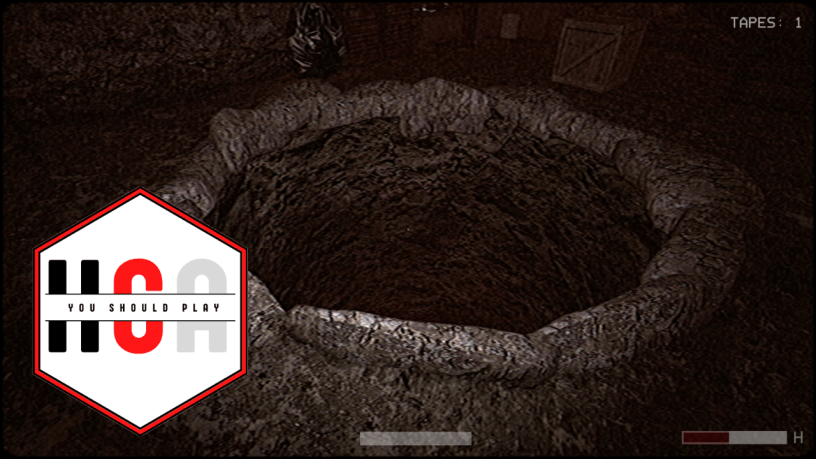
It is styled openly after Manhunt (Rockstar 2003) and Condemned: Criminal Origins (Monolith 2005), and as such it emphasizes gritty violence. Played from a first-person perspective, Butcher’s Creek‘s violent streak is made evident mere minutes in, as you pick up an assortment of weapons and use them against sack-cloth-headed foes. As you whack them, they scream; “My teeth!”, “Asshole!”, “Fucker”, and all manner of other expletives or just screeches of pain. This to me was key to getting the violence to feel authentic. The combat is not very difficult. I found that the block was unreliable and hard to master, but I also discovered the enemies are very slow and have poor pathfinding. Simply whacking them a couple of times, backpedalling to let their follow-up swing hit empty air, and following up with another few brutal clubbings was enough. Some combat encounters became frantic as a weapon breaks and you have to scramble for a new one. The most memorable, though, was probably a fight that takes place near a deep, bottomless well. My weapon broke, and in a panic, I equipped my camera and took a picture of the one remaining assailant, standing there, seemingly enjoying my weaponlessness. The flash staggered him, and he plummeted backwards into the pit.
The game is not shy about its brutality. It is most inspired in how it uses a camera as a healing item. Taking pictures of the aftermath of various torture scenes or splayed bodies regenerates your health, reinvigorates your character. This gives the gameplay feedback loop a kind of morbid sense – you play the game to enact violence, and your enjoyment of that violence perpetuates your ability to continue enacting violence. It is a ceaseless loop.
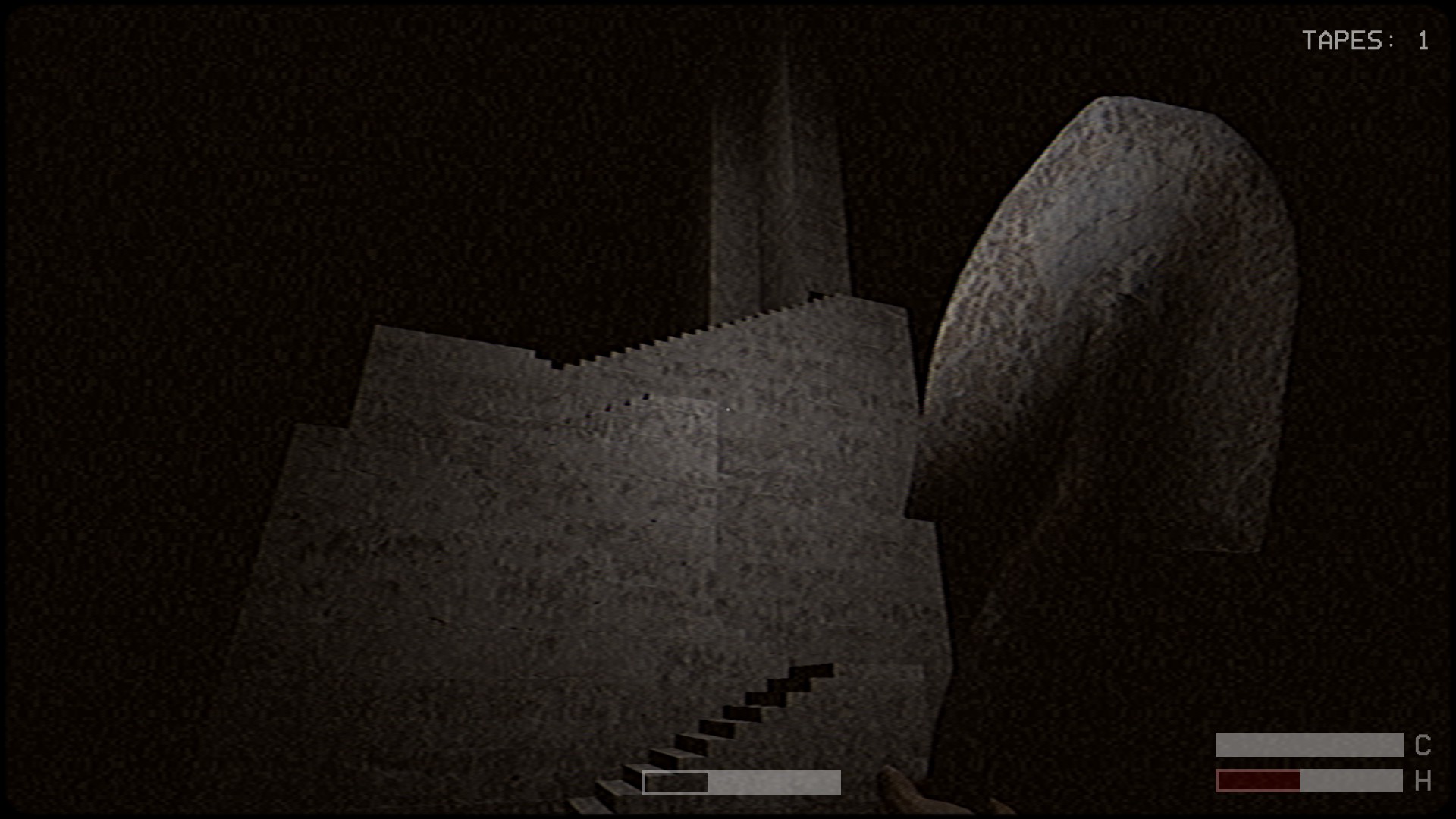
The game’s environments evolve from rustic houses, hollowed out by these torturers and made into austere, foreboding spaces, into industrial nightmare pits that seem to run miles deep into the earth. The more surreal concrete constructions will surely give me some fabulous dreams. The one in the image above was enough to give me chills alone. There are other locations that are worth luxuriating in, and the game, fortunately, is wise enough to give you the space to enjoy it. Ambient soundscapes trick you into hearing things, just like the best horror games, and I’ll surely be listening to this game’s ambience while working for some time to come.
The capacity to enjoy the violence on display is tempered by two things: first, the game isn’t close to photorealistic and as such it has a very limited pool of animations to pull from. This makes the game more “comfortable” to play in that violence is not so shocking or discomforting, but it loses its sting a little as you settle into the mundane easy nature of the combat, which is very easily gamed. Secondly, the game’s enemies are all psychotic murderers that delight in their horrible tortures. I didn’t like Christmas Massacre (Puppet Combo 2021) because I didn’t think the game was doing enough to critique its presentation of extreme violence against innocent people. As a snuff game, it didn’t do enough outside of that framework to be an interesting work of horror fiction.
Butcher’s Creek, on the other hand, is much plainer in its presentation. On the immediate level, you get satisfaction from killing people who probably deserve it. They delight in others’ pain, so it is okay to give them even a hint of that pain before they die… however troubling that is to think through to its logical conclusion. It’s not that I have become more squeamish as the years have gone by, and nor should games like Butcher’s Creek stop being made. I am just aware of the power of a gameplay loop, and what Butcher’s Creek does is slowly inure you further to the violence on screen. It doesn’t glamorize it – everything is layered in film grain, darkness, and often disgusting ooze and blood, with a truly lovely, awful soundscape – but it does still foreground it. By the tenth enemy, even, there’s a grim satisfaction in staving their mouth in with a bit of lead pipe. By the end of the game, when you’re who knows how far beneath the earth, carving psychopath’s heads off with an ax, the game has you in its butcher’s grasp.
The game is very short. I beat it in under two hours, and I think most players seem to report the same. As such, any kind of thesis statement the game might be able to make more profoundly on the violence on display, and how it transforms us into monsters, is left a little opaque by the end, even if it is still definitely there. Additionally, the game can’t quite do enough new with its gameplay loop to stand out by the end. New environments and bits of lore are really all it has to sustain itself, as well as a few later enemies having slightly different stats, with one in particular having an effective camouflage gimmick.
But if you want a truly atmospheric, grimy experience that centers exploration and melee combat into one gruesomely violent package, Butcher’s Creek has you covered. Despite its very short runtime, its environments and its gameplay loop will stick with me for a very long time, quite probably in a nightmare or two. And that’s the mark of a good horror experience. Just look out for the horses… and don’t forget to take some nice pictures.
You can buy Butcher’s Creek on Steam.
 Horrorgameanalysis