
The original Resident Evil 4 lives on in my memory as not just one of the best video games ever made, but as the game that I initially hated. My first impression of Resident Evil 4 was that it was going to kill the classic survival horror experience – the fixed cameras, the puzzle solving, the slower paced combat, the methodical resource management. Resident Evil 4 seemed antithetical to that. It is described a lot as a “horror action shooter”. The producer of Resident Evil 4, Hiroyuki Kobayashi, was asked a question by magazine Nintendo Dream.
—By the way, when you re-designed the game from survival horror to action shooter, were there any models or inspirations?
Kobayashi: Lately there’s been a lot of interesting games coming out of the west, haven’t there? We pulled a lot from there.
The game, directly inspired by more action-oriented western titles, seemed to go against everything I found interesting about survival horror up until that point. Wasn’t survival horror supposed to be like Silent Hill? Sure, it could get noisy, or even deal with the slaying of enormous monsters – but ultimately, the tank controls and the fixed camera angles were surely an immutable part of the genre?
Resident Evil 4 shows the importance of controls to a tee. It’s a story I am fond of retelling, but I once had a conversation with someone about how the original game’s controls are so “shit”. That’s not only insulting criticism, but it is disregarding why the controls of Resident Evil 4 are so damn good, they made me overlook the death of the genre itself.
You control returning series protagonist Leon Kennedy as he fights his way, over-the-shoulder camera-style, through an offbrand Spanish village, into an enormous castle, and then finally into a military base. The game’s sense of pace is almost unrivalled – every new area feels like a natural movement from the previous. The game builds and builds, but it never loses that sense of tension. You’re always checking your ammo, arranging your inventory, and finding a careful place to position yourself. You can’t move while you’re aiming your gun – a move that I still think keeps Resident Evil 4 feeling fresh and interesting compared to shooters that were to come. There’s always a need to keep an eye on your environment, and, when you begin to escort your mostly defenseless companion around, you have to consider her as well. Defending her becomes much more natural when you’re having to plant your feet in place to fight back. Every combat feels, to some extent, like a “last stand”.
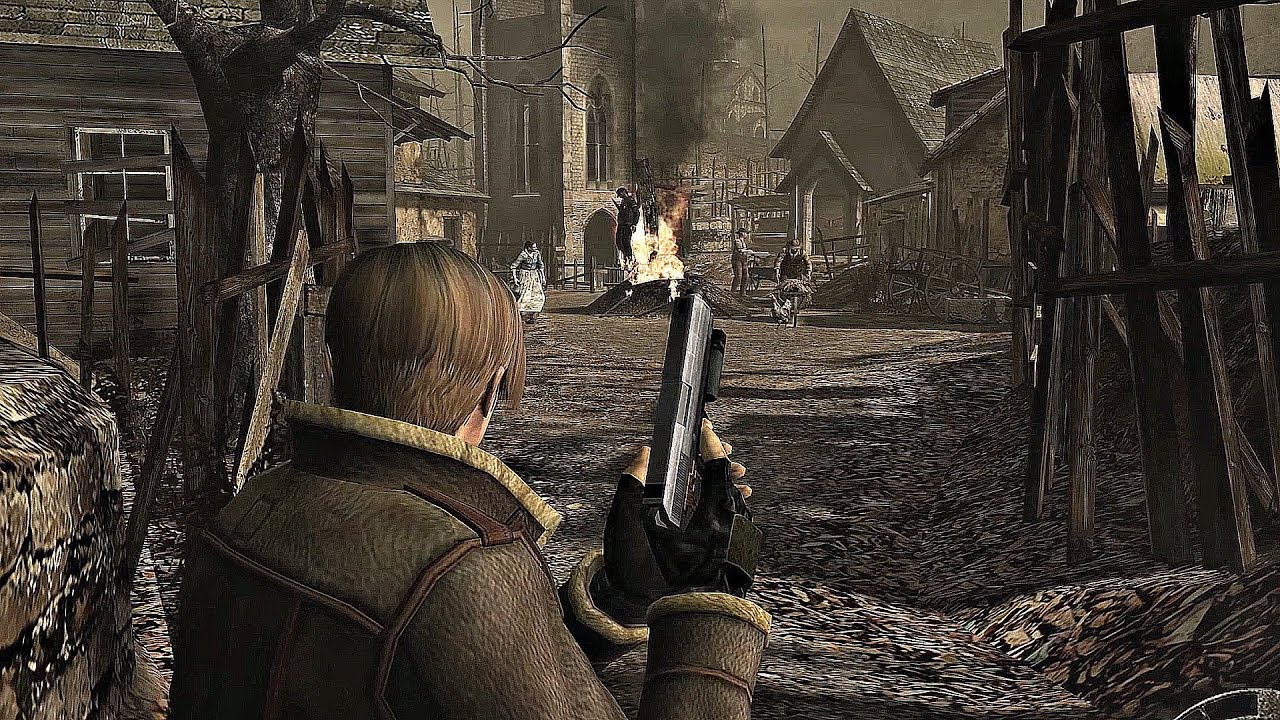
The game has a number of very famous combat encounters. Of course, the game’s very first large battle – against swarms of rabid villagers in the town square – is so beloved for a reason. It rises in pitch and intensity, with every scrap of ammo you find being worth nabbing. Every single bullet counts – it is for this reason, among others, that I love survival horror. In my recent playthrough of Fallout 3’s Point Lookout DLC, resource scarcity, even in a radioactive bog infested with hostiles, was nonexistent after twenty minutes of play. Resident Evil 4 is always asking you to make decisions about the guns you use. Do you sell a gun you have ammo for but don’t find much utility out of, hoping you’ll find more ammo for your favourite guns up ahead? Do you splurge on upgrades for your best gun, or try to diversify? Every single choice stacks up, making for a unique playthrough each and every time based on what you choose to right at the beginning. It makes for an addictive “ripple effect” where you want to replay the game, just to see how your tactical choices might have changed if you’d invested in a different selection of weapons. The game still sparks weapon-related discussions (read: arguments) to this day. The fact the game was so meticulously designed that most guns were viable options makes for an addictive play experience.
The developers realized that they wanted to break away from the series’ previous antagonists, Umbrella, as their own brand of biohazards had by this point been well established. Foes like the Lickers, zombie dogs, and regular zombies had gotten old, and their appearance was predictable.
—It seems like, in not bringing Umbrella back, you were attempting to mark a line between previous Resident Evils and RE4.
– Kobayashi: Well, we weren’t trying to completely breakaway from the past games, but if Umbrella is the enemy, that means having zombies and creatures like lickers and hunters. It would be hard to create something new if we were constrained by those elements. Zombies would feel like we were just mimicking the past games, and we’d end up with the same style of combat. So we wanted to change that.
The game’s variety of parasitic abominations makes for an engaging, even sometimes scary, shooting gallery. The game’s main source of tension comes from enemies closing in on you, weapons raised, chanting their deathly ritual spells at you – but sometimes the atmosphere is genuinely thick enough that you’re second-guessing the shadows you see all around you. Heavy breathing and crunchy footsteps signal the arrival of ever-more disturbing creatures. There is always something to upset the player’s rhythm.
And it is, ironically, that broken sense of rhythm that gives the game its expert sense of pacing. Moments of comfort are sought after and precious. It doesn’t take much looking to see that the game’s save room theme is a source of genuine rest and recuperation. These little writing rooms, tower balconies, and hovels are places between the frenzied fire and harrowing shooting, where your nerves can, finally, genuinely, unnerve themselves. There’s always so much to do and so much to see outside of these rooms that the task before Leon – and yourself – can feel insurmountable.
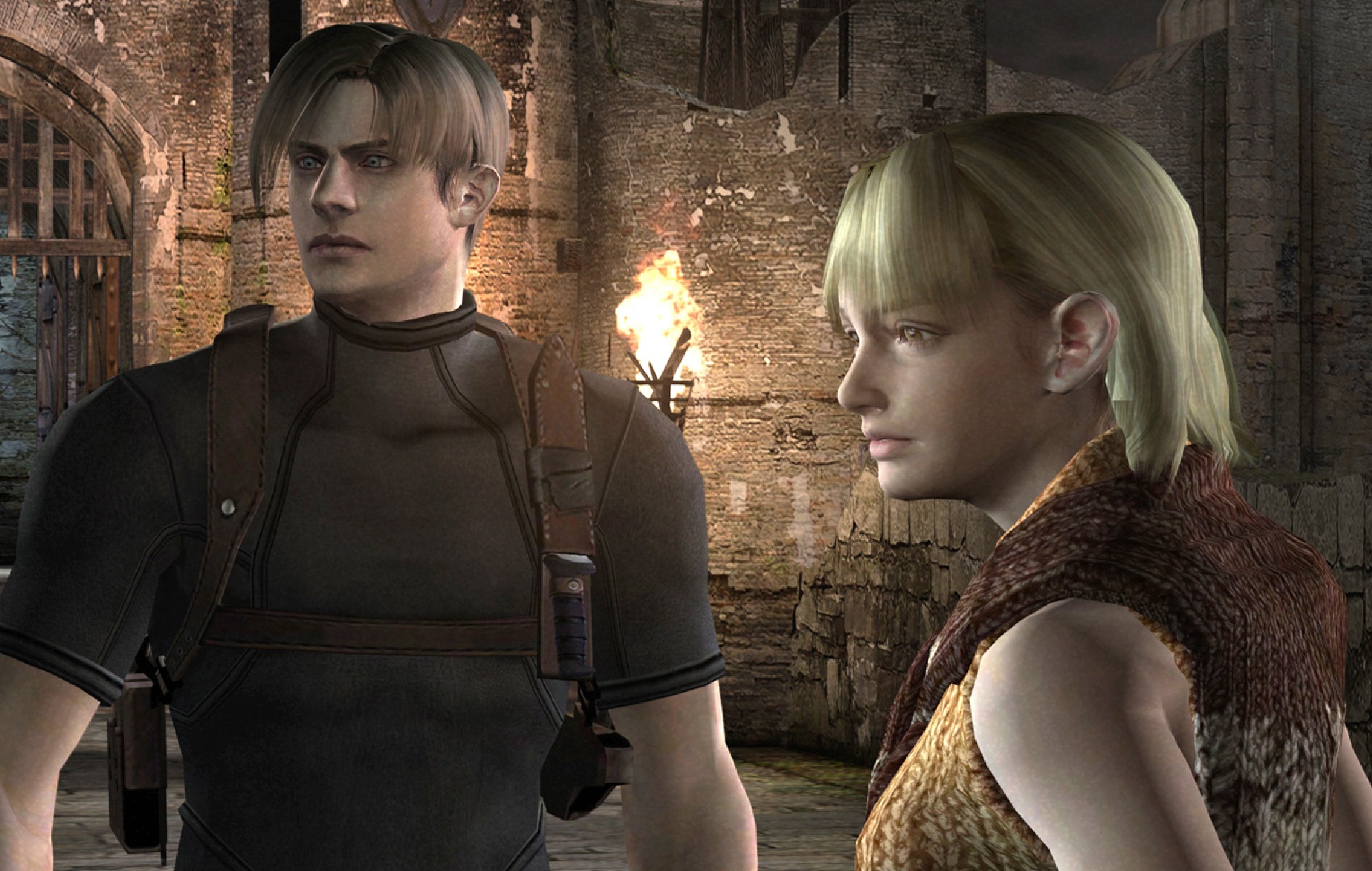
When I played this game last, it was 2020. That was, if you’ll recall, a pretty harrowing time. The ability to play Resident Evil 4 – to totally immerse myself in monster slaying and Leon’s terrible puns and Ashley’s endearing nature and all the silly campy villain lines – these are memories that are exceedingly precious to me now. In a world that frequently feels on the verge of destabilization, this is the benefit of Resident Evil 4, however ironic that feels to me now. For Resident Evil 4 did herald the death of the mainstream fixed camera, classic survival horror. Future entries in the series veered hard into action horror, and even Resident Evil 7 retained the action – though that, too, I’ve come to understand, is another mark of a well-paced horror game. The slow escalation into a frenzied, triumphant climax, is a Resident Evil special, a hallmark of the series. But, still, perhaps, it is Resident Evil 4 that does this slow ramping up best, with things becoming crazier and more impossible for Leon until he is sprinting through infernos and fighting mutants leaping from scaffolding, firing rocket launchers at pulsing walls of flesh or hordes of ex-humans, hungry for Leon’s brains.
Resident Evil 4 is a special game because in spite of my ingrained love for the genre it supplanted, which has since undergone a bit of an indie revival, I love it all the same anyway. It is a game that earned my respect, as I started from a place of doubt and skepticism. And yet, here I am – singing its praises like it is one of the most important video games you’ll ever play, especially if you’re a horror fan. Though it is worth caveating that – the game isn’t as scary as it could be. There are a lot of elements that date Resident Evil 4, such as the quick time event sequences, the giant absurd statue that chases you across a bridge, the tongue-in-cheek moments that still land but maybe not quite as well for me, who prefers a purer horror experience.
During the interview, Kobayashi was asked if the game was for people who get scared easily. He replied, “Resident Evil is often called “horror”, but RE4 is different. I can’t say it has zero horror elements but it’s not that strong. If you really want to enjoy a horror game, that would be RE1. It’s quite scary. RE4 has much more action, so… I mean, that said, if you’re really a scaredy cat it might not be a good choice. (laughs)”
Resident Evil 4 might not be scary in terms of darkness or big monsters or an atmosphere that really disturbs you at all times. It might not ask big existential questions or interrogate the human psyche. It still can be scary because of big monsters, I think – that’s the one thing on that list that sticks. You’re a badass in a world of monsters, rather than an everyperson in a desolate ruin. But it’s still a must-play horror game for how it uses the tropes and trappings of the genre to tell an excellent action-oriented story, that has its tongue firmly planted in its cheek. The remake is out there, and it’s good too, but the original is still nigh-essential. It is a cornerstone of gaming history that exists outside of the shadow of the remake. In fact, the remake is in its shadow, and remains that way, regardless of how much I loved that too. When I say the original Resident Evil 4 is one of the most important video games you’ll ever play, well, that’s because… it is.
You can play Resident Evil 4 on what feels like every platform under the sun. Seriously. Go look it up.
 Horrorgameanalysis