
At the beginning of my last post, I asked the big, thorny question – what makes a good RPG? Now, I ask what I think is an equally thorny question – what is Star Wars? As with the RPG question, many great minds have laboured over the answer to this question. It all started, of course, with the 1977 film directed by George Lucas, a space-fantasy adventure that hearkened after the sci-fi serials that came before, like Flash Gordon. When I think Star Wars, this is still the film I think of above all the others. It has both a sense of whimsy and high-stakes danger. The characters – however loose and archetypal at times – nonetheless speak to the countless narrative archetypes of the past. Each one was codified forever in modern pop culture thanks to Star Wars.
There’s Luke Skywalker, the naive farmboy who strives for something more, who discovers his fated destiny does lie among the stars, but comes with a heavy price. Then there’s Obi-Wan Kenobi, the wise, somewhat distant and enigmatic mentor figure who gives his life (spoilers!) to allow the new generation to rise in his place, to correct the mistakes he is implied to have made. The sinister and famous Darth Vader is this stoic mountain of a man – who may or may not actually be human beneath his armour. He is monstrous and mysterious, and as the Original Trilogy progressed, more and more of his humanity reveals itself. Han Solo is another famous archetype, the smuggler who shoots first (and don’t tell any Star Wars fan otherwise!) and asks questions later. In it for the money at first, he is revealed to have a heart of gold when he comes back to help Luke destroy the Death Star. The Death Star is itself an archetype, an enormous superweapon the size of a moon that can destroy planets. Then there’s Princess Leia, the badass, defiant woman who is intelligent, scrappy, and doesn’t take disrespect from anyone, while also being poised and beautiful. There are more, of course, but these are the most famous.
Why am I giving all of these recaps? If you’re reading this, you’re probably intimately familiar with all of these characters and these archetypes. But it’s important to note them as they appeared in Star Wars, because The Sith Lords picks them apart, deconstructing them and analyzing an archetype’s role in a narrative.
Lucas famously based the story of Star Wars around Joseph Campbell’s Hero’s Journey. Much has been done to discredit Campbell’s Hero’s Journey and the idea of the “monomyth”, but Star Wars buys into it, exploits the supposedly in-built human desire for this story. Luke Skywalker starts on the desert world of Tatooine, bored and seemingly ordinary, asking for adventure. Something pushes him into adventure, and the journey begins. I don’t think the monomyth is bad, but it is pervasive. The film industry and popular culture teaches that the Hero’s Journey is the way to write stories. Rising action, climax, denouement. This is traditionally satisfying, but it also limits the stories that can be told. In her acceptance speech for her Nobel Prize for Literature, Olga Tokarczuk said that “we are seeing too many attempts ‘to harness rusty, anachronistic narratives that cannot fit the future to imaginaries of the future, no doubt on the assumption that an old something is better than a new nothing”. Star Wars was a story for the moment, then. The Hero’s Journey is not so universal that we can tell it over and over again and create a more meaningful society from recycled bits and bobs, with only aesthetic variation. In other words – we have to think about models of storytelling and gameplay beyond what we already know. The Hero’s Journey in a postmodern context is lacking. We live in a society so full of literature that deconstruction is recurrent and frequent, in what I often see as a desperate attempt to find additional meaning in older stories, and more frequently to challenge the reader.
My favourite David Bowie quote comes from an interview for the magazine Filter in 2003, as he talks about his album Reality. He says about our society that “[w]e are completely and totally at sea, philosophically. And I don’t think we want new things. I think we’re kind of scrounging around among the things we know to see if we can salvage some kind of civilization which will help us endure and survive into the future. We don’t need new. We are fucked. We’ve got enough new. Enough!…There is no structure, there is no plan. We are not evolving. We have to make the best of what we’ve got”. This idea does not just apply to political models, or to industry, but also to narrative. The idea of Star Wars’ monomyth has pervaded popular culture to the point that it could be said to be actively harmful to our perception of the world, and what is possible. The transmedial nature of Star Wars is important too. Star Wars is everywhere. Games, books, films, TV, toys, comics… the list goes on.
Philosopher Mark Fisher says that Star Wars has always been a “sell-out” from the start. What was once counterculture (however momentary), he claims, was now the new mainstream, as signified by Star Wars. The defanging of joyous storytelling or stories of rebellion into something controllable by corporations. To some, Star Wars is representative of hegemonic greed, the power of merchandising, and an endless array of plastic shaped after your favourite characters. It is a money sink and a time sink. As film critic Roger Ebert famously wrote about fan culture surrounding Star Wars and Star Trek:
“A lot of fans are basically fans of fandom itself. It’s all about them. They have mastered the “Star Wars” or “Star Trek” universes or whatever, but their objects of veneration are useful mainly as a backdrop to their own devotion. Anyone who would camp out in a tent on the sidewalk for weeks in order to be first in line for a movie is more into camping on the sidewalk than movies. Extreme fandom may serve as a security blanket for the socially inept, who use its extreme structure as a substitute for social skills. If you are Luke Skywalker and she is Princess Leia, you already know what to say to each other, which is so much safer than having to ad-lib it. Your fannish obsession is your beard. If you know absolutely all the trivia about your cubbyhole of pop culture, it saves you from having to know anything about anything else. That’s why it’s excruciatingly boring to talk to such people: They’re always asking you questions they know the answer to” (Ebert, “Fanboys” 2009).
All of this critique is important to understanding the background of Star Wars, and our modern perception of it. Remember: I love Star Wars, and yet I think it’s critically important to critique; to recognize the impact it has had on popular culture and wider society. The pervasive monomyth and mythopoetics of Star Wars has informed so much of western popular culture that even if you somehow haven’t engaged with Star Wars directly, you’ve almost undoubtedly encountered some of the ideas popularized by Star Wars. And since Star Wars is so large, you can be the kind of fan that is absorbed into extreme fandom. Deconstructionist storytelling, the kind of which is found all through The Sith Lords, can also be found in Rian Johnson’s The Last Jedi (2017), the eighth film in the Star Wars franchise. While I really enjoyed most of the film, and still regard it well, the film was not popular with an extreme subsection of the Star Wars fandom, who I believe were looking for the experience Ebert describes. The rhetoric used around The Last Jedi became increasingly rightwing, tying itself to the Gamergate movement, and scaring Disney so much that they course corrected into the traditional with The Rise of Skywalker (Abrams 2019). Star Wars’ power is such that for a section of the fanbase, deconstructionism is akin to heresy. It is like going off script.
The Sith Lords is more consistently written than The Last Jedi, but actually, I think, was written in a similar situation than The Last Jedi. The original Knights of the Old Republic tells a relatively traditional Star Wars story (if you’re going for a Light Side ending, anyway), where you rise in power, gather a group of allies, and go to destroy an evil superweapon. The Sith Lords, with the main writing done by Chris Avellone, who had a bone to pick with the Star Wars universe, takes the choices made by the previous game’s scriptwriters and complicates them. We’ll get into how later in this series, but with the scene set for what Star Wars has become in the cultural and academic context, I wanted to hone in on some of the core ideas that the original 1977 film codifies in terms of the aesthetic and narrative expectations given to us by Star Wars. This will allow us later on to identify what The Sith Lords taps into, and how it intelligently deconstructs these ideas. Chris Avellone reportedly read through the entirety of the published Expanded Universe (the Star Wars novels and extended media) that I was fascinated with as a kid, perhaps the Star Wars I remain most in tune with even today. Avellone’s takeaways from the franchise’s extended lore as it stood highlighted some core pillars. The pillars here are representative of what I think Star Wars is all about. But you might disagree and include “Skywalkers” as a core part. I, personally, don’t. I’m invested in the characters, but not because they have the name Skywalker. But, anyway, here are the three parts of Star Wars I consider integral:
Multi-Layered Conflict
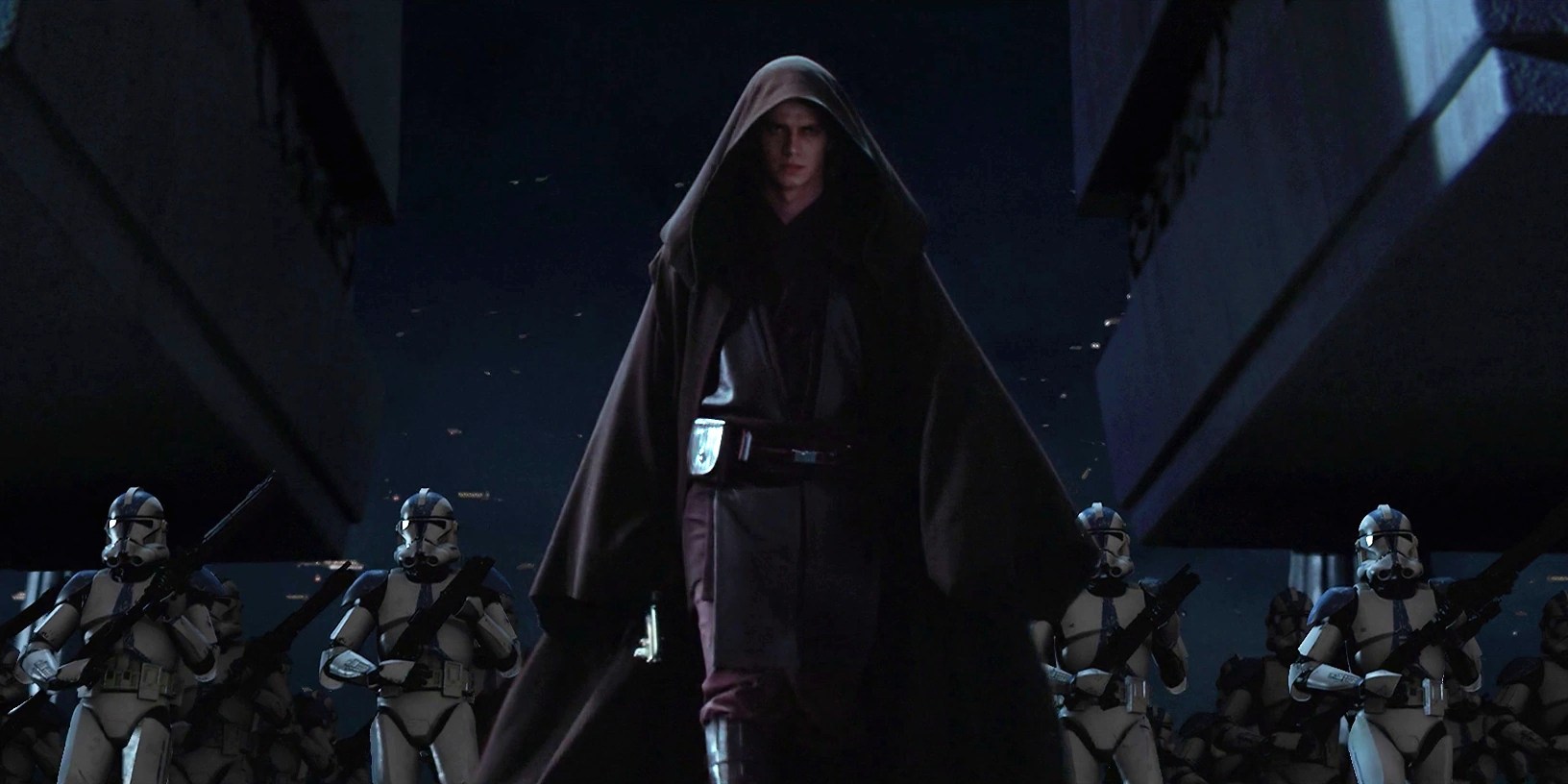
The way I see it, Star Wars is about a conflict within a conflict. The conflict seems to be for most people between the Rebel Alliance against the Galactic Empire – democratic liberation seeking to restore a republic against xenophobic imperial military fascism. This is the primary conflict that we perceive as the “Star War”. Baked into that conflict, however, is an age-old religious struggle between the Jedi and the Sith. The Jedi, a religious organization that has lasted for thousands and thousands of years, preaches pacifism and offers their service as diplomats, nonetheless still train as peacekeepers and warriors that use the Force. The Jedi Knights, as they are called, wield lightsabers and enact justice. I suppose in an ideal world they would be politically nonaligned, but they opt to support the largest galactic society, the Galactic Republic. At one point in their history, rebellious Jedi started a religious schism and became what would be known as Sith. Sith preach self-aggrandizement, prejudice, and power above all things. Proving one’s own superiority to others through using negative emotions is their goal. This creates powerful fascist military empires in the short term, but as in the actual world, authoritarianism comes at the cost of alienating much of society, causing money to be spent on military expansionism and crackdowns on the local populace.
I see the Sith / Jedi conflict as intrinsic to the setting. Others might see the Rebel / Imperial conflict as more important. The subjective importance of this I think creates different expectations depending on what you see as taking precedence. I am always more interested in the conflict between Dark and Light because of my own interest in moral systems as part of a fictional setting.
Varying Technological Levels
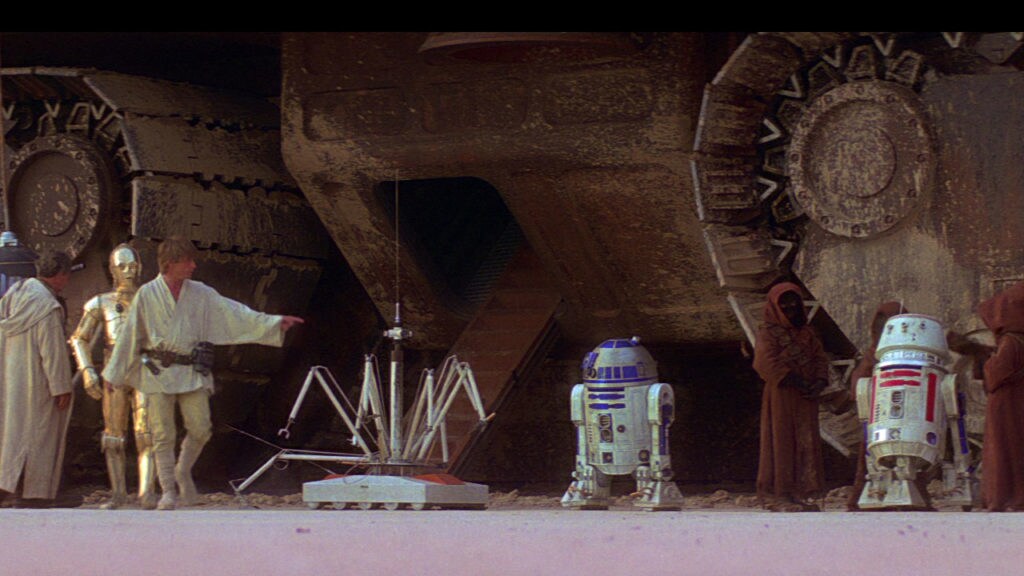
It is immediately evident that technology is stratified in Star Wars. The sleek equipment used by the Imperial attackers – white battlesuits, imposing black armour, crisp, ironed uniforms and complicated control panels – can be immediately contrasted by the technology available to the people on Tatooine. They make do with very little – rusted landspeeder vehicles, banged-up water harvesters for moisture farmers, rough-and-tumble weapons. This changes from time to time in Star Wars – some planets are idyllic, as revealed in the Prequel Trilogy like Naboo, with shiny chrome ships, gorgeous scenery, and a high-level quality of life. But to me, the most interesting Star Wars highlights the gulf between technological access. It makes the conflicts I talked about above feel more interesting. How can scrappy underdogs come out and win against overwhelming technological superiority? In some ways, The Clone Wars conflict is less interesting because it is between two relatively equal factions – but it does raise some more interesting moral questions. Out of this technological divide, you get characters growing up in different living situations, with different expectations.
Stuff like hyperspace engines aren’t properly understood by the people of the Galaxy. There’s a kind of archaeological approach to technology in Star Wars that appeals to me, making everything feel grand and mythic. They can make this stuff, but they don’t always understand it. Instead of TVs, holoprojectors are more common. Lightsabers are “an elegant weapon for a more civilized age”. Things feel either glossy and futuristic (yet still analog), or beaten up and rough, somehow still limping on. The people of the Star Wars universe have sentient robots, but don’t have much digital equipment as we understand it today. No screens – which appeals to a lot of people, I think!
Galaxy Exploration
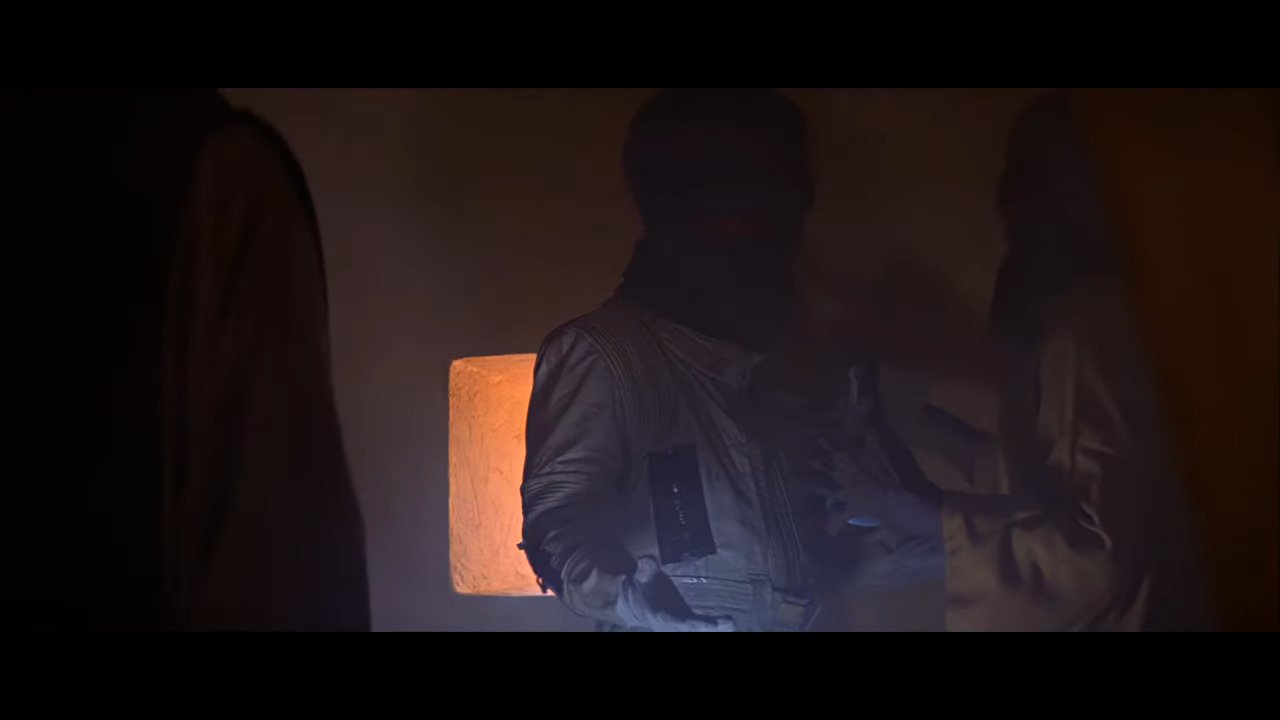
Part of the joy of Star Wars is the ability to explore all of these different worlds and cultures, driven by alien species. It seems that every new bit of Star Wars media introduces a new alien or two, while expanding on some previously seen ones. The cantina scene in A New Hope introduced so many funky looking creatures, and now you can go and look up “Duros”, for example, and find that they are a species of spacefaring, industrious starship creators. That’s right – the blue people with the big foreheads and the red eyes have their own mythos, their own culture, and it’s one that is carried through across various media.
That exploration is often carried by a sense of whimsy and wonder. Star Wars evokes truly awe-inspiring sights, such as Cloud City on Bespin, or shows things on a massive scale – like the endless deserts on Tatooine. Everything is huge, and it is a galaxy with infinite potential. There’s so much to see, and so much to do. I remember the first Star Wars d20 campaign I ran – I was so frivolous with my references and all the planets you could go to. I think that’s often where writers, or more accurately, executives in charge of modern Star Wars have become scared. Everything has to be interconnected. But the galaxy is huge. Three point two billion habitable systems, claims Wookiepedia. Even if some planets only have a smattering of people, that’s trillions of sentient beings. Quintillions, perhaps. That’s an unfathomably huge number. So while some stories where characters bump into each other all the time make some sense if they’re trying to find each other, the galaxy is so massive that its storytelling potential is off the charts. So many sentient alien species, so many individuals, each with their own goals. Not everything has to be tied to that religious conflict, or democracy versus fascism, but that is an overshadowing element of Star Wars, irrevocably.
These three core pillars – conflict, varying levels of development and technology, all tied together with a sense of exploration and dizzying potential – are used by The Sith Lords. There are new planets – Peragus and Telos – and returning ones, like Dantooine and Korriban. This mix keeps the game healthy, steeped in Star Wars’ past while allowing for the exploration of the new. It is a fascinating Star Wars game that utilizes the potential of the overarching conflict to tell a story that isn’t easily boiled down to selling toys or commercialism (though of course, they have tried that too in recent years). I could write a few more pillars, perhaps. We could consider conflicts between order and criminality more generally, with kind-hearted smugglers against vile bounty hunters. But I think, by and large, the essence of Star Wars revolves around the wonder of exploration and meeting new people, overshadowed by the threat of an enormous, intergalactic conflict that is waged between two religious sects.
So, with all of this out of the way, I think now, finally, is the time to start talking about The Sith Lords itself. Next time!
 Horrorgameanalysis