
What makes a good roleplaying game? In fact, let’s go one step further – what makes a roleplaying game a roleplaying game? This is a question many great minds have struggled in vain for years to answer. Is it number-crunching mechanics? Games where your stat and trait choices actually matter? Or maybe the true importance of a roleplaying game lies in the narrative side of things. Do we have to be able to play a wide variety of roles to truly call it an RPG? If we’re getting down into grittier detail, does an RPG have to be turn-based? Isometric? We would probably call that kind of RPG a CRPG, a computer role playing game. This was the first kind of RPG I was familiar with as a child. These RPGs seemed full of numbers, spreadsheets, and complicated stat choices (I was like, six, so do cut me a little slack).
CRPGs were born from a direct link to Dungeons & Dragons, the famous 1974 tabletop roleplaying game that initially actually pitched itself as a wargame. The fighting and stat crunching was definitely the main point. Stats, getting treasure, better stuff to whack monsters with – that was of course a large focus. Writing in 2010, blogger tavisallison keenly notes that:
“the meaningfulness of drawing a parallel between any given RPG and “wargames” as an abstract, monolithic entity is hugely overstated. The genre of wargames encompasses enormous diversity in theme, content, and playstyle. Wargames have a considerably longer history than RPGs, and have undergone at least as much change over time”. These changes were manifold, but the strongest evolution came from the connection of narrative, and the idea that there was a storyteller – or Gamemaster, or Dungeonmaster – that helped to create a more coherent narrative structure. Y’know, with themes, and stuff.
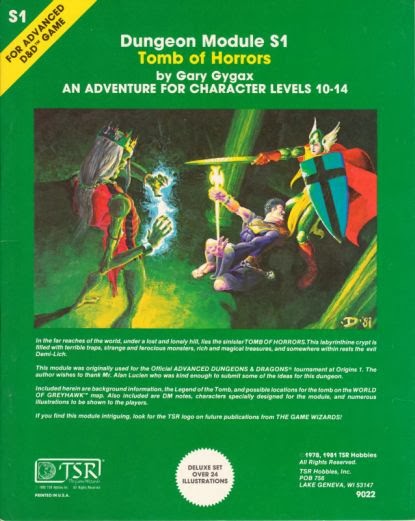
The blog RPGHistory writes that “by the late 1960’s and into the early 1970’s, we can see the roots of modern TTRPG’s (table-top role-playing games) which soon sprung forth almost fully formed by focusing on individual characterisation, immersion, and sequential story-telling which added consequence to player characterisation. Two systems were bridged by narrative; the idea of building a world, and the idea of being a character in a world”. Thus the focus for me when it comes to both RPG design and narrative studies is tracking the evolution of narrative.
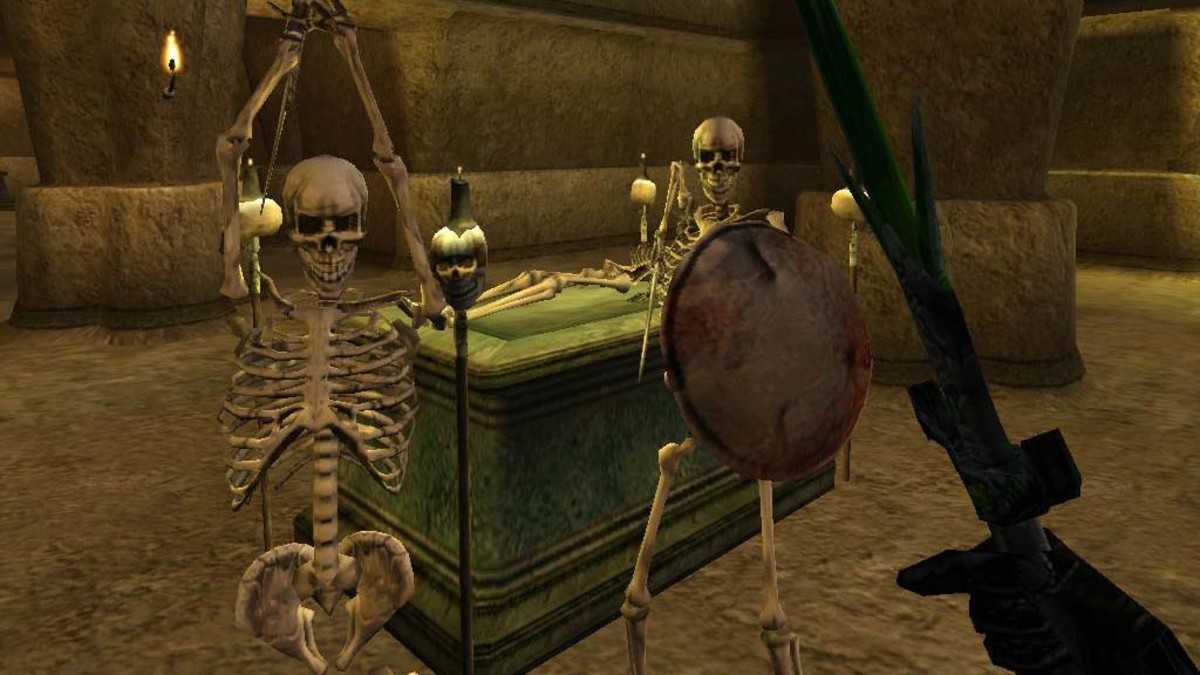
Games relied on the rulesets or ideas from roleplaying games on the tabletop. Stats like Strength, Intelligence, or Charisma were used to influence code-driven dice rolls in the player’s favour. Dice rolls, just like on the tabletop, were used for anything and everything relevant that might need to be difficult. Lockpicking a door open, hitting an enemy, seeing how much damage is dealt to that enemy, bartering effectively with someone, casting a spell – all of this was dice-driven. For a long time, that was seriously out of favour in roleplaying game design. Players expected very obvious, physics-driven cause and effect. If a player hit something with a sword, if they saw it impact, they expected it to do something. With Baldur’s Gate 3 (Larian Studios 2023), that style has well and truly officially re-entered the mainstream. But consider that Knights of the Old Republic II is on the tail-end of the habit beginning to lose steam in the mainstream. Common complaints about The Elder Scrolls III: Morrowind (Bethesda Softworks 2002) center around the frustration of not being able to hit anything, when we can clearly see the sword or fist or whatever entering the opponent’s character model. This changed with the physics-based approach of their follow-up game, Oblivion (2006). Stats affected damage and (I think) swing speed, and nothing else. As roleplaying games entered the mainstream, the mainstream wanted (or was perceived to want) the dice-rolling gone. So, for the most part, it went.
This isn’t to say that dice rolling in RPGs ever truly vanished, but it is worth keeping in mind that for a long time, big budget RPGs were primarily real-time, action-driven games (such as that of BioWare’s follow-up series, Mass Effect (2007 – 2012)). Even Dragon Age: Origins (BioWare 2008) was kind of a last gasp for that generation of consoles in terms of strategic tactical roleplaying. It is in this context that I want to talk about The Sith Lords.
The Sith Lords uses a version of Dungeons & Dragons 3rd Edition rules. Or, rather, it uses a version of Dungeons & Dragons publishers, Wizards of the Coast’s, Star Wars Roleplaying Game rules. This version of the license was developed and released in 2000 (as was third edition D&D), but the most relevant to Knights of the Old Republic II would be 2002’s Revised Edition. Both editions were written by Bill Slavicsek, who had a hand in the writing of the first Star Wars RPG developed by West End Games. This edition made a number of changes to the balance of the game, and some changes to character classes, but the most important thing to note is that, for all intents and purposes, it plays like a Star Warsified version of 3e. It uses a twenty sided dice and the stat system I was talking about before to resolve all of the in-game stat checks and combats. Revised Edition, funnily enough, is the edition of Star Wars on the tabletop that I am most familiar with, having run a years-long campaign using the system. It has a number of strengths, one of the biggest being that the d20 system is something that tabletop RPG players understand implicitly. Roll a d20, add your modifiers (positive or negative), and see if you succeed the check (say, roll above a 12).
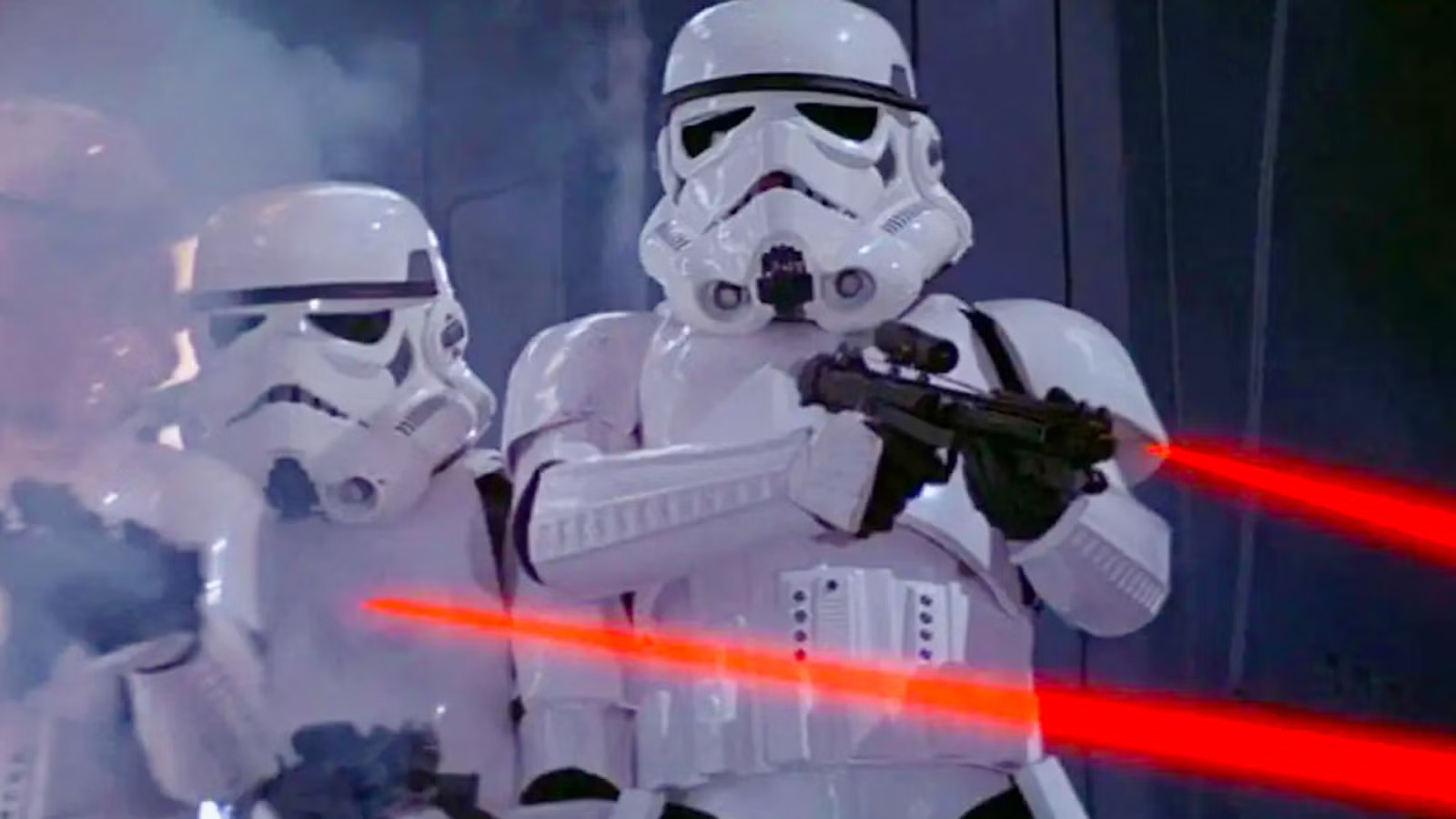
But Knights of the Old Republic does not use a 1:1 version of the rules. I think it’s worth explaining the differences so you can see where the computer game improves upon the tabletop game’s design in some ways, streamlining it for a similar, yet different, audience. The tabletop game uses a Vitality / Wound point system. Vitality is reserved for important characters – it’s an extra pool of health to draw from. Imagine it like a movie character’s immunity – shots miss, or hit non-vital parts, but that only happens for so long. Wound Points are an important character’s backup, or a standard character’s (like a Stormtrooper) only health. They are determined by a user’s Constitution, meaning it is often around 10 to 16, which is a pittance in a system where guns do 3d6 damage. Force users also drew from the Vitality pool to use their Force abilities, and lightsabers ignore an armour’s Damage Resistance. While this might have been a little less like how lightsabers work in the movies (which can slice and decapitate at will), at least it gave my party’s soldier a reason to lug around a gun, rather than suddenly discover they are Force-sensitive. HP has always been a problem in D&D-like systems, and often battles turn into awful slogs that take way too long because of it. Giving at least some enemies just wound points makes the battles with lots of enemies feel more cinematic, like the players are actually capable adventurers.
Vitality being part of a Force user’s Force pool disincentivized players from being able to use all their cool powers as well. While theoretically reducing one’s health pool to be able to cast spells is a cool feature, it didn’t necessarily feel very Star Wars-y to my players. Instead, I gave out a handful of Force Points at the start of each session to every player, more if they were Force sensitive, which allowed them to either add flat modifiers to a roll, or were spent to attempt to cast a Force ability. Both easier to keep track of, and felt less punishing for my players. The game had a few other balance issues, namely around attributes and armor. The Strength attribute was actually kind of useless compared to Dexterity, which applied to more skills AND contributed to your ability to dodge. Armor also slowed you down, removing dexterity, thus reducing your ability to dodge and worse, the damage resistance only applied to your Wound Points, by which point you were probably dead anyway. I changed how armor worked (DR applying to Vitality as well) but there was no real fix to Strength. It was a melee build focus or a dump stat, nothing in between.
All of that is important to consider because Knights of the Old Republic II’s rules streamline all of this. They make stuff easier to follow, even as they make the dice rolls as invisible as possible. Newcomers to the series will probably still be a bit confused by the combat, which has a real-time turnbased system still reliant on dice rolls to hit enemies. You pick moves you want to perform, queueing them, and watching as turns unfold in real time, and actions move up the queue. I might queue a Force Push, a regular Attack, a Flurry (two attacks in a row) and a Critical Strike. When an enemy dies, the queue is cleared. You can always pause the game as well to assign moves to you and your party’s queue. This is all rendered in real-time, over the shoulder 3D, which I think gives some players the wrong impression. So some enemies will appear to hit (just as in Morrowind) but won’t actually be hit. Vitality / Wounds are collapsed into just HP – when it hits zero, you die. Force Points work more like Magic / Mana as a spellcaster in other RPGs – each Force ability has a cost associated with it, and when you’re below the threshold, you can’t cast it. This eliminates the problem that my players had with the system as Force users – you don’t have to be constantly worrying about your health versus your Force. Unless you use the ability Force Body to convert HP into Force points, of course.
The point of all of this is that game systems – the underlying numbers and mechanics – of your game are just as important as that of the higher-level narrative stuff. The Sith Lords has its bones rooted in the tabletop game, and works to resolve some of the problems the game system has, while also obfuscating the dice rolling so it’s not obvious what’s happening at first, especially if you’ve never played a roleplaying game of this style before.
Building your character in Knights of the Old Republic II is important and you can run into serious problems if you haven’t specced your character out correctly. And unlike in a tabletop RPG, where a GM will hopefully be willing to accommodate a less-than-optimally specced character and give them things to do, a video game just can’t really be that flexible on the fly. So you do have to have some understanding of the systems in place. Just like the tabletop, the game uses a class-based system to determine what points to give out once you’ve levelled up. The game has three classes you can pick from the start. Jedi Guardian, Jedi Consular, and Jedi Sentinel. The Guardian focuses on melee combat with higher HP but less skill points to spend. They are notably the only class that gets to specialize in lightsaber combat. The Consular focuses on the Force, but less HP and a moderate amount of skill points to spend. They are the hardest class in the game, we are warned at character creation. For advanced players only! And the Sentinel gets middle of the road HP and Force, while also getting a lot of skills.
Skill allocation is important because it a) determines a player character’s viability in the field by themselves and b) what a party member can achieve in concert. Classic party building philosophy dictates that each party should be made up of characters that can accomplish different things. For this analysis playthrough, I opted to make Meetra Surik a Jedi Guardian, meaning she can chew through enemies in close-quarters combat but relies on others to pick locks and hack computers, for example. Party management, when it becomes available, will be crucial for me, whereas if I had picked Sentinel, it wouldn’t be as much. But I’d be looking for combat-oriented party members if that was the case, same for Consular. Which, as we will discover, naturally makes a few party members not worth taking along, practically ever. My choice of Jedi Guardian and its stingy skill point allocation every level makes her situationally weaker outside of combat. Sentinels get 3 + (Intelligence Modifier), and Consulars get 2 + (Intelligence Modifier). Guardians only get 1, and have a smaller selection of Class Skills. Non-Class skills cost 2 points, unless I sink a Feat (read: Perk) point into making it a Class skill. I am going to do that at least once for Security, the lockpicking skill, but it’s a tough investment, given the range of other specializations she can opt into. If she’s ever alone – and this does happen during the runtime of the game – she’s going to have to resolve things with either violence, or a silver tongue.
Speaking of: an important distinction between BioWare’s Knights of the Old Republic (2003), is that The Sith Lords’ persuasion mechanics no longer are reliant on dice rolls, similarly to that of the difference between Bethesda’s 2008 RPG Fallout 3… and Obsidian’s rushed-out-the-door sequel New Vegas (2011)… hmm. It’s almost as though one is a more flawed method than the other. I find the “Obsidian method” much more rewarding when it comes to building a video game character. When I’ve spent time investing points in a character, and there are a number of very finite outcomes the developers have coded in, I want my persuasive option to actually work first time without having to reload.
Consider a situation where I have decided to invest three precious skill points into Persuade. My Jedi Guardian only gets 1 + (Intelligence Modifier) skill point per level up. So, only 1 skill point (my Meetra is wise and strong, not book smart or computer literate). These three points are a huge investment for me as a player. The scenario is that I want to convince a member of the Exchange, an intergalactic crime syndicate, to let me inside. On the tabletop, a player might want to roll Persuade (called variably Diplomacy or Intimidate at the table, which can draw on different core attributes as a modifier). Say the number we’re looking for is 12, so DC12. If a player rolls a 7, then adds their three Persuade points, they fail to convince them. On the table, it is easier to have the guard reject them but be open to other lines of argument. In a game – a fully voice-acted game, mind – it is harder to justify spending development time crafting failure tracks as well as success tracks. So it often just ends up in violence, and we have to reload. Smooth talking is not so seamless when it always ends in blasterfire and having to reload the conversation, just because we rolled badly.
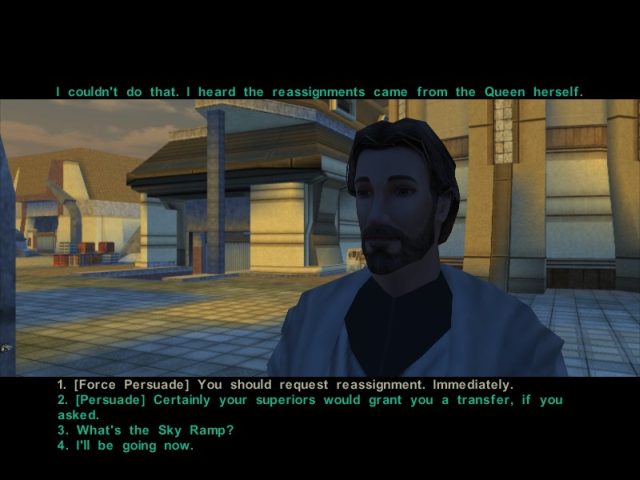
I think conversation and combat rolls, therefore, have two very different expectations attached to them. This is all subjective of course, but I expect turn-based RPG combat in the tabletop style to be both a contest of strategy – that is, picking the right actions to take at the right time – and a smidgen of luck – letting the dice roll decide the exact impact of what happens. Of course, if modifiers are high enough, you can steamroll anyone with strategy alone. But sometimes luck is fun, and makes encounters more memorable. The difference, I think, between combat and dialogue, is that in dialogue, only the player is the one rolling dice. The NPC can say everything they want to say perfectly, whereas the player is the one being tested. When it’s a dice roll, it doesn’t feel fair – but when it’s point based, it does. At least for me.
The game being so based on dice rolls is important. Because The Sith Lords, taking after the Wizards of the Coast-driven d20 system, models three different modes of play and engagement. The first is combat, which is where the most mechanical depth is located. Then there’s exploration, which is at times dice-driven. Dice rolling occurs during picking locks, disarming mines, stealthing along past enemies, repairing things, and hacking computers, among other things. Finally, there’s dialogue, which is where you’re picking different options based on what you want your character to say. I am almost tempted to say that The Sith Lords weights these three modes of engagement fairly equally at the start. There’s a lot of exploration, and as the game progresses a lot of combat rears its head (as tends to happen in RPGs). Dialogue, however, where it exists, remains the focal point, the most interesting axis on which this whole video game turns.
To answer the question I posed at the beginning of the article – what makes a good RPG – is to provide an understandably deeply subjective answer. It differs for everybody, and is further complicated by what kind of RPG you’re looking for on any given day. But I think if you want an example of what I consider to be a good RPG, The Sith Lords is a damn fine roleplaying game based on the strength of its dialogue, as well as the satisfying way you can build your character. By abstracting and changing some of the tabletop system, the developers of both the original game and its sequel were able to create a much more immediately rewarding system thanks to the video game format, while of course having to make the story more fixed. And it’s the story of the second game that really trips people up, because for some, it doesn’t feel like Star Wars. So that’s what we’re going to interrogate next time. What even is this thing we call Star Wars?
 Horrorgameanalysis