
This article contains some vague spoilers for Silent Hill f.
The newest entry in the Silent Hill series has a lot to live up to. Not only is it following up on the very well received Silent Hill 2 (Bloober Team 2024) remake, but it is the first full-length new entry in the series since Silent Hill Downpour (Vatra Games) back in 2012. As I discussed in my video essay on the game, I think there’s a dangerous tendency to lionize Silent Hill 2 (Konami 2001) above all other entries in the Silent Hill series, but it’s not like there’s no good reason to do so. Silent Hill 2 is one of my favourite games of all time, and it tells a story so addictively psychological that every single moment of it has meaning and significance, down to the colour of the wallpaper. How on earth could Silent Hill f, made by a relatively untested studio, do the same? It feels like we’re back to Konami handing the reins of its flagship horror series to untested developers – like we’re in the post-Team Silent era. Things, indeed, have not changed on that front.
Silent Hill f (Neobards Entertainment 2025) is already getting a somewhat mixed reception among some fans of the series, due to its perceived overreliance on combat. I would agree that it does have too much combat in it – and that an easy fix would be to tweak the enemy’s damage just a tad. Just a little. Please, Neobards? Because at the moment, enemies can carve through what feels like half your healthbar in a single hit, and since this is a survival horror, healing items are thin on the ground. Most enemies have to be run past, but this in turn destroys my appreciation for the thick, foreboding atmosphere the game generates. There’s so much great stuff I have to ignore, because due to the fact there’s only melee combat (a nice change in theory!) I am always in danger when I fight an enemy. And since combat is so unforgiving, it feels like a bad idea to fight anyone that I don’t need to fight.
Action horror isn’t a bad thing. I love it when games aren’t afraid to let you get up close and personal with the monsters – providing there’s space to actually maneuver around them. The game provides that space early on, with a tasteful restraint on how many monsters it deploys. I’m about a third of the way through the game according to friends of mine, and already the number of monsters feels overwhelming, and it’s a problem that will get worse, apparently. I kind of dread this turn, because I think on paper it works to sabotage the dreamlike storytelling and ambience of Silent Hill.
But. Most of the criticism that I am seeing actually feels like it is ripped straight from the early reactions to Silent Hill 4: The Room (Konami 2004). Some of the criticism I’ve written above could slot into a review of that game, I think. The Room is stuffed with tons of monsters, it ditches the fog, and tells a story set outside of Silent Hill proper. In other words, that game took a wildly different turn from the previous entries in the Silent Hill series, and also happened to be the last one developed in-house at Konami for quite some time. The divisive response to Silent Hill 4 (which has mellowed a little in recent years) has left Silent Hill f vulnerable to the same treatment. The argument about “what Silent Hill is” will rage on for as long as there are fans of the series, I think. Is it a story about cults? About foggy towns? About the eponymous town of Silent Hill itself? Is it always a story about one person unpacking their own trauma? Or about unpacking someone else’s? As I alluded to in my video, I believe that Silent Hill can and should be an anthological series that tackles different modes of gameplay, different themes, and different protagonists. Silent Hill 4 is a great game, and I also think I will rank Silent Hill f very highly in my estimation when I’ve finished it, and had time to sit and think about it for a while. But the moment-to-moment gameplay, when I’m learning it, feels as frustrating as The Room’s very early subway escalator section, where you climb an impossibly long escalator while being attacked by ambushing enemies that can knock you back down the escalator. But that’s a question of action impacting the horror. How about criticisms that Silent Hill should stay in that foggy American town?
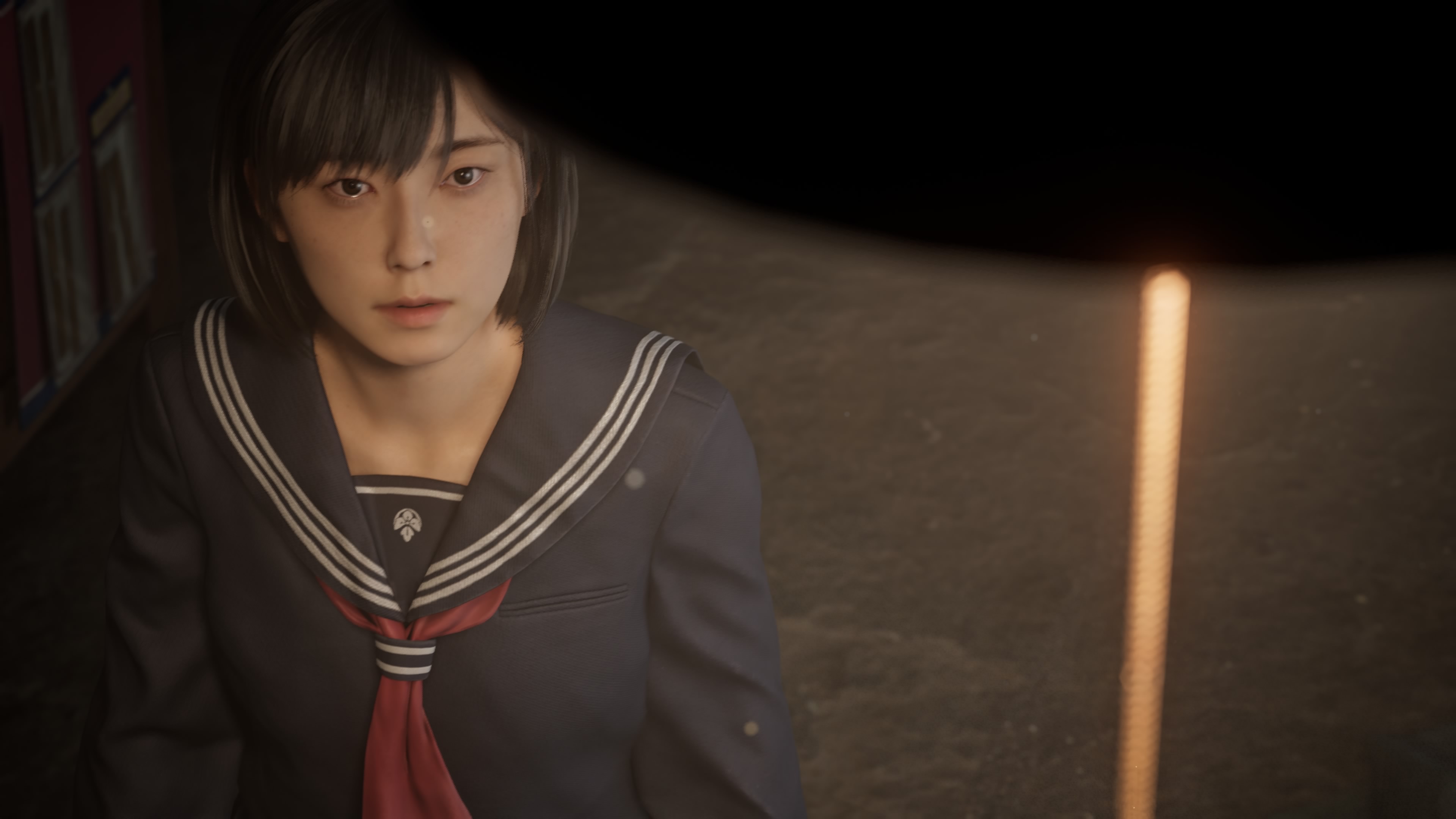
Simply put, I think that to insist that Silent Hill must only deal with stories that center American experiences is to do a disservice to the various other stories that can be told with the same framework. I think Silent Hill f, so far, is dealing with a similar structure to that of Silent Hill 2 – that of unpacking trauma in a foggy town, while running into various unreliable characters along the way, who never really seem to be able to help in the way that we want them to. The atmosphere of Silent Hill f gripped me right from the start. The cutscenes are immaculately put together, with characters often out of frame in just the right way, our grip on reality already a bit tenuous from the start. We don’t have all the important details, so we’re left to flail a bit in confusion. That in turn pushes us on, deeper into the foggy streets of Ebisugoaka – meaning “Warrior’s Hill” or “Watchman’s Hill”. This rural Japanese town, left destitute after World War II and the mining industry abandoning the town, has left aimless young people and various retired folk struggling on. They live traditional lives, which harms the game’s protagonist, Hinako. She must be about fifteen years old, yet she is already feeling the pressure to adopt femininity, to perform womanhood correctly. She can no longer play with her male best friend, Shu, and must talk to him properly, using the correct terms.
Silent Hill f, however, has an issue in that so far I’m finding the characters fairly transparent. Characters in Silent Hill aren’t always exactly subtle, but they go through arcs most of the time. Heather starts off Silent Hill 3 as a scared teenage girl, and ends it as a self-determined woman. Angela in Silent Hill 2 doesn’t have an initially clear motive from the first meeting, but as things crescendo, the tragedy of her character becomes clear. In Silent Hill f, the four main characters all have fairly standard, identifiable roles in the narrative. They are classic archetypes that so far haven’t been subverted – Rinko is the jealous one who wants Shu, Shu is the dependable best friend who doesn’t care that Hinako is a girl, Sakuko is the… “one who dies first”, as a friend of mine memorably put it.
The game – written by famous video game writer Ryukishi07 – is unexpectedly unreserved. While I haven’t played any of his previous games, though I think I should now, even the monsters feel a bit overexplained. Akira Yamaoka returns to compose and he does an incredible job of it, as usual. Director Al Yang has done a good job channeling J-horror into Silent Hill’s formula for the most part, though I think maybe that’s why people are having a difficult time with it. Traditionally, Silent Hill is a fusion of American horror and Japanese horror, the spectres and existentialism of ghostly stories placed in an American context. That gave everything this odd, disjointed, dreamlike, ethereal, disturbing, beautiful feel. Silent Hill f, its narrative context placed directly in Japan, loses that American focus, but I think gains a lot for it. It allows that directness of storytelling that thus far I think hasn’t had me as interested, but also allows for us to see how the fog and trauma of Silent Hill manifests in other cultural contexts, with other characters. Hinako is young – maybe as young as fifteen – and viewing her psyche through her monsters is a fascinating experience.
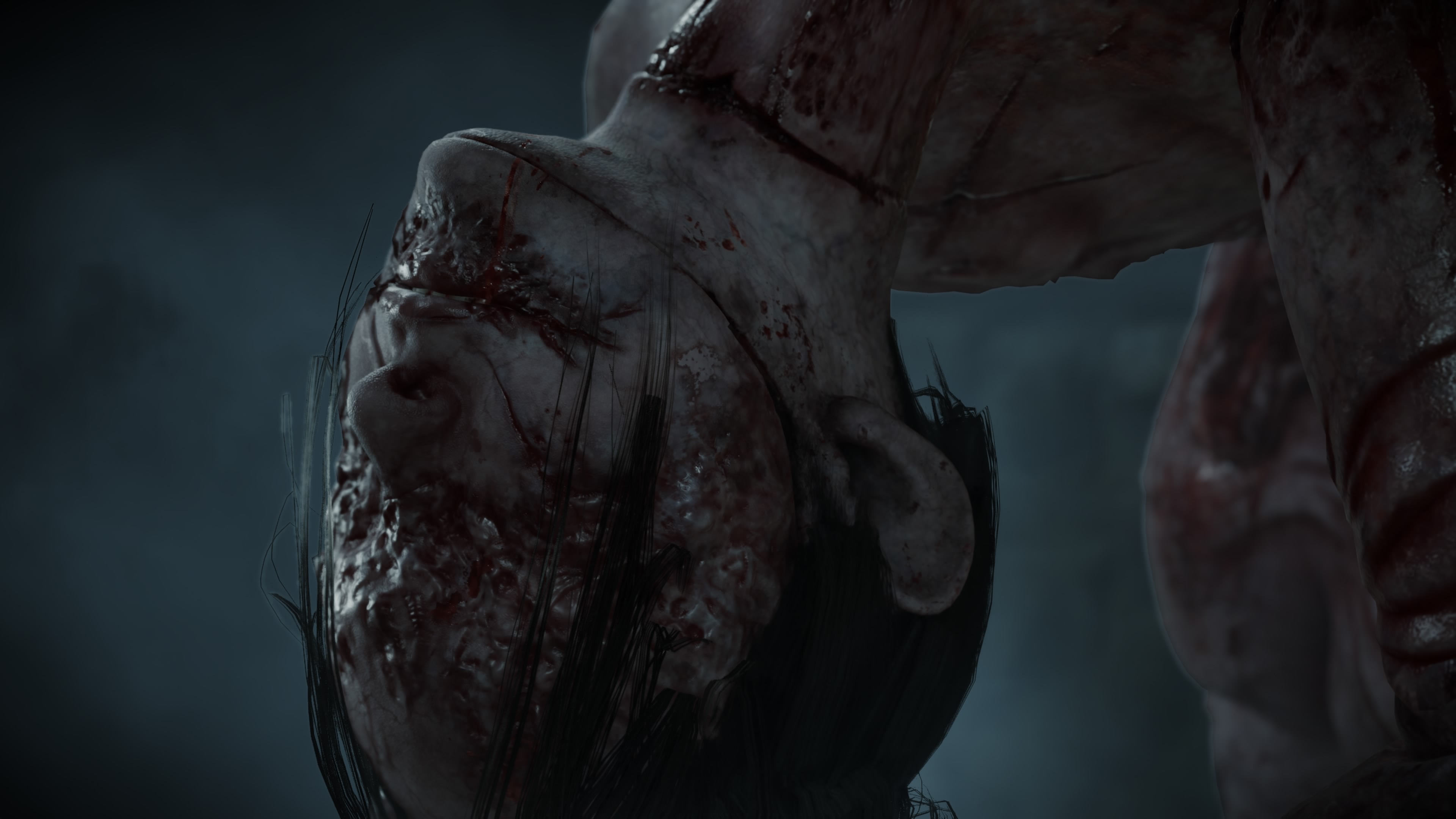
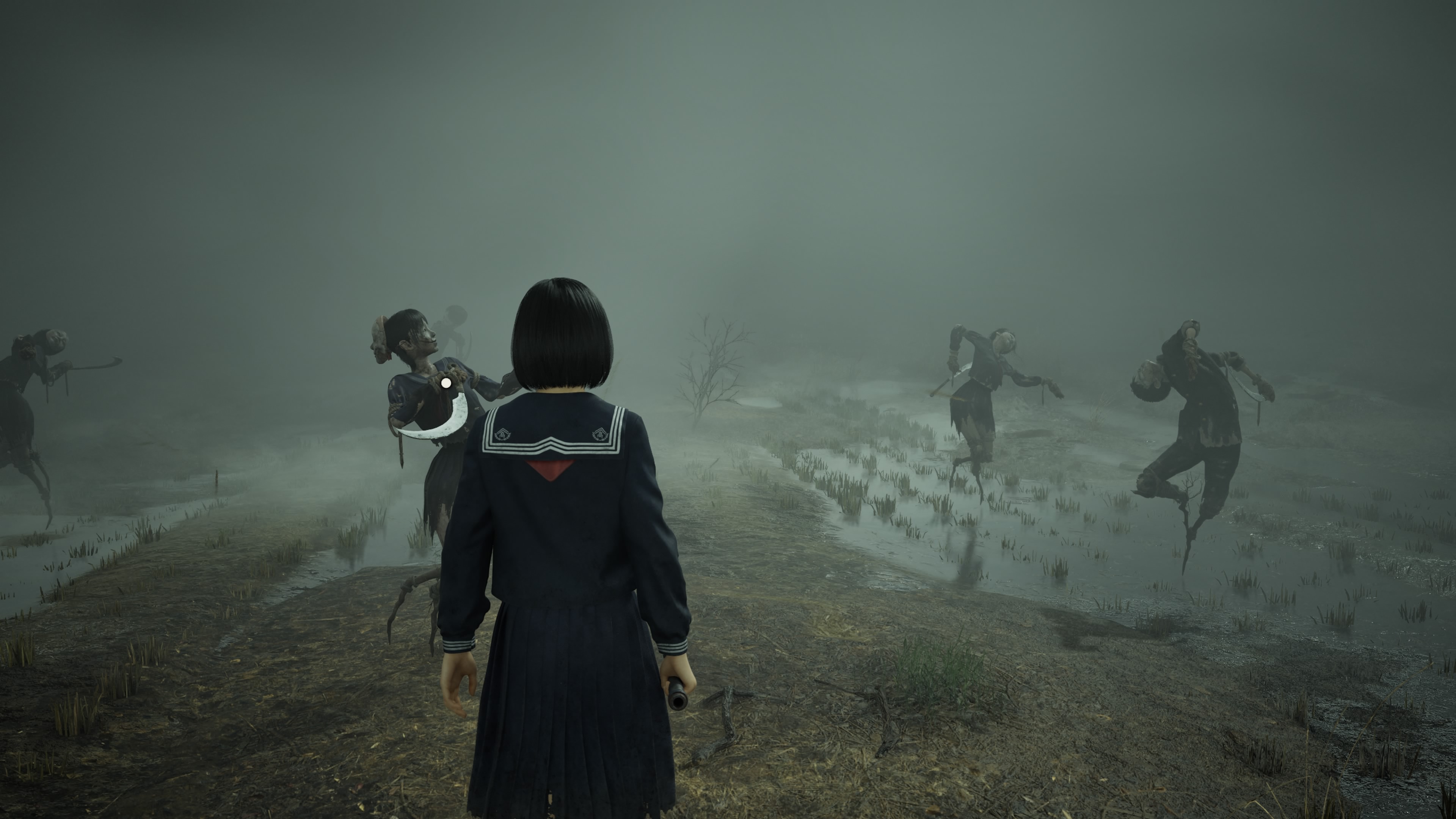
The monster designs really are great, and although I’m not usually a fan of cutscenes introducing monsters, here it really works because you get a nice slow pan of the grisly details. The first enemy, a mannequin-like doll with disjointed ball-joint limbs, is covered with nasty scars, and we get to see them all as it jerks around with gorgeously disturbing animations. Other monsters are equally grotesque, though none are as satisfying to fight as that first enemy. Scarecrows made of schoolchildren’s bodies are also disturbing and gratifying enemies to fight as they ambush you. The game’s puzzles thus far are interesting and I think satisfying to work out and puzzle over. I’ve seen some people go at the scarecrow puzzle, and while I initially agreed, I played it through again and found that the clues made sense. Where I was failing in my interpretation was that I was just looking at individual scarecrows rather than how they are positioned in relation to one another. It’s a cool puzzle and features of course a fantastic atmosphere and more disturbing enemies. I am a little disappointed at the lack of indoor “dungeon” environments as other Silent Hill games tend to feature (Midwich Elementary in SH1, the hospitals, the mall in SH3, and so on) – so far I’ve just found the school. I hope there are more to come, because I do think that’s when these games are at their best, when you’re totally immersed in the logic and style of a single place. But I suppose overall the logic is that of Ebisugoaka, and that logic is entrancing thus far indeed.
When I finish Silent Hill f, I’ll be back to write another piece on it! I hope it will be a “You Should Play” rather than a “Silent Hill f is weird” post. But… we shall see.
 Horrorgameanalysis