
Legacy is an important thing, particularly in the age of nostalgia that we live in. It is important to consider that for every instance of a successful resurrection, there are five failed investments in old IP that sink beneath the waves, to only be muttered about by people on the internet with too much time on their hands. And so, lo and behold:
5) VAMPIRE: THE MASQUERADE: BLOODLINES 2 | The Chinese Room 2025
“We made this city and we will never let anyone forget that.”
Vampire: The Masquerade – Bloodlines is one of my favourite games of all time. I played it at the same time as Pathologic, and that was a heady mix of games to play back-to-back. It blew so much other game and character writing out of the water, and made me appreciate the medium’s potential more than ever. Without either of these games, I would not be in the position I’m in now, obsessively writing about video games.
The original Bloodlines – aside from having an overlong title – was written crisply and succinctly. Every character had believable motives, good excuses for their evil deeds, if they didn’t just revel in their monstrousness. More importantly, you as the player could interact with each of these characters with genuine fluidity, with so many options for things to say. I haven’t written or talked much about the game on my channel before, but I think it’s an exceedingly important game in my own personal history – and in roleplaying game history. With so many compelling choices, locations, and characters, the game is impossible to put down, even if the combat encounters overwhelm the game towards the end. It is still one of my all-time favourites, without doubt.
So, personally speaking, Vampire: The Masquerade – Bloodlines 2 had big shoes to fill. In fact, I would argue these shoes were impossibly big. Much like the Silent Hill 2 remake, I knew that even if Bloodlines 2 was the next great RPG, it couldn’t deal a deathblow to the original, in my eyes. All this is without even thinking about the long time in development hell the game languished in. Announced in March of 2019, the game began development in 2015. After various development problems, with high-ranking staff members (such as Bloodlines writer Brian Mitsoda) culled from the project after five years of development in 2020. In 2021, the developers, Hardsuit Labs, were taken off the project by the publisher, Paradox. For two years, the project was basically dead in the water, at least from the outside. In fact, the developers at reputable art-game studio The Chinese Room were there to take on the challenge of making Bloodlines 2. It’s not like it was easy sailing for them, either – only just releasing this year, Bloodlines 2 feels dragged over the finish line, scrappy, upset, drenched in blood. Fitting, of course, but it makes for a messy, frequently ugly game. Not ugly graphically – it is, I think, a moody, atmospheric game.
Stalking the streets of Seattle is surprisingly immersive and fun. The first hour or two of gameplay provided me a very similar feeling to exploring the world of the original game – a world of dark alleyways and grim detail. As the World of Darkness – the game’s setting – likes to say, it is our world, but darker. Genius, right? But the longer I played, the more things started to feel wrong. There’s nothing interesting in the world that provoked my interest. The side quests are all variations on “go here, deliver something / murder something, come back”. For those of you familiar with the original Bloodlines, you might remember the quests where you did have to go somewhere and kill someone to cover up the Masquerade, the laws that prevent vampire society from being discovered and murdered by humans. These can feel similar on paper, but Bloodlines 2 fumbles the approach to the Masquerade. Rather than tracking the Masquerade as a meter that decays alongside Humanity (a factor that determines whether or not your vampire devolves into a murderous beast that you lose control of, a fail state), the Masquerade is basically a detection meter, like in something like Assassin’s Creed or an Elder Scrolls game. Hide for long enough and it’ll just… go away.
Rather than having to perform specific actions to make up for it, or having to think carefully about your choices, the Masquerade is a ticking timer, a “time out corner” punishment. Sit on the rooftops and think about what you’ve done! Rather than approaching situations with any particular intelligence, on several occasions I wandered up to the hapless victim in the middle of the street, snapped their neck or crushed their heart with my bare hands, and just hid on a rooftop. No consequences.
This feels like the game’s roleplaying as a whole. While I enjoyed the beat-by-beat character writing for the most part, the game saying “x will remember that” rings hollow when there’s no impact or weight to your decisions that truly feels interesting. Nothing that I could make protagonist Phyre say felt like it was really sticking throughout most of the game. Bloodlines 2’s promise of reactivity beats rings a bit hollow even in the mission design, where there’s only one path forward, which often involves combat.
Combat is actually a lot of fun. Picture a first-person, Dishonoured-style game which centers around superpowered fisticuffs, and you’ll have a pretty great idea of how it plays. Unfortunately, like the original game, combat makes up a large amount of the game. Unlike the first game, there is almost never a way to circumvent combat – stealth is only performed in service of killing enemies from behind until they’re all dead, and the next plot beat can be accessed.
Phyre – unlike the protagonist from the original Bloodlines – is an Elder, which in Vampire terms, basically means they’re supposed to be ultra-powerful. As you decrease your Generation, getting closer to the original vampire, Caine, your blood becomes stronger and thus becomes more capable of incredible feats. Thus Phyre is capable of doing some pretty fun things. You can get her to pick up weapons only through the use of telekinesis, and unload an enemy’s own gun into them from midair before summoning blood missiles to fire at their friends. You can even glide around the city like Batman – right up until one of those pesky civilians tsk-tsks at you, and you have the Masquerade marker to hide from for twenty seconds. Additionally, the enemies you fight are explicitly ghouls – humans temporarily empowered by ingested vampire blood – or thin-bloods, vampires that are technically vampires but have such weak blood their powers don’t manifest properly. These opponents frequently rip Phyre to pieces. This isn’t to say this can’t happen on the tabletop – the game is structured in such a way that if you’re really clever and play your cards right, you can blow even low-Generation vampires away. But the ghouls and thin-bloods here don’t do anything clever enough to justify it.
Low-Generation Vampire: The Masquerade plots need to be smarter than just “throw more enemies at the players”. They have to be about the danger of abstract vampire politicking. The murder mystery the game is centered around is a good plotline – but it’s something that feels a bit contrived for a Vampire Elder to be doing. Not to say it can’t work, but Phyre just doesn’t quite fit. Her fish-out-of-water qualities are entertaining but she fits in pretty quickly, and her power doesn’t match the story she’s in. The game can’t quite decide whether it wants to be a power fantasy, the story of an underdog, or a political thriller. Sometimes the body count is so absurdly high I think the Masquerade must already be broken, in that there’s no way hundreds of people dead in a night club could possibly be accounted for in any clerical fashion. The boss battle and atmosphere of that club is impressive, but there’s just no thought as to how it actually links into the greater world. Everything is just in service of the current plot beat, before we are whisked away to other things. The Anarch ghouls are murder-hobos because we need waves of enemies to fight, the overarching antagonists get to cause as many insane masquerade breaches as they like because it makes for a good setpiece, and so on. It’s all just a bit frustrating, worldbuilding-wise.
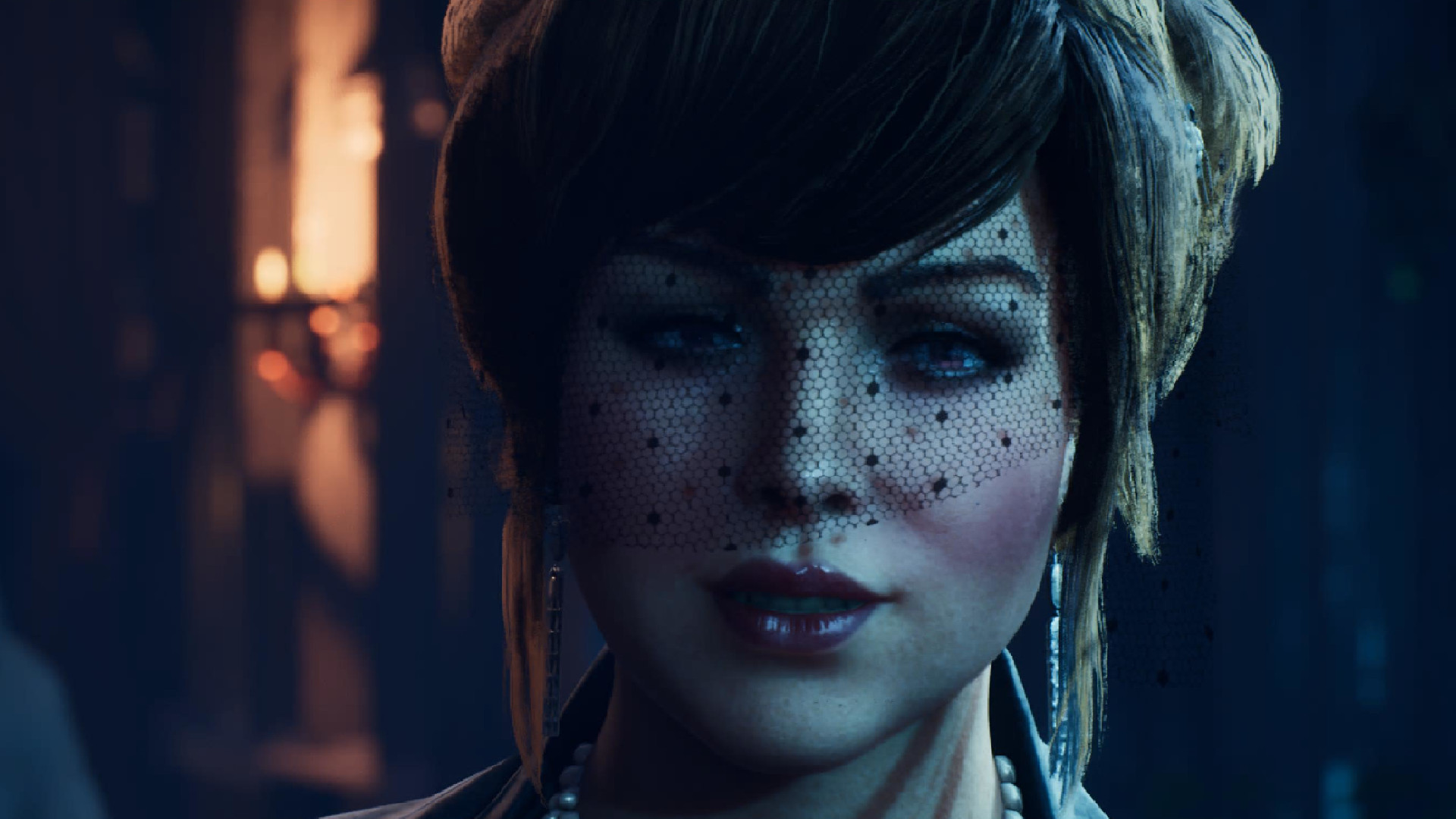
Sometimes the game is interrupted by sections where you play as the Malkavian, Fabien, who mysteriously ended up in Phyre’s head. Discovering how this happened is the game’s first mystery, and then using his memories is key to solving the game’s overarching murder mystery. These are good sections in that they foreground the intrigue central to the game’s plot, but they don’t give Fabien much to do beyond walk around the same streets you can fly around as Phyre and pick the right dialogue option. There’s no way to fail Fabien’s sections, and since they are memories you don’t make any choices.
I think a lot of this kind of frustration boils down to a very human tendency to look at the name on the box and expect something from that name to make it into the product. I’m playing a Vampire: The Masquerade game – and it gets some of the feeling right. It also leads you in to criticize some of the basic worldbuilding elements. The Anarchs, for instance, are traditionally, well, anarchists, vampires who want to break away from vampire society at large, and typically have philosophical motivations for doing so. But the Anarchs in VTMB:2 basically field an all-encompassing army of ghouls and thin-bloods to terrorize the city. They don’t stand for anything in particular, and are happy to just murder you and others for reasons that I never felt were satisfactorily explained or expounded upon. If you’re paying close attention – or are happy to handwave a few things – this does get a kind of satisfactory explanation. But it never feels particularly well-addressed, at least from my memory.
The very title of Bloodlines 2 isn’t fitting either – the common claim I’ve seen is that the game would’ve been better received as Nomad, and I can’t help but agree. The dialogue you can choose just isn’t up to the standards set by Bloodlines back in 2004. And that’s a rare game, I understand. I can’t expect everything to just magically be as good or as impactful as a game I replayed five times. Bloodlines does have a railroading problem in that you will end up playing many of the same missions regardless of your choices, but there are at least points in the story where the required missions diverge, and ways to skip others. The most important part is how you can deal with the missions – Bloodlines was like an immersive sim in that respect. Bloodlines 2 has open combat arenas and little else. Those combat arenas have to be cleared before you can move on. If a game built around a famous tabletop game which is famously about political scheming and violent vampire superheroics focuses on only one of the two pillars, how can I help but be a bit disappointed? Bloodlines is all about how Elder vampires use you, a new vampire, for their own benefit. It is fun to see how everyone’s schemes interface with one another, and how easily you can be played if you aren’t paying attention.
This year, one of my favourite games, completely unexpectedly, was Shadows of New York, set in the same world of The Masquerade. While the choices are basically as limited as they are in Bloodlines 2, there was something far more interesting about the quandaries and feelings of losing humanity in that game that Bloodlines 2 can’t tap into. As Phyre is old, she doesn’t have anything to hold onto. Are we given anything to hold onto? Not really. Romance options are boring flings, a fade-to-black sex scene after spending enough blood points on a character to unlock all their powers, and nothing further. Fabien is fun, I suppose, and I do love Lou Graham, the ruler of Seattle. But I didn’t do enough with these characters, nor did they change enough along the way, to make me feel like my choices were impacting the world. I already feel like a replay would just frustrate me, as even on a first playthrough, the seams and limitations were quite apparent.
Criticizing the game’s seams feels unfair because I know just how hard game development is, especially on this scale. I know the complexities of adding even just one substantial choice. But I think the biggest problem really can all be summarized with the game’s approach to the Masquerade itself. Much like the “sit on the rooftop” timer, the game is incorporeal, fleeting, and kind of just there to kill time. Bloodlines 2 can be fun, and interesting, and can occasionally provide a hit of playable Vampire goodness that I’m always after. The World of Darkness is a favourite setting of mine, after all. But Bloodlines 2 illustrates the perils of cashing in on one’s own legacy. The name, far from elevating the game, feels like a crutch, or even a beartrap locked on the game’s foot. It is not a bad game, persay. It is just… fine. It… exists. It was a nice place to go on holiday for a little while, if a little dull and repetitive, but I won’t be going back. That’s a shame, but I think it was also important to try. How is it possible to become better artists otherwise?
 Horrorgameanalysis