
“It was such a frightful thing that when it got into a house, as was said, no one remained. Frightened people abandoned the house and fled to another.”
– Marchione di Coppo Stefani, The Florentine Chronicle
Who but we remember these?
The sidewalks and trees
[…]
All the corners of the buildings
Who but we remember these?
– David Bowie, New Killer Star
I am leaning back in my chair, faux-cigarette perched between my lips, glass that only contains water that is masquerading alcohol grasped in one hand, dancing between script and improvisation, til I release the script and let it drift away from memory as I begin to get into it. Across from me are four would-be survivors: the Doctor, the Gravedigger, the Priest, and the Soldier. They are even more adrift than I am, lost in a haze, a fugue, a dreamstate conjured together by all of us, working in unison to create exhaustion, panic, and fear, wondering: why the fuck did we agree to play this game again?
“Neither physicians nor medicines were effective. Whether because these illnesses were previously unknown or because physicians had not previously studied them, there seemed to be no cure. There was such a fear that no one seemed to know what to do.”
– Marchione di Coppo Stefani, The Florentine Chronicle
Reading through my scattered notes of the Pathologic campaign – particularly my very early ideas – is really like reading through my own scattered thoughts regarding not the game itself, really, but the game’s mood. Mood, really, was my first and foremost goal when I concocted the idea in the first place. Who would want to play Pathologic alone? A reminder that at this time, 2017 – 2018, Pathologic 2 had not come out (and was, in fact, uncertain about whether it was even truly still coming – or so it felt for a new fan such as myself, anyway).
What I was drawing on then, was the canon of Classic HD, which then coupled itself with a number of fanart works from around the internet – and those were admittedly quite scarce at the time. But still, things began to take a strange, hazy kind of shape, like twyrine herbs drifting across the steppe.
Simon remained a key part of affairs. In fact, he was central to the entire piece, because his character was the focus of each character’s reason for being in town. They all essentially shared the Bachelor’s perspective and reason for being. Persecuted for a variety of reasons by the Powers That Be, the characters were shepherded off to the Town and stayed with Eva. Much like the game, the players are barely introduced to the world before it is revealed by Georgiy Kain that Simon is dead, murdered – and the plot becomes all of a sudden post-mortem, desperate, and beginning to show its inexorable depths.
Here is where things begin to get messy, to come unfurled. At least from what you might personally appreciate to be “Pathologic”. But you must remember, I spent a significant amount of my time at this period listening to “Most” over and over again (another aside: most of the soundtracks for the game did not exist as mirrors on YouTube – the only version of the Indoor theme was truncated to about half the length and looped awfully). I was having my mind blown, continually, by the game. In a way, I think I miss the shelteredness of that time, of being the only person in the world who’d played Pathologic in the last five or six years (or so it felt to me, being adrift in a distant corner of the world myself). I wanted to introduce new people, my friends, to the world in a way that felt communal and engaging.
So I did what any good fan of Pathologic would do – I burned the damn thing down.
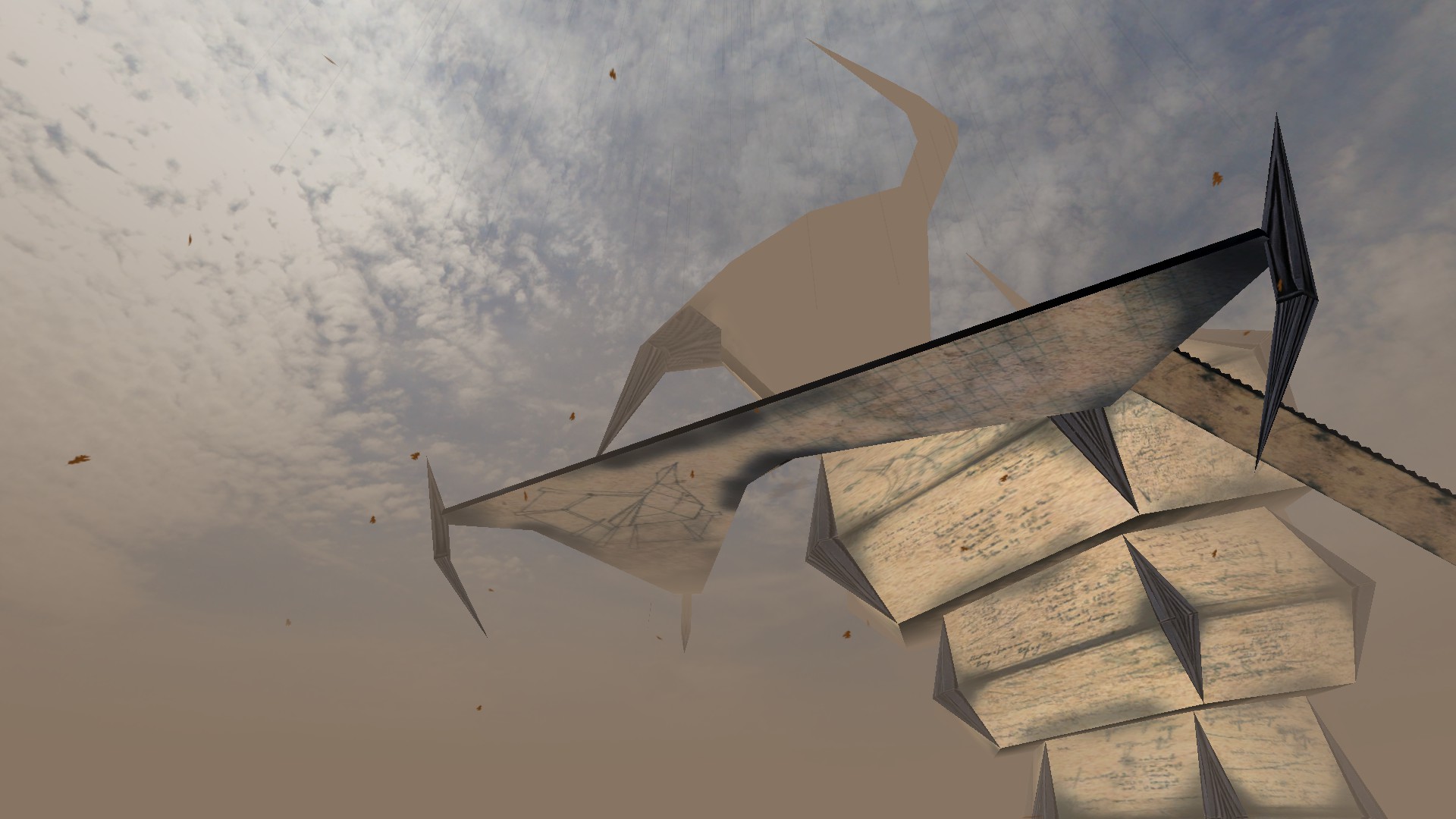
The Polyhedron was, from memory, one of the first things to go. “But HGA!” you might be saying. “That’s sacrilege!”
In a sense, yes, it felt like it. The Polyhedron is what a lot of people think of when they consider the symbols and signs of Pathologic. It’s this ever-present archetypal boundary-breaker. It exists to challenge what is real, what is possible. But I destroyed it for what I felt were valid reasons. Firstly, to preserve a sense of surprise and delight should the players ever pick up the game themselves. Secondly, to challenge myself to tell a coherent and compelling story my own way, in a way I’d never tried before on the tabletop. Thirdly, I was still playing through Haruspex and Changeling while I was writing the campaign in feverish bouts of fan-mania, so the locus of the Polyhedron had not quite crystallized in my mind, despite my achieving the “Powers That Be” ending on my first run (just). I both did and didn’t understand it, all at once. Fourthly, and finally, and perhaps most damningly: there were hardly any child characters in my version of Pathologic. Sticky showed up once! A crime, I now realize. Capella and Grace at least were strongly recurring characters throughout the whole ordeal.
The Polyhedron was replaced by the Cathedral as the focus of the Kain family’s power and architectural prowess. It played a small role at first, a larger one later, and then drifted away again. It was no Polyhedron, but it did its job. It stepped up as best as it could, as Mark might say.
As for the other buildings – well, the Abattoir the players never got into. The Termitary was also too little, too late… by the time the players finally got inside, everyone who could have told them anything was already dead. The houses remained mostly the same to their Classic HD renditions, which despite their relative ugliness and strange, incoherent design, give me a warm feeling which I don’t receive from most of the important homes in P2.
The player characters were given Bound. They had five Bound each. Even at this point, I’d cottoned on to the fact that Pathologic’s Bound lists were a way to get you to sympathize with a particular ideology (as well as work to save the characters). So I did a sneaky thing and almost aligned everyone’s lists. For instance, the Doctor had Georgiy, Maria, Eva, Peter and Mark. But Georgiy and Eva were bound to the Priest as well, and Mark was bound to the Gravedigger. In a sense, I did not just bind the players to NPCs – I bound the players in webbed alliances that meant priorities would come up when deciding who to help.
The Bound in game didn’t function quite as I wanted them to, mainly because it was hard to figure out ways to reward players consistently without it feeling contrived (which it definitely did at certain points). I plan to run one again with everything I’ve learned, and the Bound would be something I’d reassess, though I did enjoy it when it worked as I wanted it to.
The characters, though – I suppose you might be interested to know what I did with them? Firstly, I made dedicated character cards with portraits, quotes, and opinion meters on the reverse. It was one of the best things I’ve ever done for an RPG, methinks. And, well, without further ado, let me draw back some more of the curtain, for three of the characters – but not too much, of course. Secrets are always beneficial.
“Child abandoned the father, husband the wife, wife the husband, one brother the other, one sister the other. In all the city there was nothing to do but to carry the dead to a burial. And those who died had neither confessor nor other sacraments. And many died with no one looking after them. And many died of hunger because when someone took to bed sick, another in the house, terrified, said to him: “I’m going for the doctor.” Calmly walking out the door, the other left and did not return again.”
– Marchione di Coppo Stefani, The Florentine Chronicle
They know God exists ’cause the devil told them so.
– David Bowie, The Next Day
Georgiy Kain
Tell me what you want and I will tell you who you are.
Georgiy, old and slow moving, never leaving his wing of the Crucible, nonetheless was a figure that the players came to rely on.
His Nietzschean “evolutionary” philosophies didn’t make it into his character as deeply as in the game, again in part because I was still figuring everything out. Georgiy was still somewhat eccentric and attempted to defy fate again and again. He was the source of most of the “quests” the players received, from memory, just because he was a fast friend to the players.
He was the source of several contrivances in the last few days, though. Because I hadn’t quite worked out the balance (a tenuous thing, after all, balance), the players swung too close to death twice in a row. Georgiy emptied his coffers twice in order to assist the players with some medicine and money, about the last of the Kain family fortunes. A shame I had to resort to that – and a shame I didn’t really think about (or know about?) the Pathologic 2 death system, which would have worked marvelously in the context of the game I was running. At least I learned to avoid such contrivances in later tabletop games, thanks to Georgiy’s little medicine drawer. I was afraid to let the campaign end – but maybe I should’ve been more willing to accept it, too.
The factional relationship between the families changed in this game as well, mainly thanks to the intervention of the players. They didn’t like Saburov, nor did they trust Big Vlad in the slightest, so the three factions essentially recruited their own militia as time went on. He allowed the players to stay in his home several times, sleeping on his nice rug or on his lounge chairs or couches. His home was comfortable and a relative safe haven. For a while, anyway.
Georgiy was also the anchor of the Kain family, given that Victor did not exist in this campaign I made. I simplified things – and in doing so, challenged myself to look at a world I already loved with fresh eyes.
Mark Orff
The most beautiful – and meaningful – poetry is the poetry you can make with blood.
As much as I adore Aglaya as a character, I knew I couldn’t just plonk her in the middle of the campaign. I also was afraid of misrepresenting Alexandr Blok, simply because I had already come to love his poetry, and so inhabiting a character with his namesake felt in some way like appropriation.
So instead, I created someone new. Mark Orff was devilishly controlling. Perhaps even too much so. He made his first appearance in a fancy traincar sent from the Capital, with a fancy steak, gorgeous silverware, and a tidy looking appearance. Quite a contrast to the players, who were at this point looking more like mud-covered mummies given how much they’d slogged through, and how many bandages were hanging to their fragile bodies. This worked, of course – who wouldn’t want to get on the good side of someone who can provide steak to people who have been subsisting on cans of old vegetables and eggs for a week or so now?
Orff’s campaign of terror – being the commander of the army as he was – disrupted everything. The players found the town a warzone, ever-more chaotically aligned. There was nothing left to give. Yet they gave it nonetheless. He ripped apart families and even destroyed Big Vlad – another story, perhaps, for another day – but in the end, Orff loses. The plague kept going despite disciplinary action. He drowns himself – or does the other Mark, playwright and string-puller, do it? Regardless, he ends his story in the River Gorkhon, unclean and uncertain of his place in the universe.
Aspity
We frequently do good to enable us, with impunity, to do evil.
Shrewd, wicked, sharp-tongued, cryptic, taunting. She hated the players and everything they appeared to stand for. They didn’t bother to try to understand the Steppe folk, instead happy to focus on the more traditional “civilization” of the Town, avoiding discussions around other things, and mistrusting the intentions of the people they did not understand. Perhaps this, too, was in part influenced by my own lack of understanding regarding the specifics of the Steppe culture while conceptualizing the game. But I also built out small rituals of my own and took what I knew about them from the game (particularly from The Marble Nest) to try and make them interesting and appealing. Yet the players still did not move towards them, as I did in the game. And that’s fine. Because it resulted in the moment with the most emotion in the entire game.
Eva had, some years ago, agreed to become a Steppe bride. The time was come for her wedding, and so the players returned to the Stillwater one day to find the place empty. A search began, and the players went to seek Andrey, their most trusted friend, and they traced Eva’s whereabouts to the Steppe.
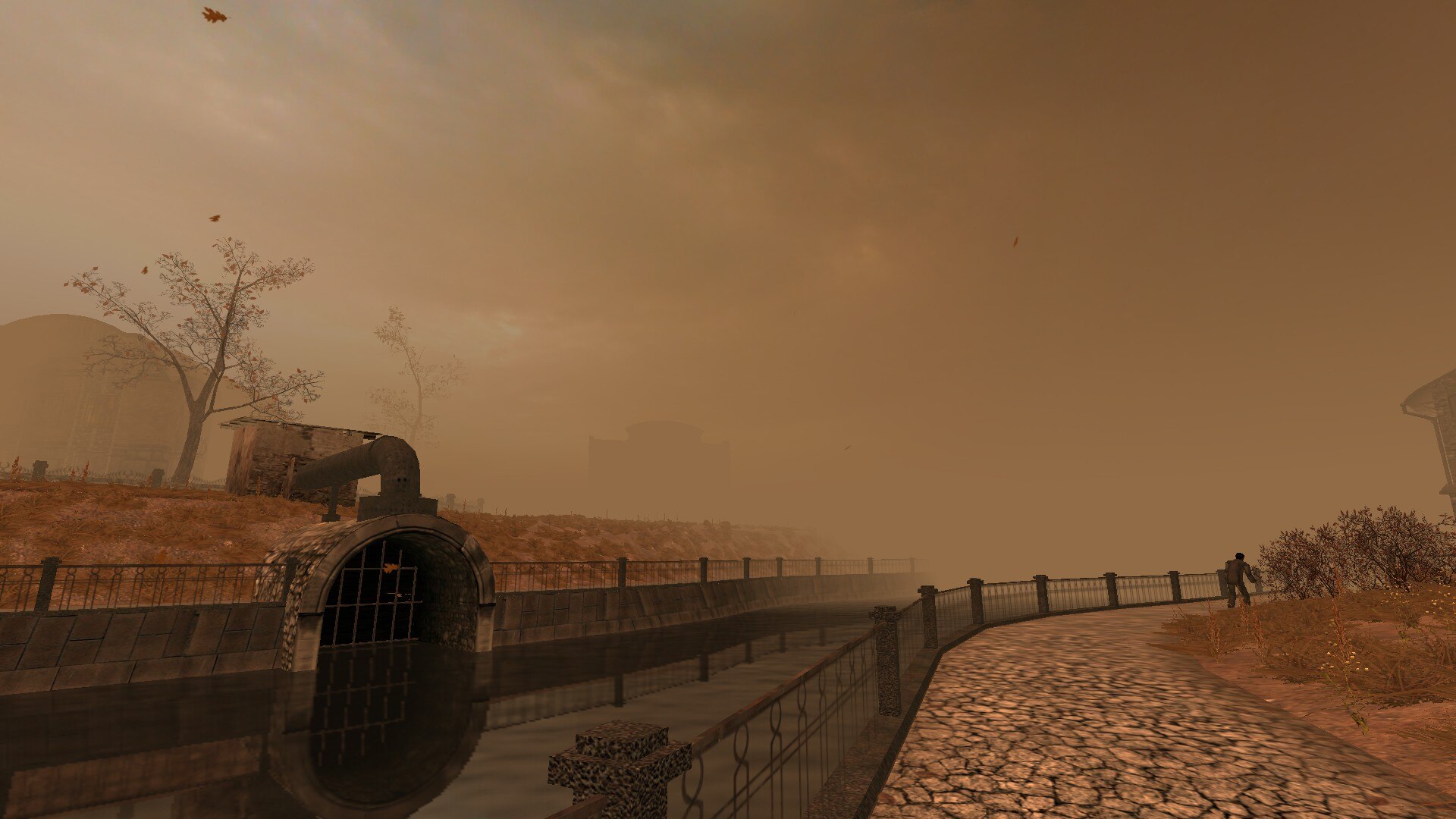
A festival of some kind was going on in the middle of the marshy river. You might know the one. The river between the Stone Yard and the Mouth, set down to the southwest of the train station. As strange as it is, the players went there with a willingness to negotiate. In fact, they did not just negotiate, they underwent a ritual. They bathed in the Gorkhon and hunted a bull to lead it back for slaughter. Or rather, the Soldier went, and the others, frail already, spoke to Aspity and Eva. There was a sense of letting go, of resignation.
The sun fell. It was a humid evening. The stink of the mud mixed with the heady aroma of twyre and blood, and the Kin played their instruments.
“You can’t have her,” Aspity began. “There’s nothing you can hold onto, Doctor.”
The Doctor’s hands were practically shaking.
“You can’t save anything. The town dies around you. You side with the wrong people. Pledge to the wrong causes. It’s all wrong, isn’t it, Doctor? A failure, aren’t you?”
The table was awfully quiet. Then the Doctor looked me in the eye and said, “I shoot her.”
The Doctor’s movement was simple. Their bag was open between their legs. They reached in with a gloved hand, stared down the beak of their mask, and pointed the revolver square at Aspity.
“You can’t miss.” I say.
Aspity smiles. That’s what does it.
Bang.
The camp erupts into chaos. The Doctor goes down. The Gravedigger and the Priest flee as Georgiy’s militiamen surge into the camp from the opposing shore.
The Soldier staggers to the Doctor and lifts them up on his shoulders, even as they are stabbed from behind.
I stumble into town, just like a sacred cow,
I am thinking now, reflecting now,
I should have let it end here. The campfire’s – the campaign’s – flames spreading to the tussock, to the tents.
I’ll ruin everything you are,
I am thinking now. The Doctor was thinking then.
The campaign never was as good as that moment of emotion right there.
It feels like just yesterday when I ran it. In reality it was four or five or even six years ago. It all blurs together somehow.
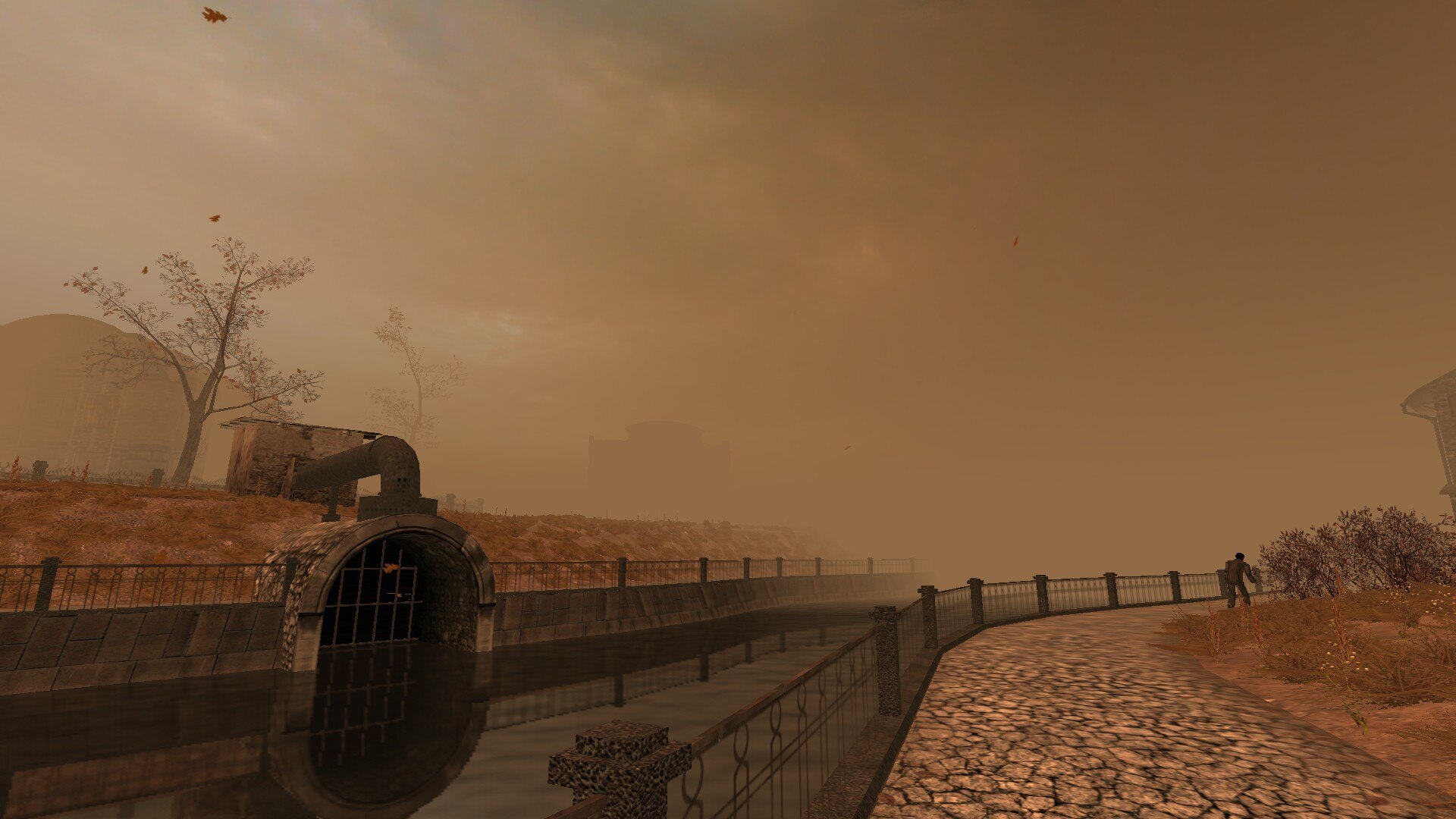
I’ve come an awfully long way, yet in some ways not very far at all. I spent many nights back then listening to Ashes to Ashes on repeat, dreaming for a way out of the malaise. The Pathologic Tabletop RPG was one escape for the imagination, written during lengthy Bowie binges, among other artists.
I have run other things since then; Cyberpunk campaigns that feature clones of David Bowie walking the streets, leading gangs of Runners; Dungeons & Dragons campaigns about the intricacies of inter-city politics as well as necromantic villages; Star Wars campaigns that aren’t about the big-picture wars as much as people trying to overcome their own pasts; Vampire campaigns about the corpses behind our eyes and the monsters in our veins, stories of addiction; horror one-shots about villages consumed by ancient curses and filled with the weepings of betrayal and enormous aquatic spider-gods; but Pathologic remains unique among all that, even. It’s a memorable little scar, I think.
Maybe I’ll take it for another spin one day. But I know for a fact that for now it’s goodbye. Always time for somewhere else. Somewhere new. But it was nice to revisit old corridors again.
It might all have sounded like madness, but it was fun while it lasted.
 Horrorgameanalysis