
I have been playing through Silent Hill 2 again in an attempt to stabilize my mental health. Given it is one of my comfort games, it is not hard for me to relax while playing it. I have been playing it either in broad daylight or in the depths of the night. Each experience offers something different from the other, particularly as I reflect on how I played it through the first time. The first time I ever booted up Silent Hill 2 was during a bright, sunny day. It was stuffy and warm, and there was not a hint of darkness, probably not even a cloud in the sky. It was a gorgeous day. The contrast of the actual world around me and the muted greys of the game’s world was a remarkable one. It exposed to me the benefit of contrast in horror, and I have been thinking about it afresh now.
Silent Hill 2 is a game that understands contrast in light and dark, even putting aside the variable times I’ve been playing it. I’ve been playing through Silent Hill 2 again on my original PS2 copy (one of my most treasured possessions) and remain impressed by how good the game looks. Each location has its own dimensions, its own mood and feel. Colour has a lot to do with that, and so does lighting. Light and dark are simple visual indicators of a space’s relative safety, and can help us identify objects in a game world that are important. I have long been a fan of Silent Hill‘s fixed camera angles and how subtle changes cue us automatically to see an area as important. Players that are wandering through the pitch-dark streets of the town, in search of the porch with the wrench and the letter on it, can find it much more easily by the simple shift in camera angle. It emphasizes where the important item is, even in complete darkness. Only James’ pocket flashlight provides any light, but the shift in camera angle is a cue for the player to sit up and pay attention, to look around even more carefully than they normally would.
Brookhaven Hospital is the location where the game first shows off its darkness. The hospital is already dark, grimy, and haunting, but its transformation into the Otherworld makes it an even bleaker space, signalling to us that the world in which we are playing has mutated. The world, already hanging on by a thread, playing by unclear rules, has become explicitly horrifying. Before we reach Brookhaven, though, we get a lot of light (such as it is in Silent Hill). The light reveals grays and browns, beginning a slow descent into misery. The vague glimpses of green in the game – in Rosewater Park or in the garden outside Lakeview Hotel – are often indicators that we can get our hopes up. We’ve finally made it somewhere! And somewhere where we might find the goal of our quest. But these locations, given life by light, are deceiving. Light and darkness have meaning but they are nonetheless used deceptively in Silent Hill. We reexperience Rosewater Park in the pitch black uncanny night of Silent Hill, and of course it is haunting. We desire the light to return, or for the fog to come and caress our screen once again. The artificial light from our torch is not enough to summon the day.
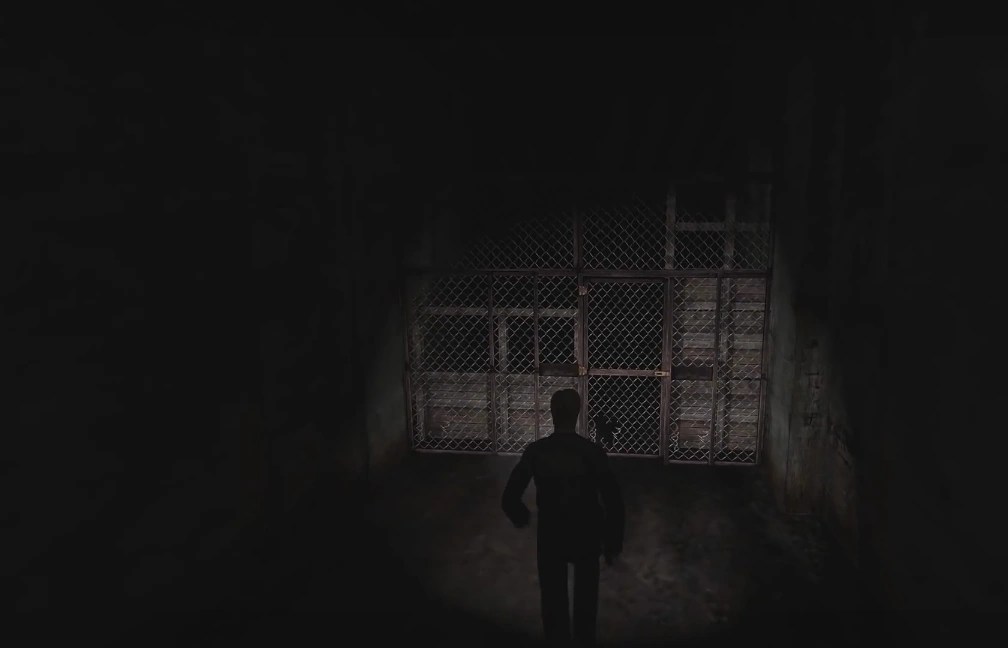
Light gives context to the environment, allowing us to see things and discern the truth. Silent Hill links light directly to the accumulation of knowledge and our ability to find our way – if we don’t have the flashlight on in a dark space, James refuses to read the map. Darkness can take away certainty, and can create intensely frightening or claustrophobic environments.
Silent Hill 4: The Room is an interesting case because darkness is not used throughout the game to any particular effect. This time around, the developers didn’t give the player a torch, so every environment had to be well-lit enough for the player to move around without any transportable light source. Interestingly, the game is often considered one of the most frightening in the series despite this “limitation” – and I would agree. I have spoken about my love for the game many times, and Water Prison World – a pretty well-lit area – remains one of the most intensely frightening horror game locations I have ever explored. It is proof that darkness is not the only tool in a game designer’s arsenal. Space, and how an environment is laid out, can create scares if you know how to utilize the hostile elements of the environment.
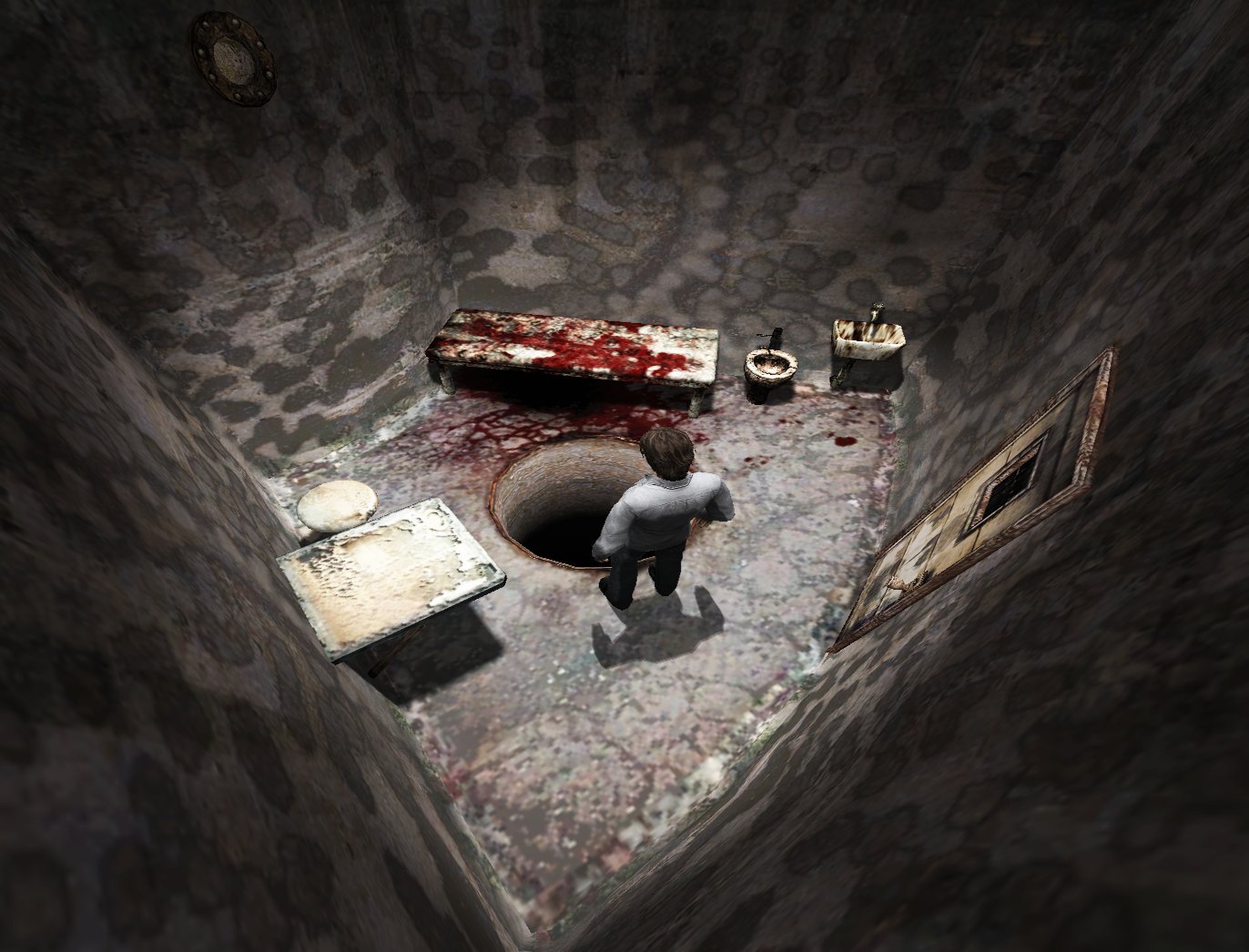
Corners, stairs, environments that wind you tighter and tighter – these things don’t necessarily need darkness. The Water Prison panopticon has no place to hide, and that is enough. In this instance, light creates contrast, a stark relief between the emotions we are feeling (fear, probably) and what we are looking at. It also means that we can see everything that is going on – and with the grisly sights available for viewing in Silent Hill 4, it is hard to avoid the horror. At least in the dark you can pretend there’s nothing there.
The original Forbidden Siren is incredibly dark. The village of Hanuda has been dragged into another world, and the nights there are abominably dark. It means that stumbling around in the dark is more than likely to end in your swift and merciless demise at the hands of the shibito. The shibito, mutated humans that kill those who are not like them, are hard to see in the darkness (aside from when they use their own torches to carve paths through the all-consuming shadows). This necessitates the use of the game’s novel “sightjacking” mechanic, which allows you to see through an enemy’s vision. Darkness in some levels of Forbidden Siren is a tool that prods you to get closer to the monsters.
You never feel safe or comfortable in Forbidden Siren, particularly given that shibito can never be properly killed either. They will always get back up and resume patrolling, giving everything a ticking timer. It is terrifying to be stumbling around in the dark, knowing that if you aren’t careful – or aren’t quick enough – an enemy you dispatched might get back up and get their hideous revenge. Darkness facilitates these possibilities, making you feverishly paranoid. Levels that do happen to be well-lit in Forbidden Siren have much the same confrontational properties thanks to frustratingly intelligent placement of the shibito and their patrols. It never stops being frightening when you hear a shibito’s breathing right next to you, whether you are in light or darkness.
I will always remember the way in which the school level unfolds. Playing as teacher Reiko Takato who must protect the young child Harumi Yomoda, darkness is both your companion and your enemy. There are shibito everywhere, and escorting Harumi is extremely difficult. You must distract shibito with noise, luring them out of corridors and into classrooms, while also not using your flashlight too liberally. If you are too flagrant with your flashlight, they’ll just spot you and come after you anyway. So you are hoping the darkness shields you from the shibito, while also praying that it is not doing the same thing for them. The experience of creeping around at a painfully slow pace is one that every horror game enthusiast should try at least once. The principal calling Reiko and Harumi’s names as he wanders the halls is murderously scary. It would not be the same without the darkness, even though it might still work in the light. It is just that the darkness actually functions as a key component of the game’s design here (aiding stealth while hindering your own visibility), rather than just being generic darkness that makes you walk into walls all the time. Here, walking into walls is accompanied by a pounding heart and sweating palms – making those kinds of mistakes here has an impact!
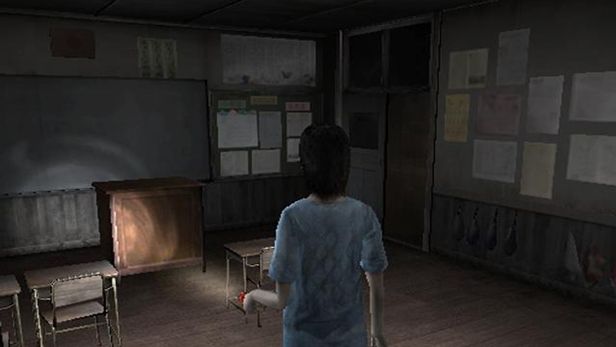
One of the best YouTube videos I have ever stumbled across is this Forbidden Siren one, showing a level that has been brightly lit (spoilers abound for enemies in this level). In the dark, this level is chilling and unpredictable. The tiered neighbourhood is patrolled by different enemies, and the polygonal trees aren’t noticeable in the vivid darkness. Yet this video throws the importance of darkness into stark relief. The enemy designs are still creepy enough to be confronting, but the level itself would be far more predictable. We could see the enemies coming – maybe they could see us, but darkness is inherently frightening. This level’s design is only horrifying (to my mind, anyway), because it is so dark. Another part of why a dark world is so interesting is because all the details you find can mean more. The things we stop and linger on have personal meaning as we court danger in order to just understand the parts of the world. That’s a reason why these videos are so interesting. They inherently interrogate why darkness works and why horror matters. Does horror need darkness? No, but does horror help darkness? Yes, if you know why you’re using it. Just as with anything in game design, light is a tool, and it can be misused.
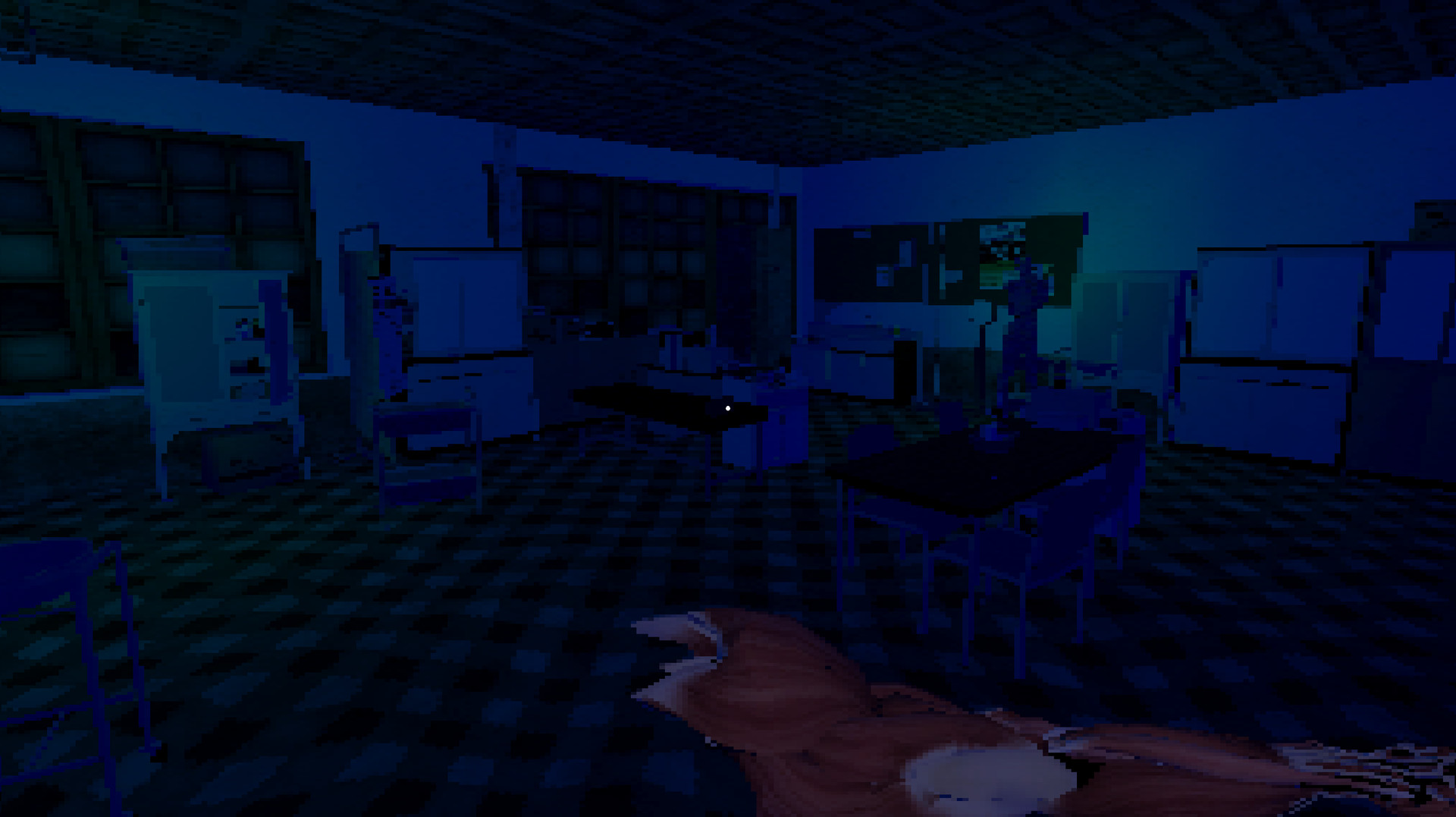
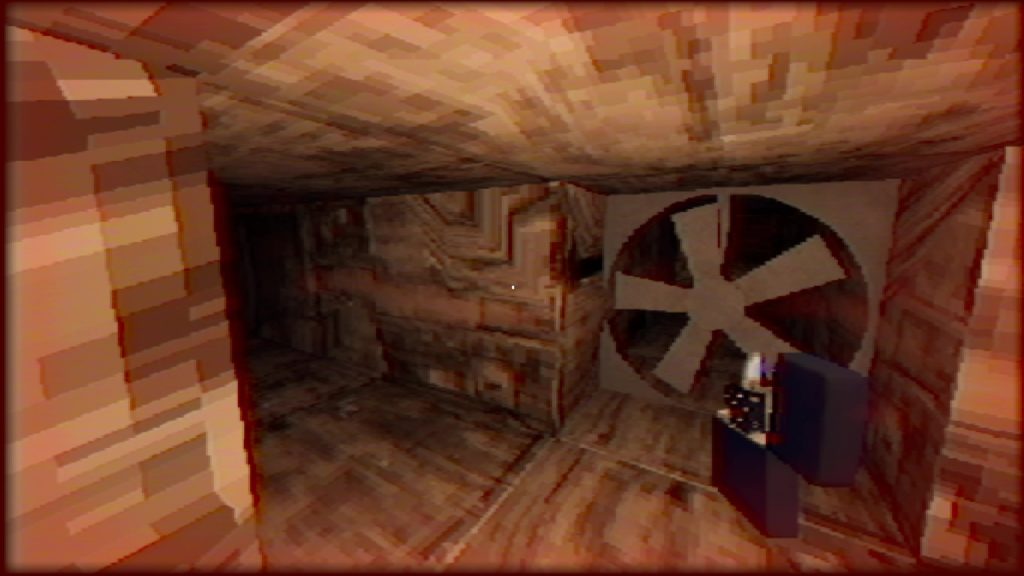
Horror games sometimes over rely on darkness, particularly indie horror games made by just a few people. But sometimes indie horror games really get it right – Nun Massacre is a fantastic example of light levels being just right. You need the lighter to see some things, but the lighter snaps on with a loud hiss. Even if it has no mechanical impact, it still feels like the Nun would be able to hear that. Aka Manto (a well-done Nun Massacre homage) similarly uses darkness to great effect. The colour that the darkness produces is, to me, soothing. A kind of deep purple. I love this kind of darkness, I am at home there. So consider how the warping textures of the walls and the ventilation system make things even more disturbing – here, light merely accentuates the unreality of the situation you find yourself in. The uncanny valley extends here to the school building itself, but the light is also the only real advantage you have over the malicious Aka Manto spirit. Without vision, the player is deprived of any means of making their way through the game’s hostile, deliberately unintuitive environment.
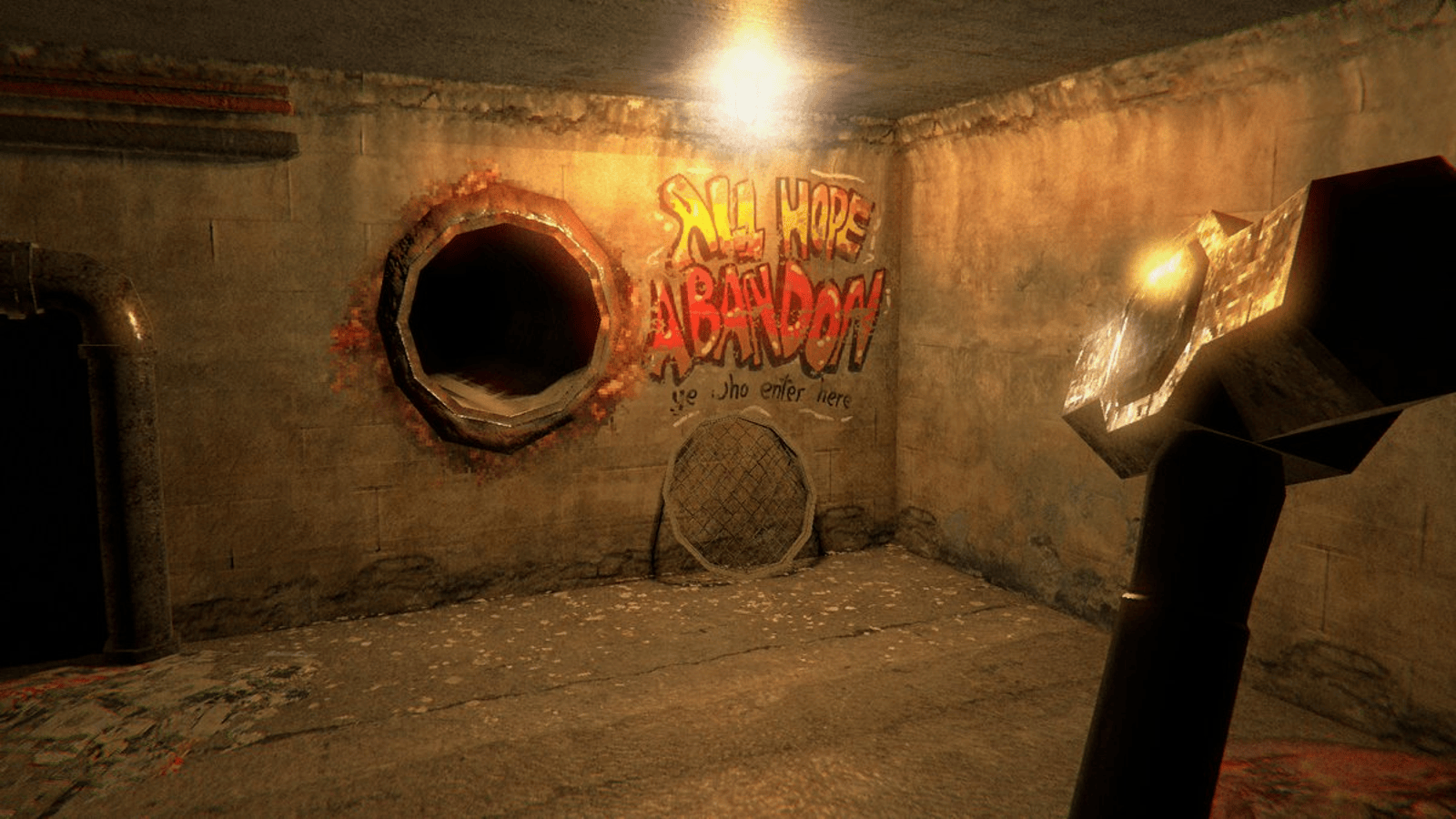
Lost in Vivo is another great example of a game that uses darkness and light in the correct situations. In the subway tunnels, light bathes many of the rooms on the first journey through. But we walk through the area in the light to reach the breaker box in order to switch the lights off. A player must then make their way back through labyrinthian corridors, pursued by a ghost, in the dark. The very idea that the player themselves is the one who must put themselves in danger is a great one. The game only becomes more frightening when immersion in darkness is our own explicit decision, because our imagination works feverishly to tell us what a bad idea this is.
Lost in Vivo has a slightly different kind of darkness than in Aka Manto, as the darkness in Aka Manto tends to be enforced by the game at any given moment. The light can be turned on and off, but it doesn’t automatically summon something bad. Darkness can be beneficial in Aka Manto – at least as a way to delude yourself into thinking you’re going to be okay. Silent Hill 2‘s torch can be turned off, but with little consequence most of the time. Lost in Vivo‘s darkness claws at you and hides things from sight, but the game is also happy to stick you in a well-lit warehouse with the game’s most terrifying monster. The well-lit environment provides such a contrast from the environment you’ve just fought through that the tension somehow increases rather than decreases. The threat has been bubbling up for some time now, you know kind of what you are going to face, but that ramps the fear up. It is an evil scenario and one that only works in the light, rather than the darkness.
I fortunately have not spent much time playing asset flips or other such games, but I have seen many screenshots of cheaply made horror games that just use the base Unity lighting engine (which gives the Unity engine as a whole a bad name). Games like Baldimore’s High School (which is a cheap knock-off of the genuinely fun Baldi’s Basics in Education and Learning) are still technically functional games. But there is such a lack of understanding as to what makes darkness an effective tool in horror games. Darkness is not something that is smeared over everything in a generic fashion. I hope, as I have illustrated, that darkness should be included deliberately, with thought as to how it affects the environment.
Darkness can make you frightened but it can just as easily frustrate you. The light can put you at ease but it can also do the opposite, juxtaposing your awful circumstances by putting you in broad daylight or well-lit rooms where the horror cannot be hidden from. There are many different uses for it – and light outside the game can have an effect too. I don’t like to play new horror games these days in the light, and I try to play them alone, as they don’t frighten me anywhere near as much as they used to. Light can be safe, and people often do play horror games with the lights on for that reason. But playing a horror game in broad daylight can inspire new feelings too.
I love Silent Hill 2 on a bright sunny morning because the game’s atmosphere clashes so powerfully with the environment I surround myself with. It is one of my favourite ways to play (though I would of course recommend darkness as the way to play it first). Darkness is something to be considered at every turn when you are designing an environment. What places will cast shadows? Where can enemies hide? Where can the player find shelter? Is the absence of light artifice that benefits the horror, or distracts from it? I hope at the very least this article has made you consider how such a small element of a game’s visual design has a tremendous impact on how it makes us feel. I’ll probably write about it again in the future when I’ve thought about it some more. There’s always more to consider!
 Horrorgameanalysis