
I think an underestimated part of video games is movement. It feels as though we often take movement for granted. People tend to say things feel “bad to control” without stopping to think about the design decisions related to why the movement actually feels that way.
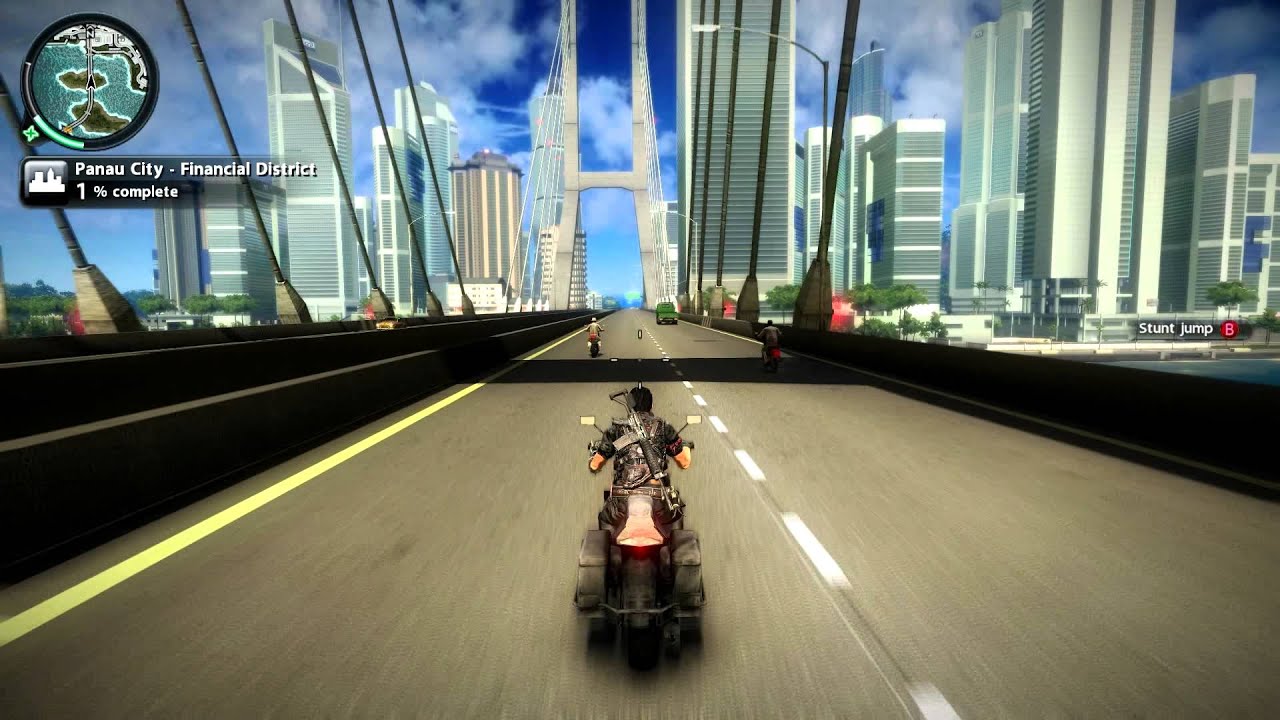
Yes, sometimes movement is rubbish. Let’s start there, shall we? I booted up Just Cause 2, the open-world action shooter, for the first time in maybe four or five years (at least). It was a game I used to play around its release date in 2010, but I remember feeling even then that something was wrong with how the driving worked. Driving in Just Cause 2 has aged even worse than I thought was possible. The car wobbles along the road, twitching at the slightest touch on the analogue stick, and freaking out when you hit anything. Driving a tank means flattening cars all around you and watching them explode at the slightest touch. Driving a motorcycle and touching the curb equals being flung into the side of a nearby skyscraper and dying instantaneously. I’m not saying this is wrong, but this feels pretty bad. For a game that is ostensibly about being powerful and in control, the fact that none of the vehicles feel remotely satisfying to drive is troubling. In a game with hundreds of vehicles, I can hardly think of any I actually enjoy driving. Some cars are lightning fast, exacerbating the issue of twitchiness. Others are painfully slow, meaning you would be better just to grapple hook your way around the island country of Panau. This movement is not making me feel how I should in a game that otherwise makes you feel powerful.
A game I see people take shots at fairly constantly for its controls is Silent Hill 2. I have long been a defender of these controls though. I think James has the perfect level of responsiveness for the situation, and for what the game is actually expecting of the player. Barring a few exceptions on the game’s hardest difficulty – like a chase scene in the basement of the hospital – James controls at a rapid, realistic speed. Each time the shotgun or the rifle fires there is a short hitch that feels natural. James sprints but begins to slow down after a few seconds of running, his pace slowing to a jog after enough time. There’s no UI element of fatigue needed, with everything visible through character animation. That is why I think Silent Hill 2‘s movement is so successful – even James’ untrained, slow movement speed is reflected in animation. And animation is definitely hard to get right – animation can often appear too clunky or disjointed, not reflective of what the character is actually doing.
The original Jak & Daxter is a game with incredibly slick movement, but I found myself even more impressed by how Jak II incorporates combat into its platformer moveset. Instead of just elegant jumps, spins, and dive moves, Jak now has guns too. The way he whips each gun out – even in the middle of firing another one – means that the player doesn’t miss a beat. There’s no hesitancy there – the game is designed for this free-flowing, fast-moving gameplay. It still looks sublime today. The move from a roll to a leap to a spin feels impossibly fluid.
I have seen an incredible amount of frustration with Outer Wilds, the space exploration game (and one of my favourite games ever made, that I don’t think I talk about enough). Many people have a problem with the jump. In most games, when you hit the jump button, the character jumps. In Outer Wilds, it is when you release the button that the character jumps. For whatever reason, I was immediately fascinated by this approach. The character bends their knees and it is on the release that they throw themselves forward. It is a choice that lines up with the game’s overall fascination with time, wherein movement is something you anticipate. It makes you feel a bit more fragile, and makes the act of jumping feel more deliberate. You can bend your knees, release, and then fire the jetpack thrusters on your spacesuit. The awe-inspiring height you gather is grounded by the realistic movement the game facilitates.
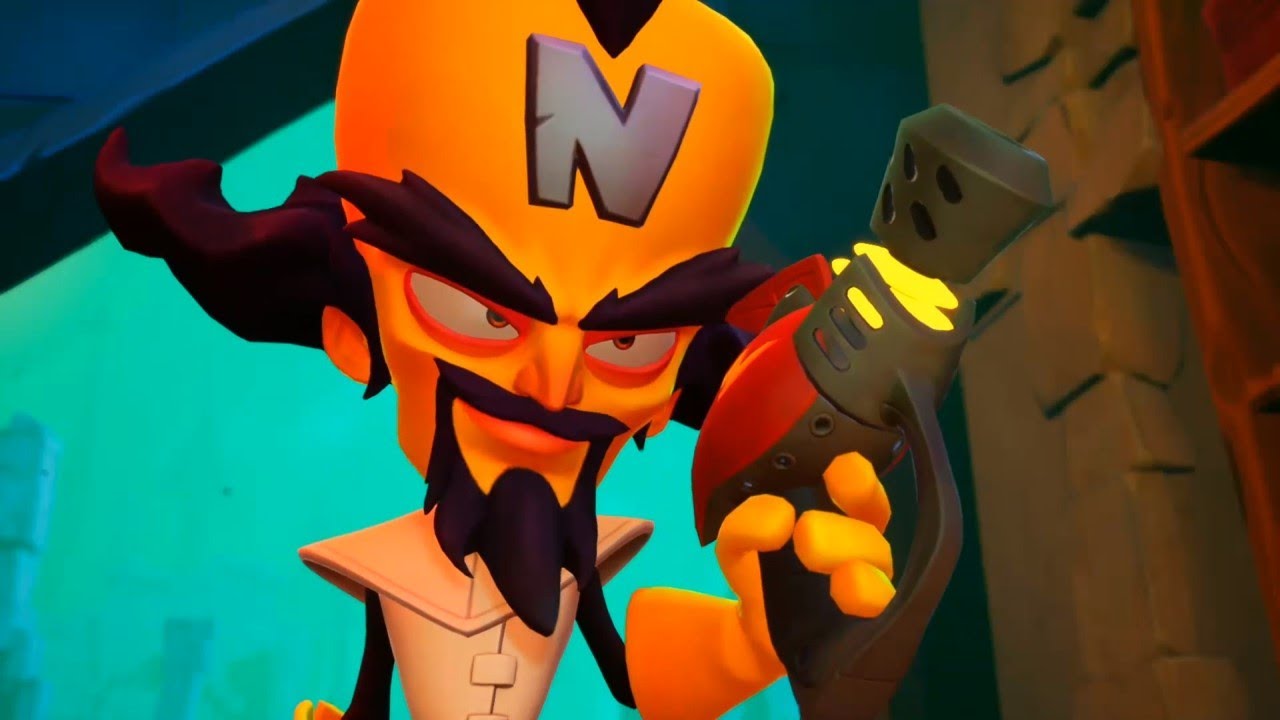
The spaceship is also lots of fun to pilot – it is maybe a little twitchy, but it rewards experimentation rather than punishes it, as in the case of Just Cause 2. Crashing into the surface of a planet and losing your landing gear teaches you something – it is a predictable reminder of the game’s rules. When movement feels wonky or inconsistent – when the game’s expectations don’t line up with what you can achieve – that’s where frustration kicks in. Crash Bandicoot 4, a fantastic 3D platformer to play casually, becomes infuriatingly difficult in certain completionist runs. The game expects you to get through each level, collecting every box, without dying – and some of the levels in Crash 4 are truly fiendish, requiring incredible focus and dexterity (and sometimes a little luck). So when the game’s physics don’t always work how you’d expect them to, the frustration is tangible.
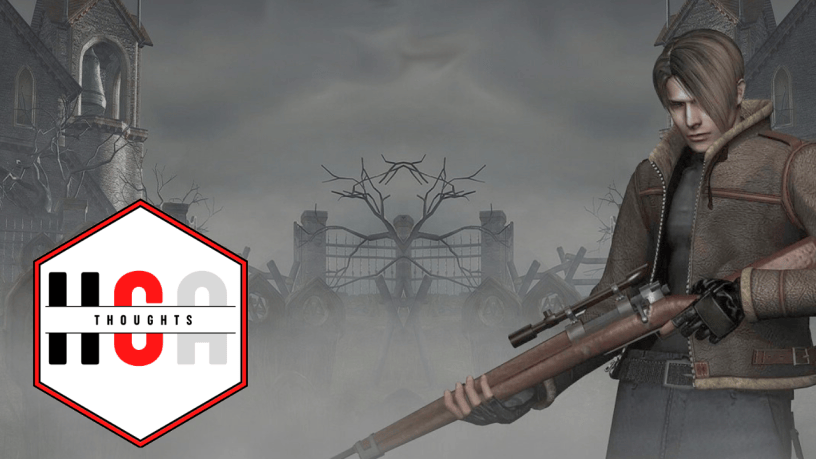
I have spoken to people who dislike the movement of Resident Evil 4 – insanity, for sure, but I do kind of get it. For those who are used to the manic pace of modern third-person shooters, Leon Kennedy’s approach to combat feels languid, maybe even lethargic. But Resident Evil 4 is deliberate. You switch between specific modes. The choice to enact violence is considered, a moment of shifting between one mindset and the other. Positioning is also integral – where you choose to stand your ground has an incredible amount of weight to it, meaning you have to understand rooms and the space around you. Resident Evil 4 makes you consider your surroundings in a way that few other shooters I’ve played do. Rather than moving through linearly, leaving a path of destruction in your wake, or moving slowly from cover to cover, Resident Evil 4 often leaves you out in open spaces, and you must do your best to avoid being cornered. With limited supplies – always hunting for more as you move around, space becomes paramount. How we move through that space – at a gentle walk most of the time – is tense and invigorating.
What a game doesn’t allow you to do with movement is often just as important as what it does allow you to do. I have been playing through Metal Gear Solid 3 for the first time (a long-overlooked part of my gaming backlog) and I was initially frustrated by Snake’s inability to crouch walk. But it didn’t take me long to appreciate the explicit shift between modes. You are either moving around confidently or crawling along on your belly, two entirely different modes of play. A moderate mode of play would make things much easier – here, you have to choose your playstyle. Without that limitation, the challenges the game puts in your way would be less challenging. The game was designed with that “limitation” in mind.
Let’s also consider classic survival horror games again, such as Forbidden Siren – and compare it to Siren: Blood Curse, the third game in the series. In the first game in the series, if you are lucky enough to be given a weapon, you have to hold down the trigger button to put yourself into a fighting stance. This moment of deliberation – of shifting into the violent mode of play – is also a moment of hesitation. The enemies can move a bit faster than you, attack a bit faster, and catch you off guard. An ambush in the original game is much more effective than in Blood Curse, as in Blood Curse you can just hammer the trigger button over and over again to flail around with your melee weapon. This tends to be incredibly effective, and the speed at which you can attack negates most normal enemies in moments. Unfortunately, the ease with which enemies are dispatched means all fear is lost. When you are in control, the game has no way to scare you. Possession of control is a lack of fear.

The gun in Forbidden Siren is also much easier to aim in the later games. In the first game, the rifle – the most powerful weapon in the game, technically – is obscenely hard to aim. Perhaps this is because the guy who uses the rifle is about eighty years old, but nonetheless, this powerful weapon is also made slightly toothless based on how we move it around. It takes real practice, real skill, to wield the rifle in an effective way. Movement, to my mind, should not always be easy. Movement should be deliberate, perhaps even clunky, in some games – because that way, we are expected to have a real level of mastery over our character’s body. If the control scheme is good enough, we are aligned with their own frustrations and anxieties, their inability to properly defend themselves against a harrowing enemy.
It is worth considering how a game encourages movement. How do we move? How does the character feel to control? Are they immediately responsive? Do the controls actually afford control, or do they include built-in delays, things that make us feel less in control than we want to be? Is it good to have controls always feel “nice”? Accessibility is always a good thing to aim for – the more people that can play video games the better – but are there ever instances where inaccessible controls are worth pursuing? These are questions I continue to consider, and no doubt will write more on in future!
 Horrorgameanalysis