
The following article discusses gender dysphoria and quotes the game using the f-slur.
Bewa, bimbay.
Sun crunching beneath your feet, sand shining in your eyes, you make your way down to the mall in your stupid little uniform, white socks tugged over sweaty feet up to your knees in your sandal-shoes. You are so ready to start another day of work flinging burgers and sweating all over your acne. Your shift is dull, so dull, it is a rippling tide of bubbling oil washing over your brain, turning it crunchy-crispy, and then she appears. She has a little smile on her angelic face, which gets bigger when she sees you, and she orders with a grin, then she says chop, chop, burgerfag, and wow, when she bites into your mind, it’s all soft and gooey beneath her teeth!
Get ready to lose it. Permanent dopamine down-regulation. Your karma will drop ten lifetimes. A hundred. You ready, cockroach?
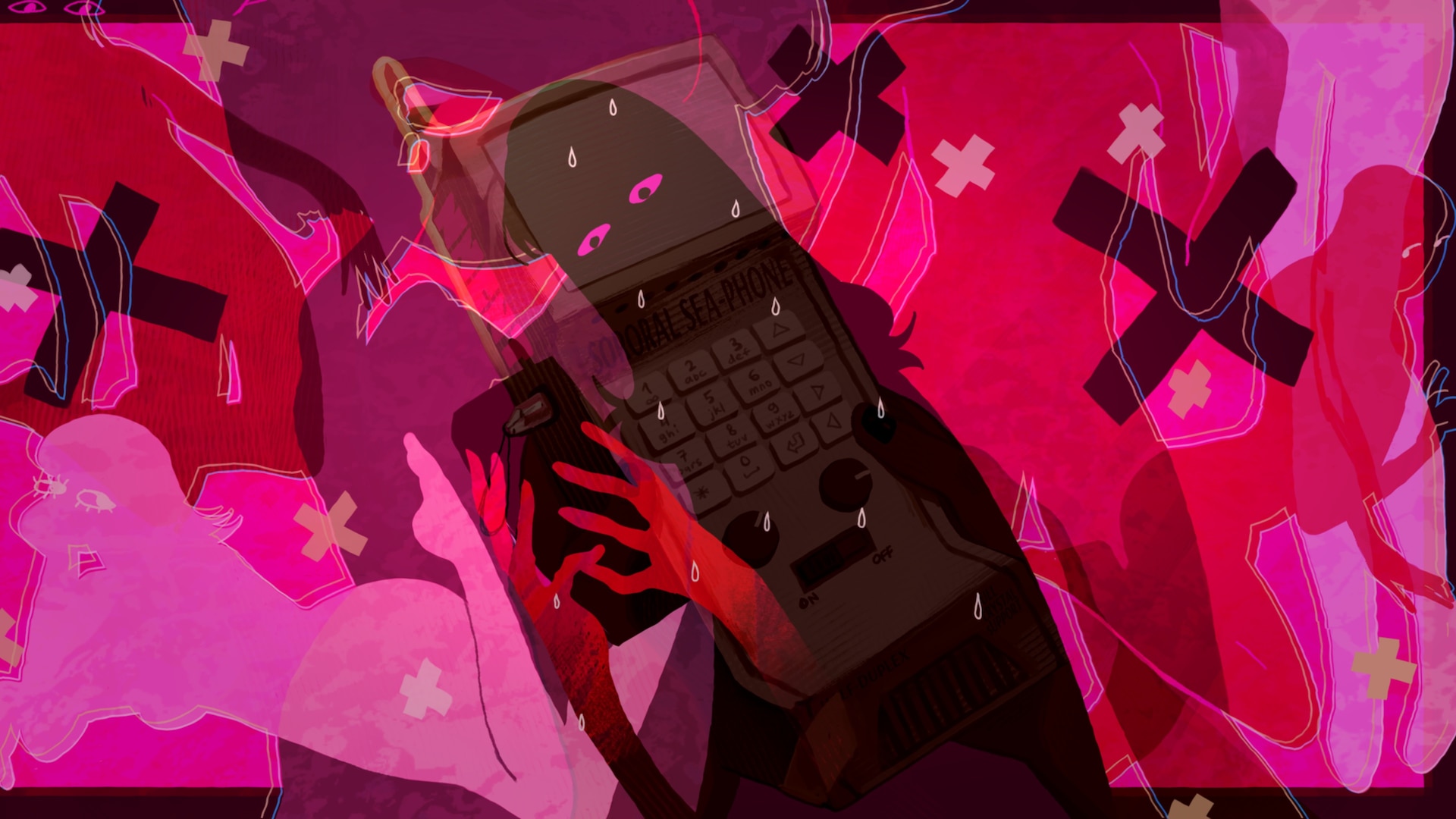
Money for Girls: Amortized (Porpentine 2026) is possibly the best game I’ve played all year. Subjective, to be sure, but why come to a review like mine if you don’t want a woman’s subjective opinion blared from the rooftops? So let’s turn the dial: Money for Girls is the best new-release game I’ve played all year. And what is even more impressive is that it is one of the best written games I’ve ever played, and I have played a lot of them at this point. Given I make a living from writing and theorizing about the damn things, I find it increasingly rare for a game to leave such a profound impact on me. Yet Money for Girls is one of those rare exceptions, a breath of fresh air from a prose perspective, a visual novel with just enough mechanics to power successive replays, and a deep desire to explore an incredibly interesting world. Flip phones are in vogue, bimbay!
You must manage Mood and Hygiene as an absolute disaster of a young woman called Cancer. Cancer is struggling to manage herself in the face of eviction and the crushing, alienating forces of capitalism, but you get the feeling she’d be struggling whatever life had to throw at her. And she’s so damn lovable, that spending time with her is effortless. She’s at once a complete mess that made me laugh, as well as so deeply relatable that she made me cry, and so tough that I wanted to give her a hug.
I could talk about the game’s design, which is centered around an immensely clever narrative slice-of-life structure. You pick two things to do a week, but that becomes more and more stressful as you try to earn $1000 to make sure your mum doesn’t go to debtor’s prison. It’s difficult however, because you’re also inevitably wanting to spend time with the wonderful and terrifying characters that populate the game. I could talk about the game’s sharp wit and humor, its presentation, its art, its music; all of it and more aligns to create one of the best visual novels I’ve ever played. So many stupid little jokes: DO YOU KNOW WHAT DEBASEMENT IS? one character asks, and Cancer replies:
“… It’s below the house?”
Dreams aren’t supposed to hurt.
Nothing hurts worse. Than a dream.
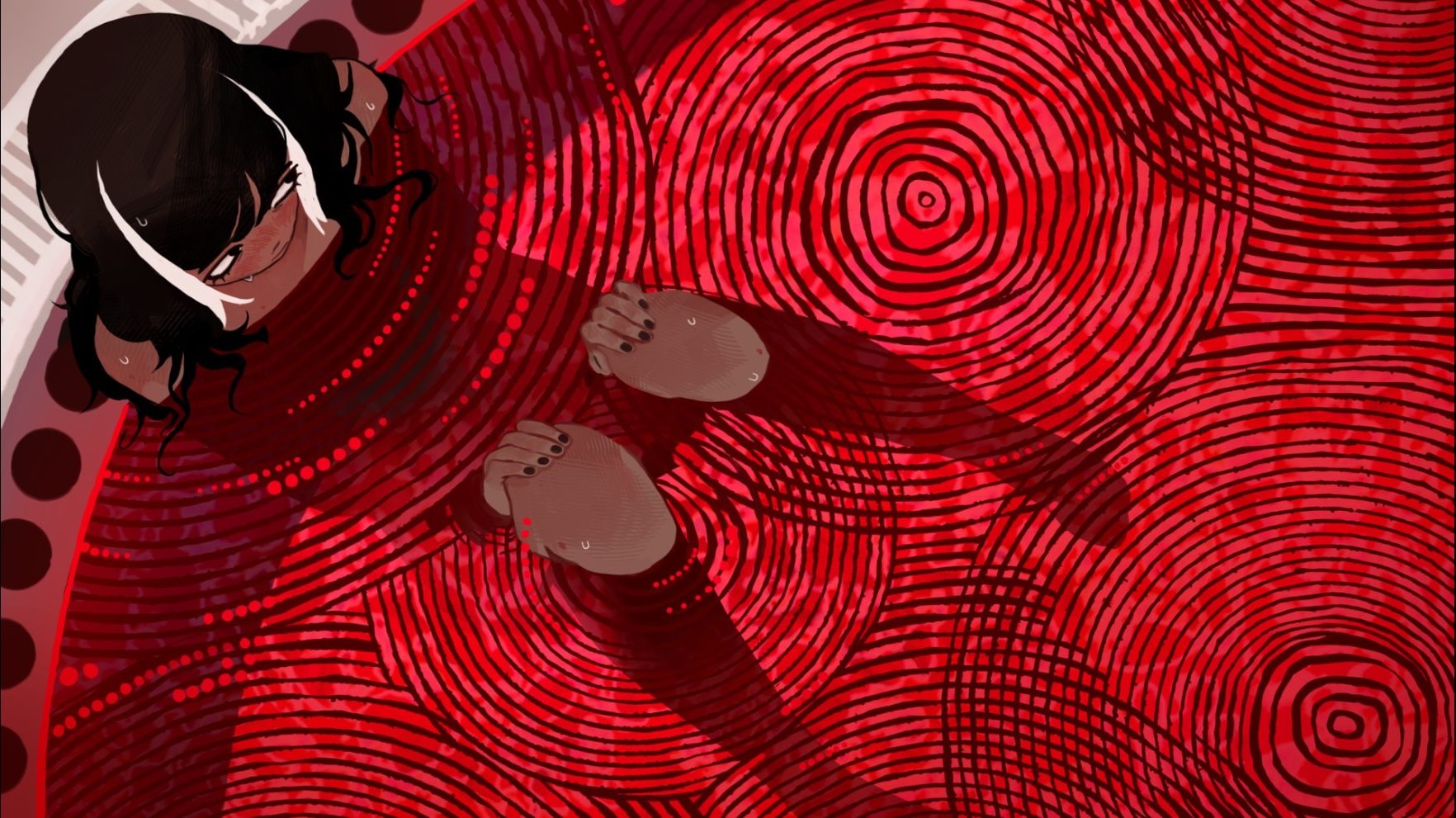
Yet I think Money for Girls’ most important quality was how immensely seen I felt. Money for Girls is yearning, desperately eloquent, immensely stupid, tear-jerking, melancholic, hilarious, queer, perverted, toxic, sapphic, and in general it is about what it means to be a woman (to me, at least). As other reviews for the game on Steam state, this game gets it. It really, really does.
Womanhood is ugly and gross and all over the place. It is beautiful and transcendent and connective. My womanhood, my girlhood, means everything to me. Longing. Joy. Pain. So much pain. Euphoria. Grief. Yearning. Dysphoria. Misery. Impossibilities of past, present, and future that nonetheless you experience as physiological requirements. There is not enough time in the universe to make everything right. Circular thoughts that are generated to power your brain like a pain machine. This game somehow captures it all.
Money for Girls, I think, is about what it means to strive and suffer and question at every single turn, about how we fight to retain selfhood in a world dedicated to shaping us, with so many levers to pull to that awful end. How can you author yourself when the game is constantly pulling levers against you?
Thus the game is about life; about how silly and horrifying it is; how bizarre and cruel it is; how wretched and mocking it is. Money for Girls asks: what do our bodies mean? What do we do with them? Are we just meatbags to be skinned? Skinner boxes to stick money in? Dysfunctional horses that deserve to be shuttled off to the glue factory? Or are we acne-speckled imperfects that get frightened and jealous and happy splashing around on the beach, eating cheesy fries? Are we what we make ourselves to be? What do others want from our bodies? What do we want from others?
It’s here that I trot out my usual, if you like you should play, so, if you like: adventure games, horror games, visual novels, incredible soundtracks, proper trans representation, actual queer rep, mind boggling art, surreal nightmares, horrible nasty toxic romances that can actually be the sweetest thing ever, gorgeous life-spattered meaty poetic prose, if you like reading and life and to be quite honest video games in general, you must play.
You should definitely carefully check the content warnings, as I could see it being quite a harrowing game at points, with a scene about self-harm, various scenes that deal in vivid gore, degradation / abuse material, body dysmorphia and gender dysphoria, and disaster yearning lesbians.
I imagine I will look back on this article in years to come, and my many subsequent replays to come. I think each time I encounter this game I will say, vainly, this is all about me, how did they know???? Truthfully, I simply cannot recommend this game more.
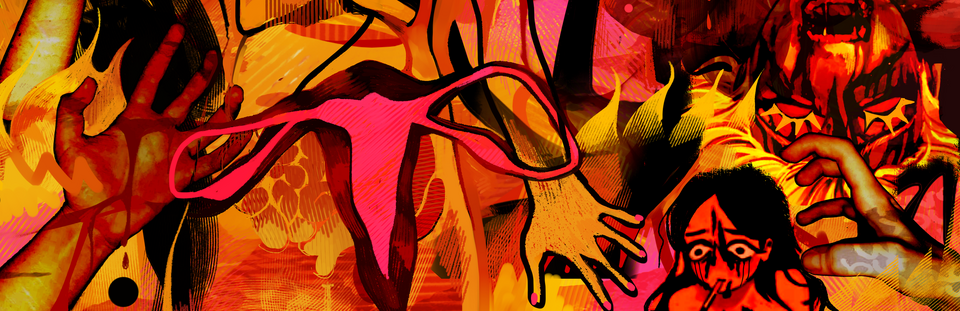
She breaks my arms she breaks my fingers she breaks my knees she breaks my ankles she breaks my toes
And puppet is so grateful.
I also wanted to talk a bit about how the game simulates life with endometriosis, which was the most meaningful thing I could have ever had simulated for me in a video game, to be quite honest.
As a woman who will never be able to truly experience a period, but who experiences her body as needing one, I am always looking for thoughtful representation of such in playable form. Money for Girls offers some; at the beginning of the game, you can select six kinds of traits for Cancer; Girl Gamer, OCD, Slob, Horse Girl, Endometriosis, and Boyborn. Through selecting the Endometriosis trait, you are given some of the most ruthlessly liquid, oozing prose you’ve ever read. Chocolate cysts stickily making their way out of your body, asshole burning, extra uteruses growing through your insides (so everything gets a period!), moaning in incomprehensible pain on the bathroom floor until your mum or your crush comes to help you. Aside from just adding gorgeous prose – because all of the extra traits, and even the outfits you wear, can affect moments in the prose both big and small, so replay value is insanely high for players who love attention to detail – Endometriosis also drains Hygiene and Mood at the beginning of every day. It’s basically playing the game on hard mode. The body becomes mechanic, becomes evidence, becomes narrative. The body is a site for all of this and more, the thing through which we, we, all of us we, experience life. Disgust is beautiful; pain can be hilarious; just as joy can provoke misery, or how bodily dissociation can be erotic. We experience all this, all this experience, as the self, and for me, the self is pain. Crunchy-crispy pain!
That stuff I was saying about pain; it is very true that womanhood is not reducible in its core to pain, because there is so much joy, and there is no one model of womanhood that could ever fit everyone, let alone two people. Yet this simulation of pain means a lot to me, a window into something that my brain cannot help but fixate on. Desire, even. As I wrote recently in a draft of a game I’m working on myself, a character says that; I want that [endometriosis] for no-one but myself. Noble woman, becoming a martyr (blegh) to take the burden of uterine cysts into herself! But no, that’s not what I want at all. I desire embodiment. And yet I do desire it at the same time, I desire evidence..! So, ah, desire – is that even truly the right word? Desire?
The question of desire runs through Money for Girls. Money determines what we can do, but does it also determine what we desire? Is womanhood a detached desiring force unto itself in my brain? For me, no, womanhood is innate, not something I need to desire or question. So womanhood must be something else. Womanhood must be embodiment, but no, it’s not, a body does not determine one’s womanhood, so why does desire surface so? Can we satisfy ourselves with the workaday grind for meaning? How much can we endure?
Why do we want the things we want, need the things we need? What is it that powers those wants and needs? Are wants and needs generated by external forces, like money, acceptance, lust, or are they generated by internal factors, like physiology, psychology, the way we were raised, the things we came to expect from our life narratives? The questions I’m exploring here are all influenced by way too many other factors, and each other, to resolve into a pithy statement. And yet that’s what the best writing does, open up Pandora’s Box and ask, why? In my case, embodiment is persistently awful and disappointing and distressing. It is a relationship that changes more and more as I age, but distress; lucky me! That has always stayed the same.
However, in the case of marvelous prose, gorgeous art, transcendent music, and meaningful game mechanics, one’s body becomes a depot for delivery, trucks coming in to deliver Money for Girls, back up, back up, yep, dump it right into my gooey amygdala please! Mm, crunch.
 Horrorgameanalysis